 How-to
How to Choose Trailer Flooring for Heavy Equipment
Last Updated: November 4, 2026
Quick Summary
The best trailer flooring for heavy equipment is a deck matched to your machine's weight, footprint, and trailer type, since the deck spreads load into the crossmembers and gives tires or tracks grip. Wood, steel, aluminum, and rubber each trade strength, weight, traction, and cost, and floor thickness matters less than crossmember spacing underneath.
- Measure operating weight, tire or track footprint, and deck length before choosing any material.
- A 2-inch hardwood or apitong board on 12- to 16-inch centers is the heavy-equipment norm.
- Rubber mats, PVC tiles, and roll-out vinyl are coverings, not structural decks.
- A plank or mat under each track helps spread point loads across several crossmembers.
- Seal cut edges and end grain before installation, since they absorb water fastest.
Table of Contents
- Start With Your Equipment: Load, Footprint, and Trailer Type
- Trailer Flooring Material Options Compared
- How Trailer Floor Thickness and Deck Structure Carry the Load
- Waterproof Trailer Flooring and Rot Resistance
- Trailer Floor Traction for Ramps, Wheels, and Tracks
- Matching Flooring to Trailer Type and Equipment
- Installation, Replacement, and Maintenance
- Get Your Trailer Floor Spec'd Before You Buy
- Frequently Asked Questions
Start With Your Equipment: Load, Footprint, and Trailer Type
The best trailer flooring for heavy equipment is the deck that spreads your machine's weight across the frame without rotting, cracking, or turning slick under a track.
Trailer flooring is the load-bearing surface of the deck, and it does two jobs at once. It transfers weight into the crossmembers and it gives tires or tracks something to grip.
Start with three numbers: the operating weight of the machine, the footprint of its tires or tracks, and the deck length you actually need. A compact track loader concentrates its weight on two narrow steel tracks. That is a point load, and it punishes soft decking far faster than a wheeled machine of the same weight. Compare that with a wide-tired skid steer, which spreads load across four contact patches.
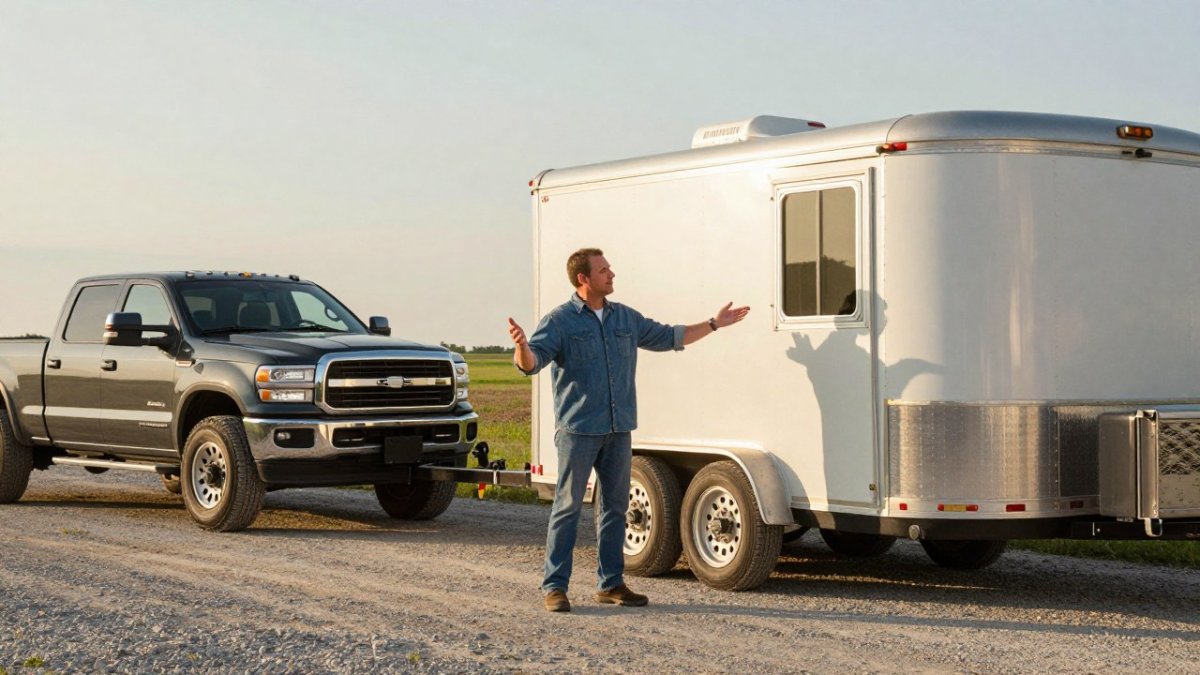
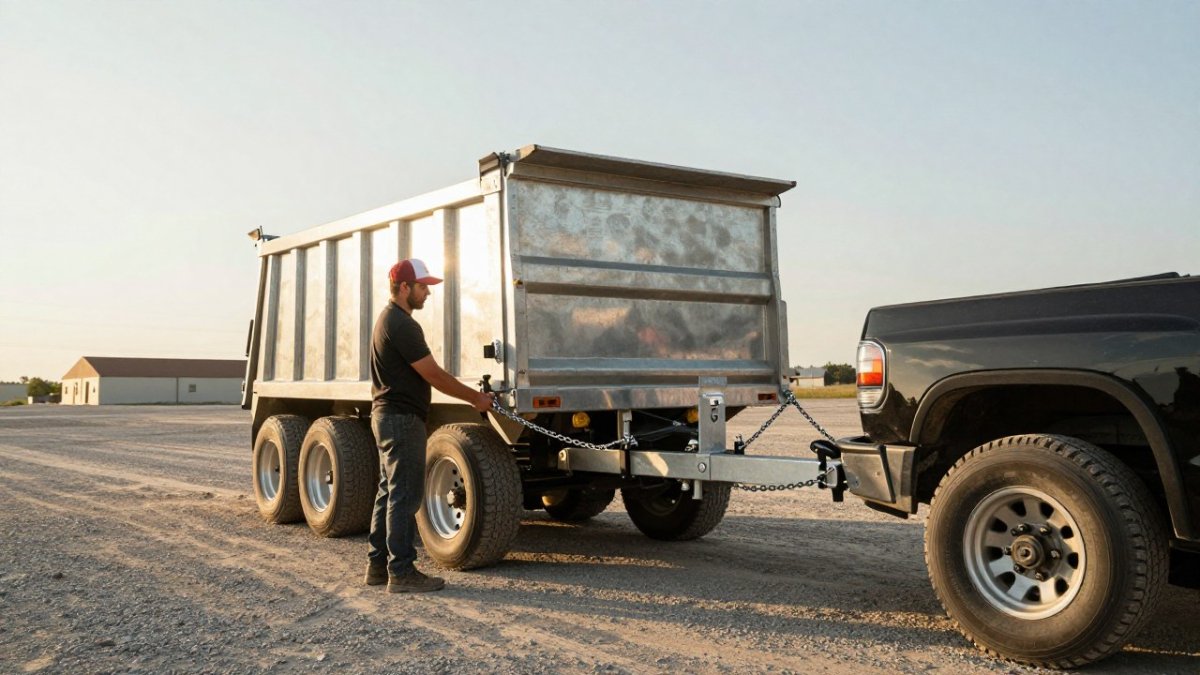
Then match the material to the trailer. A dump trailer, utility trailer, enclosed trailer, and flatbed all carry equipment differently.
Trailer Flooring Material Options Compared
Three families cover almost every heavy-equipment trailer: wood, metal, and rubber or vinyl. Each trades strength, weight, traction, and cost against the others.
| Material | Best For | Strengths | Watch Out For |
|---|---|---|---|
| Pressure-treated pine | Budget utility decks | Common, easy to replace | Softer, dents under tracks |
| Oak and hardwood | Tracked equipment | Hard surface, good wear | Heavier, needs sealing |
| Apitong (Keruing) | Flatbeds, heavy-duty | Strong for its weight | Higher material cost |
| Steel | Maximum durability | Holds up best under abuse | Heavy, rust-prone |
| Aluminum | Weight-sensitive builds | Best weight-to-strength tradeoff | Dents, costs more |
| Rubber and vinyl | Enclosed trailers | Cushioning, traction | Not a structural deck |
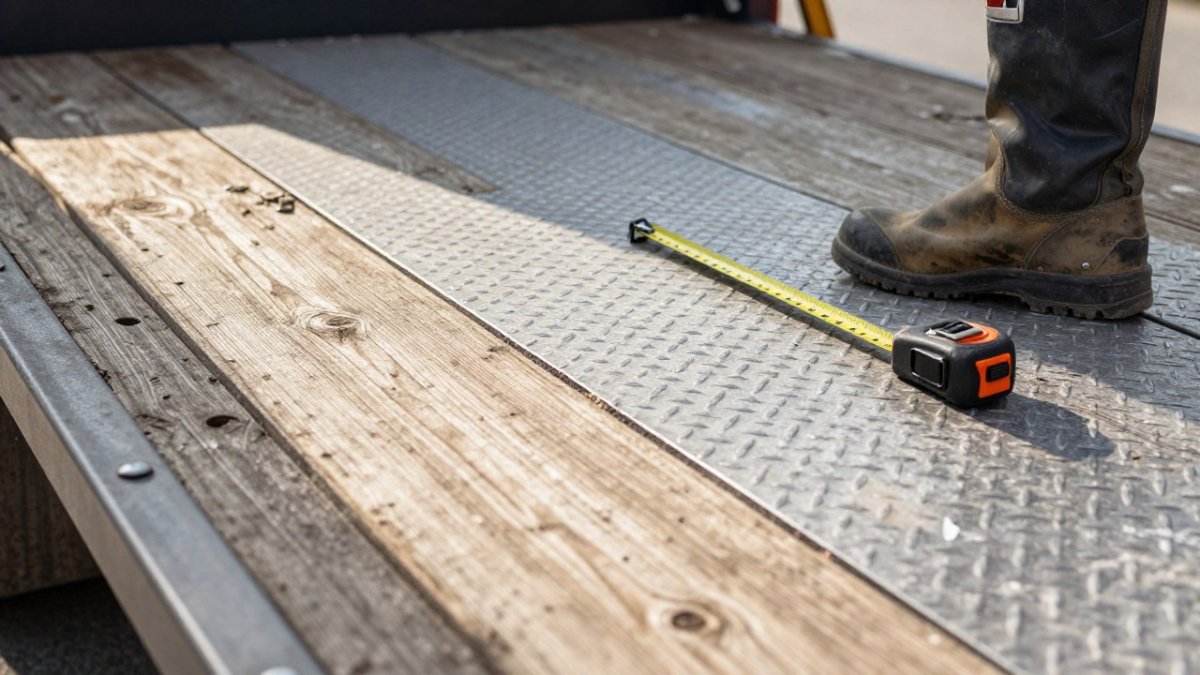
Wood Decking: Pressure-Treated Pine, Oak, Apitong, and Exotic Hardwoods
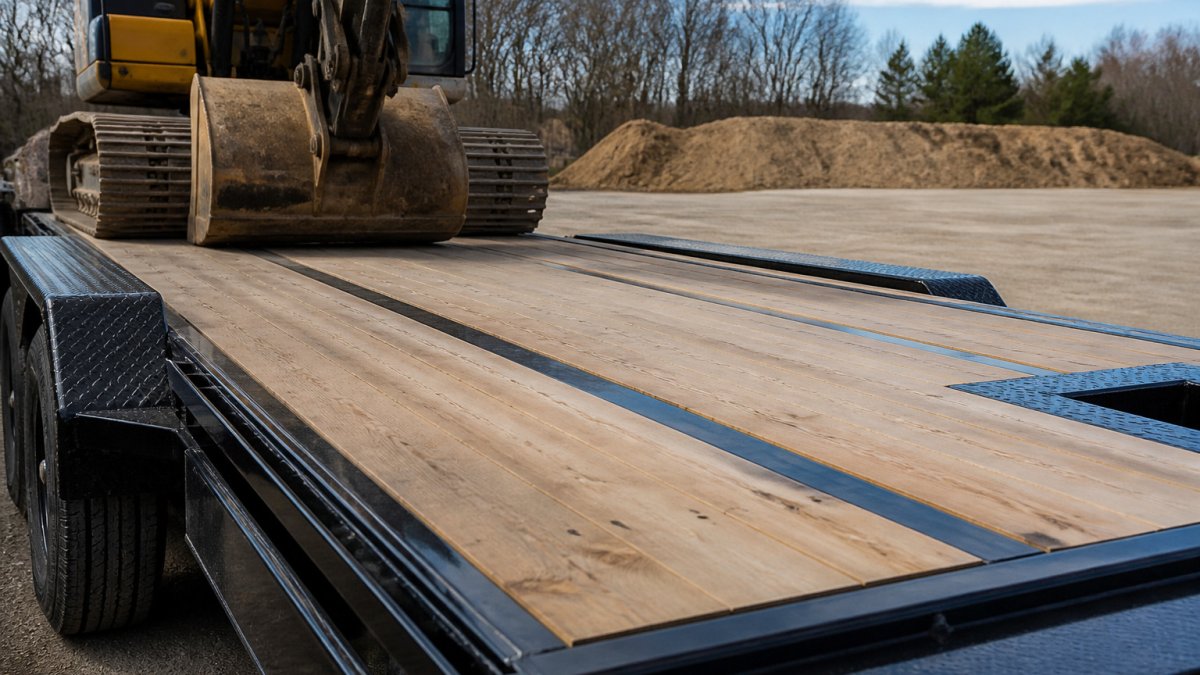
Wood remains one of the most common trailer decking materials because it is repairable board by board. Pressure-treated pine is a common choice, though it can dent under concentrated loads. Oak is often used for tracked equipment. Apitong, also called Keruing, is a tropical hardwood valued for its strength-to-weight ratio on flatbeds and heavy-duty trailers.
Metal Decking: Steel and Aluminum
Steel decking is often valued for durability under abrasion. The tradeoffs are weight and rust. Aluminum is often chosen where every pound of payload counts.
Rubber, PVC, and Roll-Out Vinyl
Rubber mats, PVC tiles, and roll-out vinyl are floor coverings, not structural decks. They are typically used on top of sound wood or metal rather than instead of it.
How Trailer Floor Thickness and Deck Structure Carry the Load
Trailer floor thickness matters less than the structure underneath it. Boards or plates sit on crossmembers spaced along the frame, and that spacing sets how much weight each span can take. A thick board over wide crossmember spacing will flex. A thinner board over tight spacing can outperform it. This is the single most misunderstood point in trailer flooring: the deck is a spanning member, not a slab, and its capacity depends on span, thickness, species or alloy, and how the load is applied.
The Four Variables That Set Safe Deck Load
- Crossmember spacing (span). Crossmember spacing is a key factor in deck capacity. Tighter spacing generally raises the load a given board can carry, so ask for the spacing before you choose a deck material.
- Deck thickness. Deck thickness should be matched to the equipment and the crossmember spacing. Steel and aluminum decks are specified by gauge or plate thickness, and a thinner plate over wide spacing can flex under a track.
- Support condition. A board that bears fully on every crossmember carries far more than one resting on a rotted or rusted member. Inspect the frame before you blame the deck.
- Load application. A distributed load (wide tires, long track contact) is gentler than a concentrated point load (a steel cleat, a narrow caster, an outrigger foot). The same total weight can be safe spread out and damaging concentrated.
Deck Rating vs. Trailer Rating
Load capacity is a whole-trailer figure, not a flooring spec. The trailer's gross vehicle weight rating (GVWR) and axle ratings set the safe total, and the deck has to distribute that weight so no single crossmember is overloaded. A deck that is strong enough in aggregate can still fail locally under one track shoe. Never treat a flooring product's marketing claim as a substitute for the trailer's manufacturer rating, and never exceed the GVWR by loading a "stronger" deck.
Spreading Point Loads
For tracked equipment, a plank or mat under each track can help spread the point load across several crossmembers. For wheeled equipment, check that tire positions land near crossmembers rather than mid-span.
Weight Distribution and Securement
Weight distribution counts as much as deck strength: a load sitting too far back can unload the tongue and overload the rear axle, while a load too far forward can exceed the tow vehicle's hitch rating.
Watch out: a deck that looks sound can hide a cracked crossmember or a rusted web behind a board. If a board flexes more than expected under a wheel, stop and inspect the frame before the next load.
Waterproof Trailer Flooring and Rot Resistance
No deck is truly waterproof, but some resist moisture far better than others. Wood rots when water sits on it, so sealing cut ends and edges matters as much as the surface finish.
Watch out: water trapped between a rubber mat and a wood deck is one of the most common causes of hidden rot. Pull mats periodically and let the deck dry.
For decks that see rain, snow, and road spray, a durable finish can help protect against moisture damage. Readers protecting a deck from moisture and rot can learn which durable paint finishes for heavy duty trailers hold up.
Trailer Floor Traction for Ramps, Wheels, and Tracks
Trailer floor traction decides whether a machine loads cleanly or slides. Bare steel and wet wood are the worst offenders. Diamond plate, expanded metal, and textured rubber are commonly used to add grip.
Tracked equipment needs a different approach. Steel tracks on bare wood can spin and chew the surface. A rubber mat under each track improves grip and protects the deck.
Matching Flooring to Trailer Type and Equipment
The right deck follows from the trailer and the machine, not the other way around. Small contractors comparing trailer types can find guidance on the best utility trailers for small contractors.
Enclosed trailers carrying food service or event gear want a protected, easy-clean floor. Buyers can see how a heavy-duty dump trailer is configured in this heavy duty dump trailer buying guide.
Consider operating conditions too. A trailer that sits outside in wet weather needs rot resistance first. One that loads tracks daily needs impact absorption and a hard surface.
Installation, Replacement, and Maintenance
Replacing a deck is often a manageable job for a wood floor and a bigger project for welded steel. Readers planning floor replacement or upkeep can review essential trailer parts for regular maintenance. The steps are consistent, but the details decide whether the new deck lasts a season or a decade.
Before You Order Material
- Measure the deck and crossmember spacing. Record length, width, crossmember spacing (on center), and board width. Order material to the actual span, not a guess.
- Match thickness to span and load. A 2-inch hardwood or apitong board on 12- to 16-inch centers is the heavy-equipment norm; thinner boards belong on lighter decks or tighter spacing.
- Check the frame. Look for rusted, bent, or cracked crossmembers and for loose or missing fasteners. Straighten or replace members before laying new decking; a new board over a bad frame will fail early.
Removal
- Remove fasteners and lift the old decking without damaging the frame. Cut or back out screws and bolts; do not pry against a crossmember flange. Label or photograph the layout if you plan to reuse a pattern.
- Inspect the frame and crossmembers for rust, straightness, and weld condition. Treat surface rust before it becomes section loss.
Installation
- Cut new boards or plates to fit, allowing a small gap between wood boards for drainage. Butt boards snugly at ends but leave a gap at edges so water does not sit.
- Fasten with the correct screws or bolts, countersinking where equipment slides. Use coated or stainless fasteners suited to the material; plain steel screws in treated wood corrode quickly. Space fasteners per the board width and crossmember layout, and do not overdrive screws into hardwood.
- Seal cut edges and coat the surface. End grain and cut edges absorb water fastest; seal them before installation. Coat the surface per the product's directions.
- Re-check fasteners after the first few loads. New decks settle; a torque check after the first haul catches loose hardware before it becomes a hazard.
Maintenance and Inspection
Maintenance is simple but not optional: sweep the deck, clear drainage gaps, reseal wood annually, and touch up metal coatings. Inspect fasteners each season. A loose board or lifted plate is a loading hazard.
Watch out: water trapped between a rubber mat and a wood deck is one of the most common causes of hidden rot. If a mat has been down for a season, lift it and probe the wood before the next load.
Safety and Compliance Checks
Before every heavy load, confirm traction is adequate when wet or oily, that tie-down points are accessible and rated, and that no board is soft, cracked, or loose. Follow the trailer and equipment manufacturer ratings for load and securement; a deck upgrade does not raise the trailer's GVWR.
Get Your Trailer Floor Spec'd Before You Buy
Picking a floor in isolation is how buyers end up replacing a deck early. Buyers ready to purchase can shortlist trailers with this best trailer brands for contractors comparison.
That is where DoubleTake Trailer Sales can help. We build custom trailers to your specifications, offer a range of dump, utility, enclosed, and car hauler models, and have an in-house service and parts department.
Get started with DoubleTake Trailer Sales and get a deck built for the equipment you run.
Frequently Asked Questions
What is the best trailer flooring material for hauling heavy equipment?
There is no single best answer because it depends on your equipment. Apitong hardwood is often chosen for flatbeds and heavy-duty trailers thanks to its strength-to-weight ratio. Steel decking is valued for durability, while aluminum is often chosen where weight matters most. For tracked equipment, oak is often used. Match the material to your load type, trailer type, and budget rather than defaulting to one option.
What is the best thickness for a trailer floor?
Trailer floor thickness should match your load and span. Heavier equipment and wider spacing between crossmembers call for thicker decking. Pressure-treated pine and oak are common wood choices, and rubber mats can add protection over an existing deck. Ask your trailer builder or dealer to confirm the deck thickness your frame is rated for before you buy or replace a floor.
How can I improve traction on a heavy equipment trailer floor?
Trailer floor traction depends on surface texture and material. Steel diamond plate and textured rubber mats provide grip for wheeled equipment. Wood decks can become slick when wet or coated in mud, so cleaning and periodic resealing help. For tracked equipment, oak and other hardwoods resist scuffing and provide a stable surface. Add traction aids on ramps and inspect the deck for worn or polished spots that reduce grip.
How do I know when a trailer floor needs to be replaced?
Look for soft spots, rot, cracked or splintered planks, loose fasteners, and rust-through on metal decks. Wood that stays wet or shows dark staining is a warning sign. On steel and aluminum, check for corrosion around welds and seams. If the deck flexes under load or the surface has worn smooth, replacement is due. Inspect before each hauling season and after heavy weather exposure.