 How-to
How to Tow a Heavy Contractor Trailer Safely
Last Updated: November 15, 2026
Quick Summary
Towing a heavy contractor trailer safely starts before you hitch up, by confirming your tow vehicle is rated for the trailer fully loaded. Then match the hitch and ball to the trailer's weight, load about 60% of cargo ahead of the axles, and complete a repeatable walk-around inspection.
- Check both towing capacity and payload rating, since a truck can be overloaded even with a high tow rating.
- Set tongue weight at roughly 10% to 15% of the loaded trailer weight.
- Place about 60% of cargo weight in front of the trailer axles and 40% behind.
- Upward-tug the coupler to confirm it cannot lift off the ball before you drive.
- Set the brake controller in an empty lot at low speed, never on the road.
Table of Contents
- Before You Hitch: Matching Your Tow Vehicle to the Load
- Step 1: Choose the Right Hitch, Ball, and Coupler
- Step 2: Load Cargo and Set Tongue Weight Correctly
- Step 3: Pre-Trip Inspection of Tires, Lights, and Brakes
- Driving Techniques: Speed, Following Distance, and Trailer Sway
- Backing Up and Reversing with a Heavy Trailer
- Your First Heavy Haul: Practice Runs and Emergency Gear
- Scheduling Your Next Trailer Check or Service Visit with DoubleTake
- Frequently Asked Questions
Before You Hitch: Matching Your Tow Vehicle to the Load
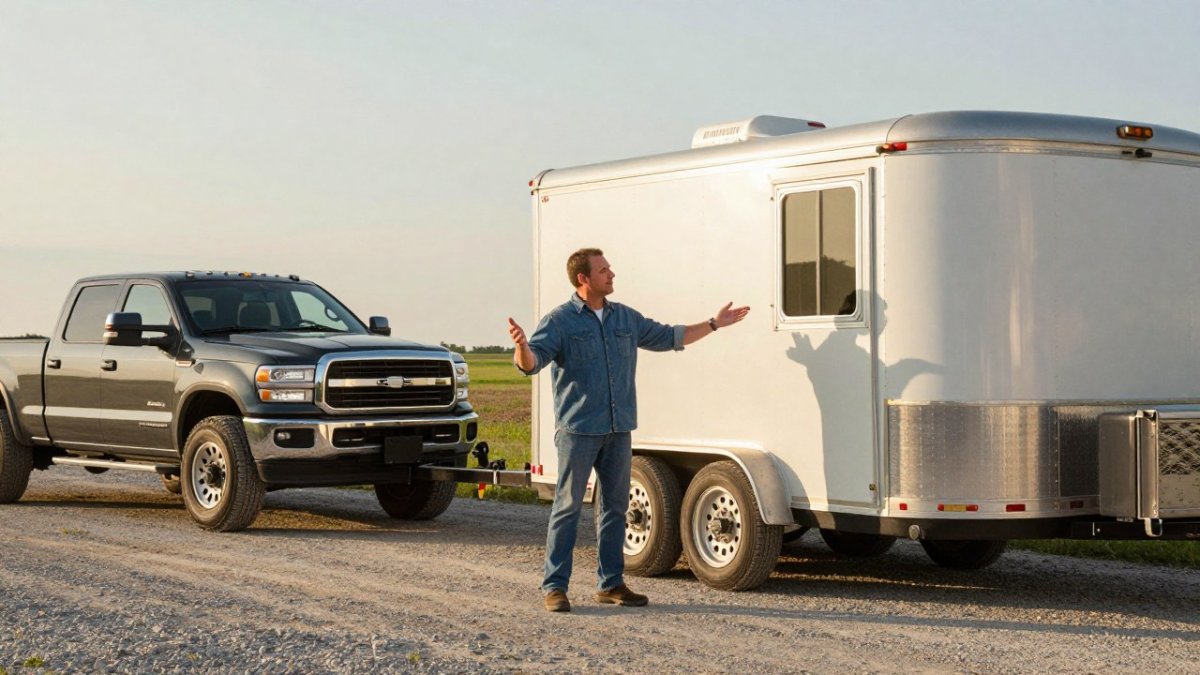
A heavy trailer hitched to a truck that was never rated to pull it is a common and dangerous mistake.
Check your owner's manual for the maximum towing capacity.
Look at the door-jamb sticker too. It lists the gross vehicle weight rating (GVWR) and the gross axle weight ratings.
A tow vehicle with capacity to spare is generally the safer choice. Running near the maximum can wear the transmission, brakes and cooling system faster.
Doing the Payload and Combined-Weight Math
Add up the weight of the trailer, the cargo, the tools, the fuel, the passengers and the tongue weight. That total is your gross combined weight rating (GCWR) check. Your tow vehicle must stay under its GCWR when fully loaded.
Use this quick check:
- Trailer weight (empty): from the trailer's data plate
- Cargo weight: add every tool, material and piece of equipment
- Tongue weight: usually 10% to 15% of the loaded trailer weight
- Truck payload used: tongue weight + passengers + gear in the bed
If the numbers come close to the limit, go up a truck class or lighten the load.
Step 1: Choose the Right Hitch, Ball, and Coupler
The hitch connects your truck to the trailer, so it must match the weight you plan to pull.
Next, check the ball. The ball diameter and rating must match the coupler on the trailer.
Watch out: Using a ball rated below the trailer's weight can cause the ball to shear off while driving.
Before you pull out, make sure the coupler is fully latched. Lower the coupler onto the ball, close the latch, and insert the locking pin.
Step 2: Load Cargo and Set Tongue Weight Correctly
How you load a trailer matters as much as how much you load. Poor weight placement causes sway and steering problems at highway speed.
Applying the 60/40 Loading Rule
Place roughly 60% of the cargo weight in front of the trailer axles and 40% behind them. This puts the right amount of weight on the hitch.
Secure everything with tie-down straps or chains. Loose tools become dangerous projectiles in a sudden stop. Check the straps again after the first few miles.
Once loaded, measure tongue weight if you can. Too little tongue weight makes the trailer sway. Too much overloads the tow vehicle's rear axle.
Step 3: Pre-Trip Inspection of Tires, Lights, and Brakes
A heavy contractor trailer rewards a repeatable inspection, not a glance. Build a walk-around you run the same way every time, starting at the driver's door and moving counterclockwise so you never skip a station. Ten to fifteen minutes on flat, level ground catches most problems before they become roadside failures.
The Walk-Around Sequence
- Coupler and hitch: Confirm the coupler is seated fully on the ball, the latch is closed, and the locking pin is in. Give the trailer tongue a firm upward tug. Check that the hitch head and shank bolts are tight and that the receiver pin is clipped.
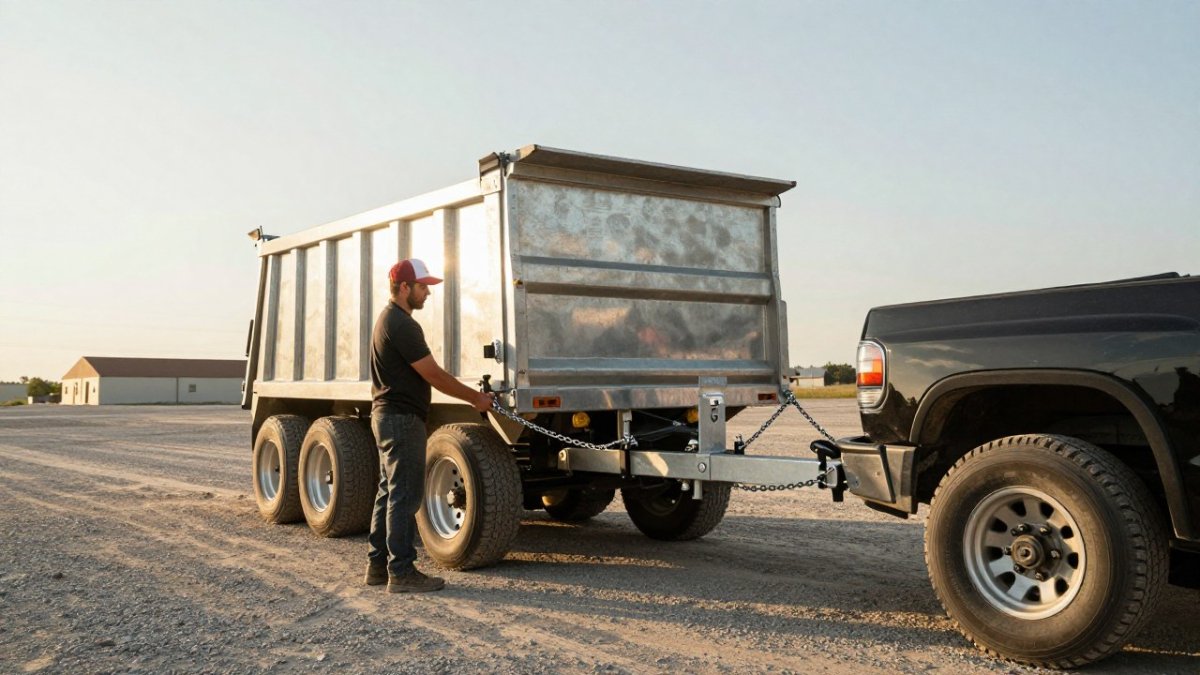
- Safety chains: Cross them under the coupler in an X so the tongue cannot drop to the pavement if the coupler fails. Attach them to the truck's designated points, not to the bumper, and leave enough slack to turn without dragging.
- Electrical connection: Plug in the seven-way connector until it locks, then test every circuit with a helper: running lights, left and right turn, brake lights, reverse, and trailer brakes. Look for a chafed or pinched cord where it passes the hitch.
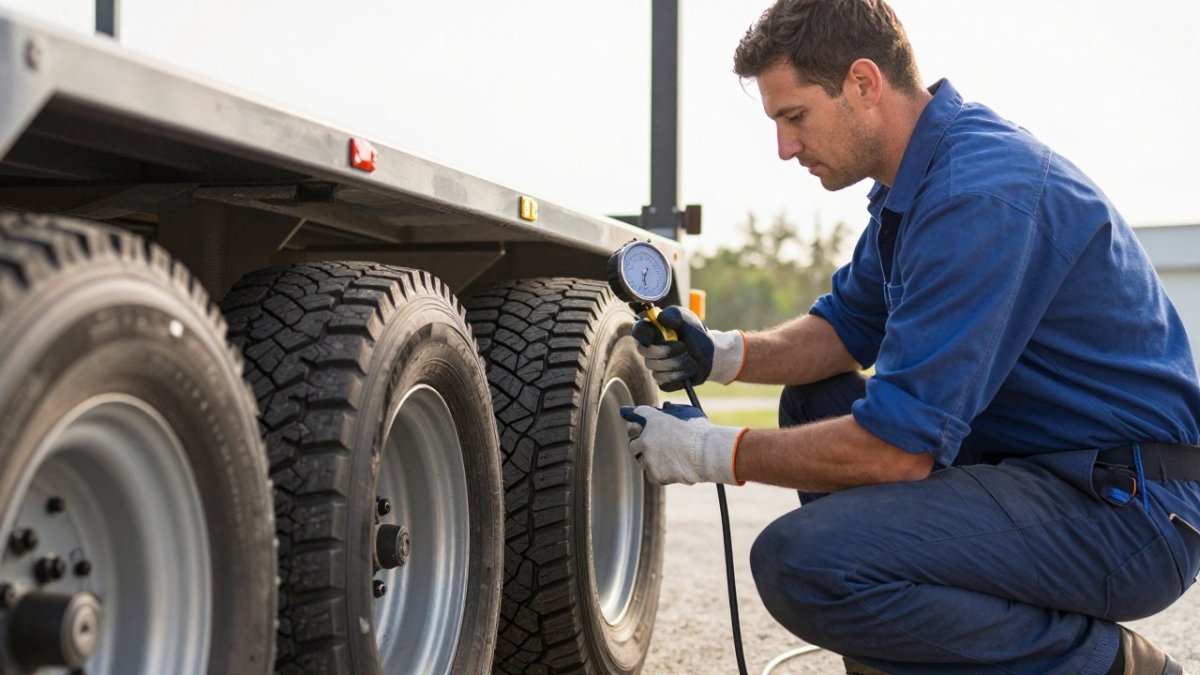
- Tires and wheels: Check pressure cold against the trailer's data plate, not the tire sidewall maximum. Look for uneven wear, sidewall cracks, and embedded objects. Confirm the spare is inflated and the lug wrench and jack fit the trailer's lugs. Check lug nuts for rust streaks or shine that suggest loosening, and re-torque to the trailer manufacturer's spec after the first 50 miles of a new or freshly serviced wheel.
- Brakes and breakaway: With the controller set, test trailer brakes at a walking pace. Pull the breakaway pin and confirm the trailer brakes lock, then reseat the pin and confirm the battery holds a charge.
- Lights and reflectors: Confirm every clearance light, marker, and reflector is intact and clean. A cracked lens fills with water and shorts the circuit.
- Load and securement: Shake the load. Every strap and chain should be tight, with the correct working load limit for the cargo. Check that binders are locked and that nothing can slide into the tongue or off the back under braking.
- Emergency equipment: Flares or triangles, a fire extinguisher rated for the load, a first-aid kit, a headlamp, gloves, and a charged phone.
Watch out: A coupler that looks latched but is not fully seated can pop off on the first hard bump. The upward tug is the only check that proves it.
Setting Up the Brake Controller and Breakaway System
Many heavy contractor trailers use electric brakes, which are run through a controller in the cab.
Confirm the breakaway system separately.
Watch out: A controller set too high locks the trailer tires on slick pavement and can start a jackknife. Set it in a lot, not on the road.
The walk-around comes down to a handful of checks, each with a specific target.
| Check | What to look for | Note |
|---|---|---|
| Coupler and hitch | Fully seated, latch closed, pin in | Upward tug confirms it |
| Safety chains | Crossed in an X under the coupler | Attach to designated points |
| Electrical connection | Seven-way plug locked, every circuit tested | Check cord at the hitch |
| Tires and wheels | Pressure cold vs. data plate | Re-torque lug nuts after 50 miles |
| Brakes and breakaway | Trailer brakes lock on pin pull | Reseat pin, confirm battery charge |
| Lights and reflectors | Every clearance light and reflector intact | Cracked lens lets in water |
| Load and securement | Straps and chains tight, binders locked | Check for shifting under braking |
| Emergency equipment | Flares or triangles, extinguisher, first-aid kit | Charged phone |
Driving Techniques: Speed, Following Distance, and Trailer Sway
A heavy contractor trailer changes the physics of every input. Plan on a lower cruising speed than you run empty, longer following distance, and gentler steering and braking. Speed limits for vehicles towing trailers can differ from those for other vehicles, so confirm the posted rules along your route rather than assuming the truck's limit applies.
Managing Sway Before It Starts
Sway usually comes from too little tongue weight, an unbalanced load, or speed. Load roughly 60% of the cargo weight ahead of the axles, keep heavy equipment low and centered, and recheck tongue weight after loading. If the trailer starts to sway, ease off the accelerator and hold the wheel steady.
Watch out: Speeding up to "pull out" of a sway is the move that turns a wobble into a loss of control. Slow down instead.
If a Trailer Tire Fails
A blowout on a loaded trailer feels like a hard pull and a bang. Grip the wheel with both hands, keep the truck pointed straight, and ease off the accelerator. Do not stab the brakes. Let the rig slow on its own, then brake gently once you are below highway speed and pull as far onto the shoulder as the surface allows.
If the Trailer Brakes Fail or Drag
If the trailer brakes stop responding, the truck's brakes still work but stopping distance grows. Reduce speed immediately, downshift to let the engine help, and find the first safe exit or wide shoulder. If the trailer brakes drag or smoke, pull over at once; a dragging brake can heat a wheel and start a fire. Let the hub cool before inspecting, and do not touch a hot drum or wheel.
Downhill Braking and Turns
On long grades, a lower gear can help the engine hold speed so the trailer brakes share the load. Riding the truck brakes the whole way down overheats them and can fade them out. On turns, swing wider than the truck alone requires and watch the trailer's inside wheel path; a heavy trailer cuts the corner more than the truck does. Signal early, check mirrors twice, and change lanes only when you can see the trailer's full length in the mirror.
Backing Up and Reversing with a Heavy Trailer
Backing a heavy trailer is the skill that trips up most new haulers. The trick is to hold the bottom of the steering wheel and move your hand in the direction you want the trailer to go. Small steering inputs make big changes, so go slowly.
Practice in an open area first. Set up cones and try to back between them until the movement feels natural. Get out and look often, and use a spotter when you can.
Your First Heavy Haul: Practice Runs and Emergency Gear
Before your first real job, take the rig on a few short practice trips.
Keep emergency gear in the truck. Pack road flares, a headlamp, work gloves, a tire jack that fits your trailer, and a lug wrench. A basic first-aid kit is worth having too.
Know what to do if something goes wrong. If you lose a tire, stay calm, signal, and pull over on level ground.
Scheduling Your Next Trailer Check or Service Visit with DoubleTake
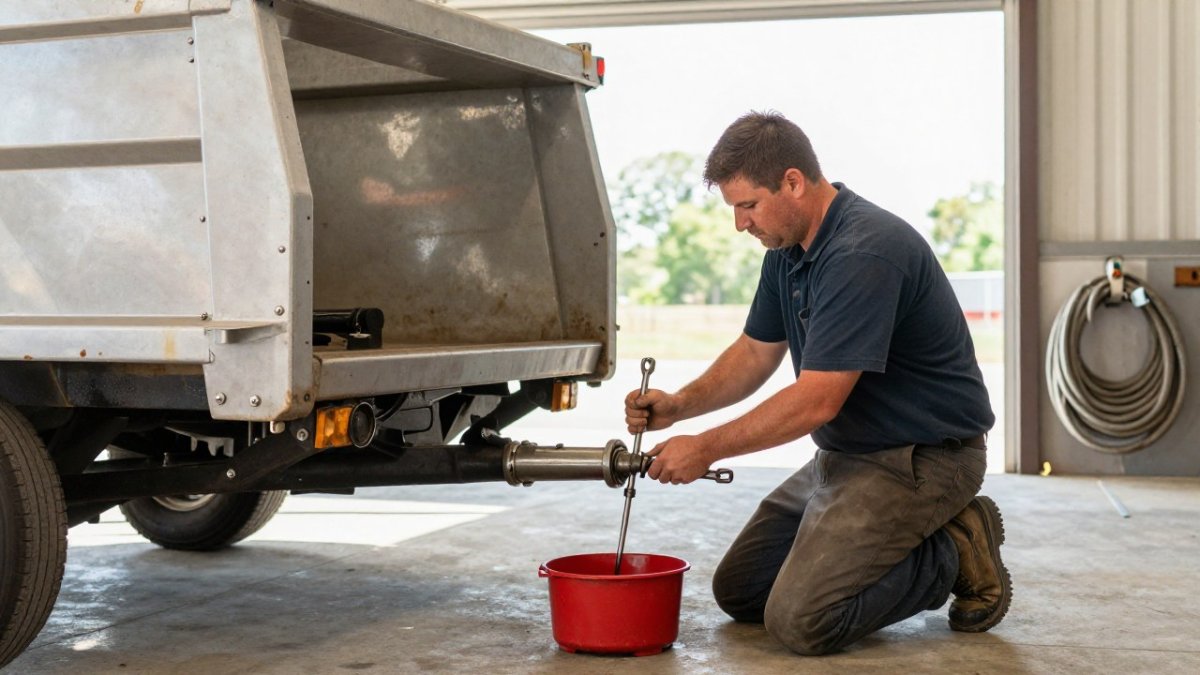
Regular maintenance keeps a heavy trailer safe and reliable. Schedule brake inspections, bearing service and tire checks on a set interval, especially if you haul every week.
Our team at DoubleTake Trailer Sales can help with service and parts for the trailers we sell.
Ready to find a trailer built for your job? Visit DoubleTake Trailer Sales to browse inventory, ask about custom builds, or schedule a service visit.
Frequently Asked Questions
What is the 80% rule when towing?
The 80% rule suggests keeping the loaded trailer's weight at or below 80% of your tow vehicle's rated towing capacity. This leaves a margin for hills, wind, and braking, and it protects the drivetrain and brakes from constant strain. Check the capacity on the vehicle's door placard and owner's manual, then add up the trailer, cargo, and any gear in the truck bed. Pricing and specification details for DoubleTake trailers are available from the sales team or on the DoubleTake website.
What is the 60/40 rule for loading a trailer?
The 60/40 rule places about 60% of the cargo weight in the front half of the trailer, ahead of the axles, and about 40% behind them. This positions roughly 10% to 15% of the total load on the hitch as tongue weight, which keeps the trailer stable. Too much weight at the rear can cause trailer sway, while too little can lift the tow vehicle's front wheels and reduce steering control.
How do you reverse a pickup with a trailer?
Place a hand at the bottom of the steering wheel and move it in the direction you want the trailer to go. Make small steering inputs and back up slowly, using a spotter outside the vehicle when possible. Practice in an open area before backing into a tight job site, and use mirrors frequently to check the trailer's angle.
What should you check before towing a heavy contractor trailer?
Confirm that the coupler is fully latched and locked, the safety chains are crossed underneath the coupler, and the electrical connector is secure. Check tire pressure and lug nuts, verify that the trailer lights and brakes work, and make sure the breakaway cable is attached to the tow vehicle. Confirm that the cargo is tied down and the total weight stays within the rated limits.