 How-to
How to Maintain Dump Trailer Hydraulic Systems
Last Updated: November 8, 2026
Quick Summary
Maintaining dump trailer hydraulic systems starts with checking fluid level and inspecting for leaks before every lift. Change the fluid every one to two years, or sooner if it looks milky or dark, and bleed the system by cycling the bed several times. Keep the battery, wiring, and cylinder rod clean and dry to prevent most failures.
- Check the reservoir with the bed fully down and the cylinder retracted for a true reading.
- Clear amber fluid is healthy; milky means water and dark or gritty means it is overdue.
- Skipping the bleed step is the most common reason a fresh fluid change still lifts poorly.
- Weak batteries and loose grounds are a common cause of poor pump performance.
- A wet cylinder rod means a seal is failing, while a shiny dry rod is healthy.
Table of Contents
- What to Check Before Every Dump Trailer Hydraulic Lift
- Dump Trailer Hydraulic Fluid Change Interval and Step-by-Step Service
- Dump Trailer Hydraulic Pump Maintenance for the Power Unit
- Dump Trailer Hydraulic Cylinder Maintenance and Inspection
- Dump Trailer Hydraulic System Troubleshooting: Slow, Weak, or Uneven Lifting
- Seasonal and Cold-Weather Care for Your Hydraulic Lift
- Ordering Parts and Service for Your Dump Trailer Hydraulic System
- Frequently Asked Questions
What to Check Before Every Dump Trailer Hydraulic Lift
A five-minute walkaround before every lift prevents most hydraulic failures. Maintaining dump trailer hydraulic systems starts with two quick checks: fluid level and leak inspection. Skip them, and a slow lift on a job site becomes a tow-truck call.
The pump is the heart of a dump trailer hydraulic system, but the fluid and hoses are the blood vessels. Check both before you raise the bed.
Fluid Level and Condition at a Glance
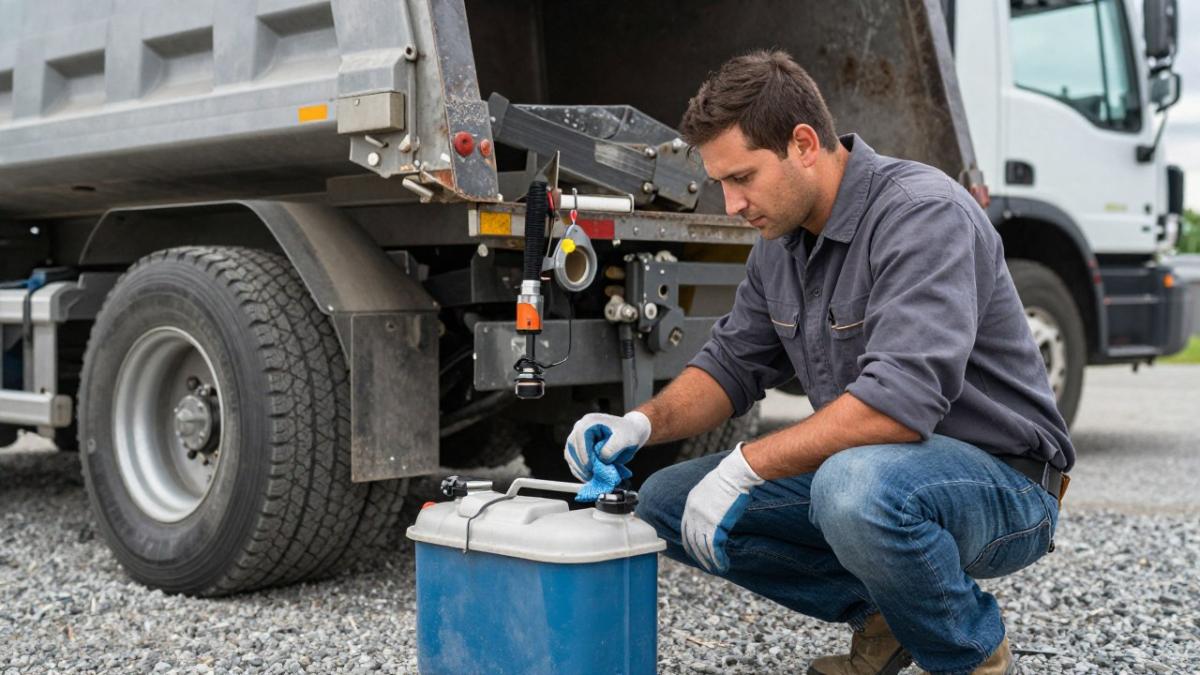
Check the reservoir with the bed fully down and the cylinder retracted. That is the only reading you can trust.
- Level: Fluid should sit at the full mark, not below it.
- Color: Clear amber is healthy. Milky means water got in. Dark or gritty means it is overdue for a change.
- Smell: A burnt smell points to overheating.
Hoses, Fittings, and Connection Leaks
Run your hand along each hose and look under every fitting. A weeping fitting leaves an oily film on the frame.
- Check for cracks, rubbing, and bulges.
- Tighten loose fittings, but do not overtighten.
- Wipe away old fluid so new leaks show up clearly.
For a full list of wear parts to inspect and keep on hand, see our guide to essential trailer parts for regular maintenance.
Dump Trailer Hydraulic Fluid Change Interval and Step-by-Step Service
Most dump trailer hydraulic systems need a fluid change every one to two years, or sooner if the fluid looks milky or dark. Heavy use in dusty or wet conditions shortens that window.
Here is a general service sequence for a dump trailer hydraulic fluid change:
- Lower the bed fully and park on level ground. The cylinder must be retracted so the reservoir reads true. Set the parking brake and chock the wheels.
- Clean the reservoir cap and surrounding area before opening anything. Dust and grit are the most common contaminants in a trailer hydraulic system.
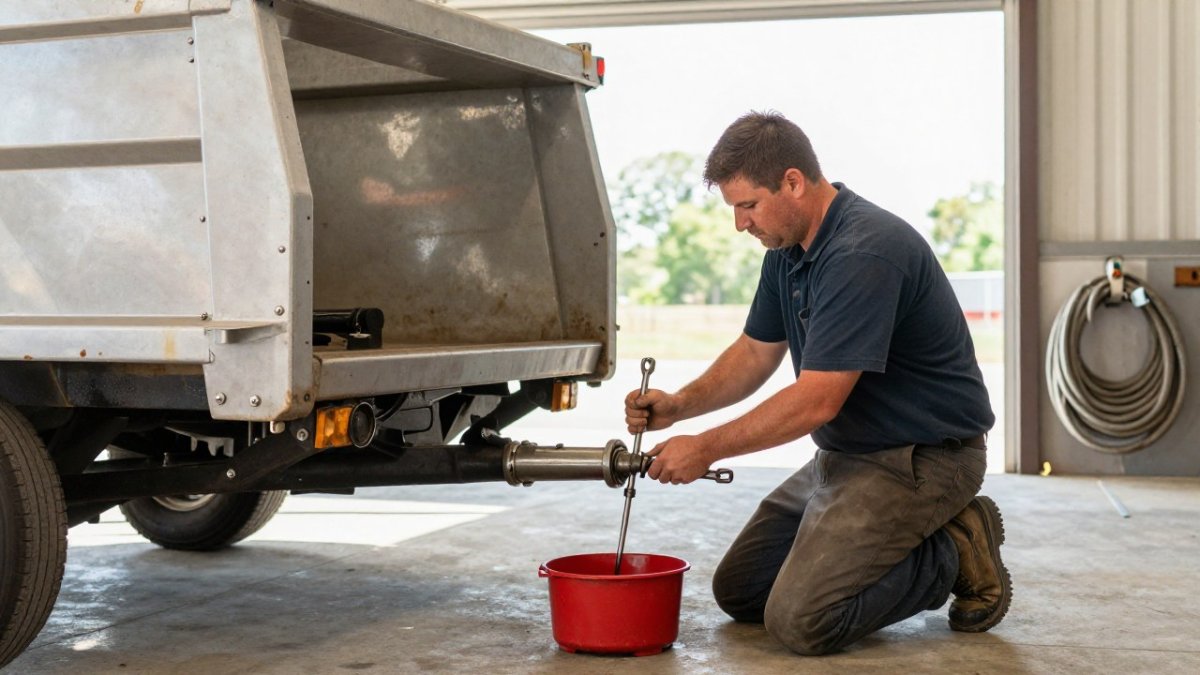
- Place a drain pan under the reservoir sized for the full system volume, typically several quarts on a dump trailer, so use a pan that will not overflow.
- Open the drain plug and let the old fluid flow out. If the reservoir has no drain plug, use a hand pump or suction gun through the fill port.
- Flush with fresh fluid if the old fluid was contaminated. Pour a small amount of new fluid through the reservoir and let it drain to carry out sludge. Do not run the pump dry during this step.
- Replace the drain plug and fill to the full mark with the specified fluid. Fill slowly to avoid trapping air.
- Cycle the bed up and down several times to work out air, then recheck the level and top off.
- Check every fitting and hose end for leaks after the first full cycle.
Choosing the Right Fluid and Bleeding the System
Use the fluid grade your trailer's manual specifies. Most dump trailer power units call for a standard hydraulic oil, and the manual will state the viscosity grade and any temperature range. Never mix brands or grades, and never substitute motor oil or transmission fluid unless the manual explicitly allows it.
Bleeding matters as much as filling. Air in the system causes spongy, uneven lifting and can make a fresh fluid change feel like a failure. Cycle the bed slowly through several full up-and-down strokes, pausing at the top and bottom, then recheck the level. If lifting is still uneven after three or four cycles, stop and look for a loose fitting or a worn seal that is drawing air.
Watch out: skipping the bleed step is the most common reason a fresh fluid change still lifts poorly, and running the pump with air in the system can damage the pump.
Dispose of old fluid at a local recycling center or an auto parts store that accepts used oil. Never pour it on the ground or into a storm drain. Keep the old fluid in a sealed container until you can drop it off.
Dump Trailer Hydraulic Pump Maintenance for the Power Unit
The power unit needs clean power and clean fluid. Weak batteries and loose grounds are a common cause of poor pump performance, so check them before assuming the pump has worn out.
Check these on a regular schedule:
- Battery: Keep terminals clean and tight. A low battery spins the pump motor slowly and strains it.
- Wiring: Inspect electrical connections for corrosion and fraying.
- Mounting bolts: Vibration loosens them over time.
- Motor: Listen for grinding or whining during a lift.
Dump Trailer Hydraulic Cylinder Maintenance and Inspection
Inspect the cylinder for scoring, dents, and fluid seeping past the seals. A shiny, dry rod is healthy. A wet rod means a seal is failing.
- Wipe the rod clean before and after use.
- Lubricate hinges and pivot points regularly.
- Watch for uneven movement, which often signals a bent rod or trapped air.
Catching a worn seal early saves the cylinder. Let it run, and you risk scoring the rod and a much bigger repair.
Dump Trailer Hydraulic System Troubleshooting: Slow, Weak, or Uneven Lifting
Match the symptom to the likely cause before you buy parts. Work from the cheapest and safest check upward, and stop any diagnosis that requires reaching under a raised bed until the bed is supported.
| Symptom | Likely Cause | First Check | Next Step |
|---|---|---|---|
| Slow lifting | Low fluid, weak battery, or cold fluid | Check reservoir level and battery charge | Top off fluid, charge battery, cycle slowly |
| Weak lift under load | Clogged filter, worn pump, or low fluid | Inspect filter and fluid level | Replace filter, test pump pressure |
| Uneven movement | Air in system or bent rod | Bleed system per the fluid service steps | Inspect cylinder rod for bends or scoring |
| Bed drifts down | Internal seal leak or faulty valve | Check for external leaks first | Pressure-test the cylinder and valve |
| Overheating | Overloading, low fluid, or restricted return line | Reduce load and check fluid level | Inspect return line and cooler if equipped |
| Will not raise at all | Dead battery, blown fuse, or faulty switch | Check battery, fuse, and switch continuity | Test motor and pump |
Start with the cheapest fix and work up. Most slow-lift complaints end at the fluid level or the battery. A bed that drifts down under load is different: that usually points to an internal seal or valve problem, and it should be repaired before the trailer is used again.
Safety Before You Diagnose
Before any inspection under a raised bed, lower the bed fully or support it with rated jack stands or the manufacturer's bed prop. Never rely on the hydraulic system to hold a raised bed while you work under it. Relieve pressure at the valve before loosening any fitting, and wear eye protection, a pinhole leak in a pressurized line can inject fluid into skin, which is a medical emergency.
A Simple Diagnostic Order
- Confirm the battery is charged and the ground is clean and tight.
- Check fluid level with the bed down and the cylinder retracted.
- Look for external leaks at hoses, fittings, and the cylinder rod.
- Bleed the system if lifting is spongy or uneven.
- Test the pump and valve only after the simple checks pass.
This order keeps most owners from replacing a pump when the real problem was a loose ground or a low reservoir.
Seasonal and Cold-Weather Care for Your Hydraulic Lift
Cold weather thickens hydraulic fluid and slows every lift. Before winter, check the fluid for water contamination and switch to a grade rated for low temperatures if your manual allows.
- Store the trailer with the bed down.
- Keep the battery charged during storage.
- Cycle the system slowly on the first cold lift.
- Clear snow and ice from the cylinder rod before use.
Summer brings its own risk: heat and heavy loads push fluid temperatures up. Check the level more often during long workdays.
Ordering Parts and Service for Your Dump Trailer Hydraulic System
Keeping a small spares kit on hand, such as a spare hose, fittings, seals, and fluid, can help you handle minor breakdowns quickly.
When you need parts or service, DoubleTake's in-house parts and service department can help you find the right components for your trailer. If you are also weighing a new trailer, our heavy duty dump trailer buying guide walks through the models and options.
Maintaining dump trailer hydraulic systems comes down to routine checks and quick fixes, not expensive repairs. If your trailer needs parts, service, or a replacement, DoubleTake Trailer Sales offers an in-house parts and service department, custom builds to your specs, and flexible financing options. Get started with DoubleTake Trailer Sales and keep your trailer working as hard as you do.
Frequently Asked Questions
How often should I change the hydraulic fluid in a dump trailer?
Fluid change intervals vary by manufacturer, so check your trailer's manual for the specified schedule. If you notice the fluid turning dark, milky, or gritty, change it sooner regardless of hours. Check the fluid level and condition before every lift, and keep a simple service log so you know exactly when the last change happened. Harsh conditions like heavy dust or frequent cold-weather use shorten the interval.
Why is my dump trailer hydraulic lift slow or weak?
Slow or weak lifting usually traces to low fluid, a clogged filter, air in the system, a weak battery, or a failing pump. Start by checking the fluid level and condition, then inspect the battery and electrical connections at the power unit. If the motor runs but the bed barely moves, bleed the system to remove air. Persistent weakness after those checks points to a worn pump or cylinder seals, so have a service tech pressure-test the system.
What is the most common problem in a dump trailer hydraulic system?
Leaks at hoses and fittings are the most common issue, followed by low or contaminated fluid. Hoses rub against frames, fittings loosen from vibration, and seals wear over time. A quick pre-use walkaround that checks hoses, connections, and the reservoir catches most problems before they strand you on a job site. Replacing a worn hose is far cheaper than repairing a pump damaged by running low on fluid.
How do I know if my dump trailer hydraulic pump is failing?
Warning signs include a motor that runs hot, a whining or grinding noise under load, slow lift times even with full fluid, and fluid weeping around the pump housing. Check the battery and wiring first, since weak voltage makes a healthy pump act tired. If electrical checks pass and performance still drops, have the pump tested. Catching a failing pump early protects the cylinder and keeps repair costs down.