 blog
Essential Trailer Parts for Regular Maintenance (2026)
Table of Contents
- The 9 Essential Trailer Parts That Keep You Rolling
- Your Trailer Maintenance Checklist: A Prioritized Parts Guide
- Trailer Tire Maintenance: Pressure, Tread, and Wear Limits
- Trailer Brake Maintenance: Electric, Surge, and Breakaway Systems
- Trailer Wheel Bearing Maintenance: Greasing, Seals, and Replacement Cues
- Wheels, Lug Nuts, and Fasteners: The Parts You Torque, Not Guess
- Electrical, Suspension, and Towing Connections: The Rest of the Essential Parts
- What to Ignore, What to Stock, and How to Get Parts Fast
- Frequently Asked Questions
Last Updated: October 12, 2026
The 9 Essential Trailer Parts That Keep You Rolling
The essential trailer parts for regular maintenance are tires, brakes, wheel bearings, lug nuts, lights and wiring, suspension components, the coupler and hitch ball, safety chains, and structural seals.
Trailer maintenance is the routine inspection and replacement of wear parts so your trailer stays safe and road-ready. It covers tires, brakes, bearings, electrical systems, and towing connections.
Below, we cover nine common wear parts, plus a prioritized checklist you can use this weekend.
Your Trailer Maintenance Checklist: A Prioritized Parts Guide
A good trailer maintenance checklist starts with safety-critical parts, then moves to wear items, then to appearance. Here is the order we recommend.
- Tires and pressure - check before every trip
- Brakes and breakaway system - inspect monthly
- Wheel bearings and hubs - grease annually or every 12,000 miles
- Lug nuts and fasteners - torque before every trip
- Lights and wiring - test before every trip
- Suspension, axles, and springs - inspect every six months
- Coupler and hitch ball - check before every trip
- Safety chains and hooks - inspect monthly
- Deck, doors, seals, and hinges - inspect seasonally
Work top to bottom. Safety-critical parts come first because a failure there causes accidents, not inconvenience.
Trailer Tire Maintenance: Pressure, Tread, and Wear Limits
Trailer tire maintenance is the single highest-value habit you can build. Tires carry the load, and they fail more often than any other part.
Check tire pressure cold, before you drive. Underinflation builds heat and causes blowouts. Look for uneven tread wear, which signals alignment or bearing problems.
Replace tires when tread drops to 2/32 of an inch, or sooner if you see cracking or bulging sidewalls.
Trailer Brake Maintenance: Electric, Surge, and Breakaway Systems
Trailer brake maintenance covers three systems: electric brakes, surge brakes, and the breakaway system. Each one needs a different check.
Electric brakes use a controller in your tow vehicle. Test them by pulling the manual override and listening for the magnets to engage.
The breakaway system is the part most owners forget.
Inspect brake shoes, drums, and wiring for wear and corrosion. Replace worn parts before they score the drum.
Trailer Wheel Bearing Maintenance: Greasing, Seals, and Replacement Cues
Trailer wheel bearing maintenance keeps your hubs spinning freely and cool. Bearings sit inside the hub and need clean grease and intact seals.
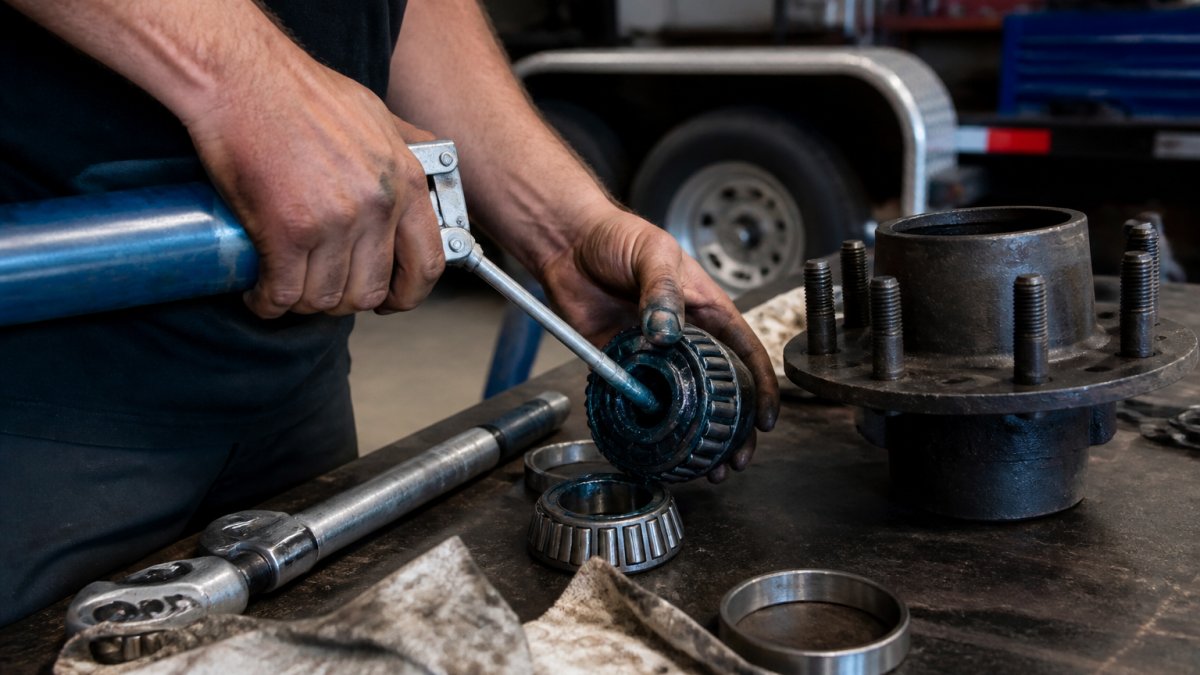
Repack bearings annually, or every 12,000 miles, whichever comes first. More often if you launch boats or drive through water.
Watch for these replacement cues:
- Grinding or rumbling noise while rolling
- Excess play when you rock the wheel
- Grease leaking past the seal
- A hub that runs hot after a short drive
Replace the seal every time you repack. Seals are cheap and a failed seal ruins the bearing.
Wheels, Lug Nuts, and Fasteners: The Parts You Torque, Not Guess
Wheels, lug nuts, and fasteners hold everything together, so torque them to spec, never by feel.
Check lug nut torque before every trip and after any wheel service.
Inspect wheels for cracks, bent rims, and rust around the studs. Replace damaged lug nuts, not just tighten them.
Keep a torque wrench and a spare set of lug nuts in your tow vehicle.
Electrical, Suspension, and Towing Connections: The Rest of the Essential Parts
The electrical system, suspension, and towing connections round out your essential trailer parts for regular maintenance. These keep you legal, visible, and stable, and each one has its own inspection steps and wear cues. Skipping any of them is how trailers end up on the shoulder or, worse, in the next lane.
Electrical System, Wiring, and Lights
Test running lights, brake lights, turn signals, and marker lights before every trip. A helper at the rear of the trailer saves time; if you tow alone, back up to a wall or garage door and watch the reflection.
Most light problems trace back to a bad ground, not a burned-out bulb. When a light fails, check the ground wire at the trailer frame before you replace anything. Look for:
- Chafed or pinched wiring where it passes through the frame or tongue
- Corroded connectors, green or white crust on terminals
- Cracked or moisture-filled lens housings
- A weak breakaway battery that will not hold a charge
Replace cracked lenses and corroded connectors rather than cleaning them repeatedly. Use dielectric grease on connectors to slow corrosion, especially if the trailer sits outside or gets launched in water.
Suspension, Axles, and Springs
Inspect springs for cracks, flattened leaves, and missing or shifted leaf clamps.
Check axle alignment by measuring from a fixed point on the frame to the center of each spindle on both sides.
Equalizer links, hangers, and wet bolts are common wear points on tandem-axle trailers. Grease wet bolts at every service and replace them when the grease fitting will not take grease.
Coupler and Hitch Ball
Match the coupler to the correct hitch ball size, a 2-inch coupler needs a 2-inch ball, and a 2-5/16-inch coupler needs a 2-5/16-inch ball. A loose fit causes sway and can uncouple under load.
Inspect the coupler latch for wear, slop, or a latch that will not lock down fully. Adjust or replace the coupler if the latch does not hold the ball snugly.
Safety Chains and Hooks
Cross the chains under the coupler in an X pattern and attach them to the tow vehicle's frame or hitch, never to the ball or ball mount.
Inspect hooks for wear, stretch, and a bent or missing safety latch. Replace any chain with cracked links, heavy rust, or stretched hooks. Chains are inexpensive and one of the few parts that can save the trailer if the coupler fails.
Breakaway System
The breakaway system uses a small battery to lock the trailer brakes if the trailer separates from the tow vehicle. Test the breakaway battery monthly and replace it when it will not hold a charge. Pull the breakaway pin and confirm the brakes engage, then reset the pin before towing.
Prioritize These Four Systems
If you only have an hour before a trip, check in this order: coupler and hitch ball, safety chains, lights and wiring, then suspension. The first two prevent separation, the third keeps you visible, and the fourth keeps the trailer tracking straight. Everything else can wait until you are home.
What to Ignore, What to Stock, and How to Get Parts Fast
Not every part needs the same attention. Focus your time and money where failure hurts most, and stock the parts and tools that turn a roadside breakdown into a 20-minute fix instead of a tow bill.
Tools for Routine Service
A small, dedicated trailer kit keeps you from hunting for tools every time you service the trailer. Most owners find these cover the vast majority of routine jobs:
- A calibrated torque wrench sized for your lug nuts
- A grease gun with the correct grease for your bearings and wet bolts
- A lug wrench or impact wrench with the correct socket
- Jack and jack stands rated for the loaded trailer weight
- A test light or multimeter for electrical checks
- Wire strippers, crimpers, and heat-shrink connectors
- A tire pressure gauge rated for your trailer's inflation pressure
Keep the kit in the tow vehicle, not the trailer. If the trailer is the thing that failed, you want the tools with you.
Spare Parts to Carry
Stock these spares in your tow vehicle:
- A spare tire, inflated and inspected, plus the tools to change it
- A set of lug nuts and a torque wrench
- Spare bearings, races, and seals for your hub size
- Fuses, bulbs, and wire connectors
- A breakaway battery
- A spare coupler latch pin and safety chain hooks
- A tube of the grease your bearings use
Skip stocking cosmetic parts. They can wait until you are home.
Roadside Preparedness
The most common roadside failures are flat tires, seized bearings, failed lights, and coupler or chain problems. A kit that addresses those four covers most emergencies. Add a reflective triangle or flares, a flashlight or headlamp, and gloves. If you tow at night or in remote areas, a portable jump pack and a small air compressor earn their space.
Maintenance Differences by Trailer Type and Use
Maintenance needs shift by trailer type, load, mileage, and storage:
- Utility and cargo trailers, tires, lights, and coupler wear dominate. Check lug torque often if the trailer sees frequent loading and unloading.
- Dump trailers, brakes and suspension work hard. Inspect brake shoes, drums, and springs more often than the annual baseline.
- Boat trailers, bearings and seals are the priority. Launching in water contaminates grease, so repack bearings more frequently and inspect seals after every launch.
- Horse and livestock trailers, electrical, floor, and door hardware matter most. Check interior lighting, latches, and floor integrity regularly.
- Car haulers and equipment trailers, tie-downs, deck condition, and axle alignment are the focus. Inspect straps, chains, and binders before every load.
- Trailers stored outdoors, expect faster corrosion on connectors, chains, and fasteners. Grease and inspect more often.
Maintenance Records and Cost Planning
Keep a simple log for each trailer: date, mileage, what was inspected, what was replaced, and what it cost. Over a season, the log shows which parts fail repeatedly and whether a repair is cheaper than replacement. It also gives you a service history if you sell the trailer. A log takes five minutes per service and prevents the most common maintenance mistake, forgetting when a part was last checked.
Getting Parts Fast
Match parts to the trailer's axle, hub, and brake ratings, not just the trailer size. Bring the trailer's VIN, axle tag, or the old part number when you buy replacements. For parts and service, DoubleTake Trailer Sales runs an in-house parts department and can match the right components to your trailer. Our team also builds custom trailers to your specifications if you are adding capacity.
Frequently Asked Questions
What parts of a trailer should be checked regularly?
Prioritize tires and tire pressure, lug nuts, brakes (including the breakaway battery), wheel bearings and hubs, lights and wiring, suspension components, coupler and hitch ball, safety chains, and the deck or floor. A trailer maintenance checklist should cover these at every pre-trip inspection, with deeper checks on bearings, brakes, and suspension at least annually or before long hauls.
How often should you inspect trailer tires and brakes?
Check tire pressure and tread before every trip, and inspect for cracks or bulges monthly. Brakes should be checked at least every 3,000 miles, or annually if you tow less. For trailer tire maintenance, replace tires every 5-6 years regardless of tread, and for trailer brake maintenance, replace shoes or pads when lining thickness drops below 1/8 inch or you notice grabbing, noise, or longer stopping distances.
How do you know when trailer bearings need to be replaced?
Signs include a grinding or rumbling noise while towing, excessive play when you rock the wheel by hand, a wheel that runs hotter than the others, or grease leaking past the seal. For trailer wheel bearing maintenance, repack bearings every 12,000 miles or annually, and replace them if you see pitting, discoloration, or rough rotation when you spin the hub.
What should be included in a trailer maintenance checklist?
A practical trailer maintenance checklist covers: tire pressure, tread depth, and sidewall condition; lug nut torque; brake function and breakaway battery charge; bearing grease and seal condition; all lights (running, brake, turn, reverse); wiring connections; suspension springs and shackles; coupler latch and hitch ball wear; safety chains and hooks; and deck, door, and ramp hardware. Note the date and mileage each time you complete it.
Trailer maintenance comes down to a short list of parts checked on a regular schedule. Miss that schedule and the road will remind you. DoubleTake Trailer Sales supports owners with an in-house parts department, custom trailer builds, and no credit check financing options. Get started with DoubleTake Trailer Sales and keep your trailer rolling with the right parts on hand.