 blog
blog
Best Trailers for Mobile Food Businesses: 2026 Guide
Table of Contents
- Trailer Types and Sizes for Mobile Food Businesses
- Quick Comparison: Trailer Options at a Glance
- Used vs New Custom Concession Trailers: Which Makes Sense
- Food Trailer Health Department Requirements You Must Meet
- Mobile Food Business Financing Options and Insurance
- Customization, Equipment, and Operational Workflow
- Resale Value and Depreciation for Mobile Food Trailers
- Conclusion
- Frequently Asked Questions
Last Updated: September 27, 2026
Trailer Types and Sizes for Mobile Food Businesses
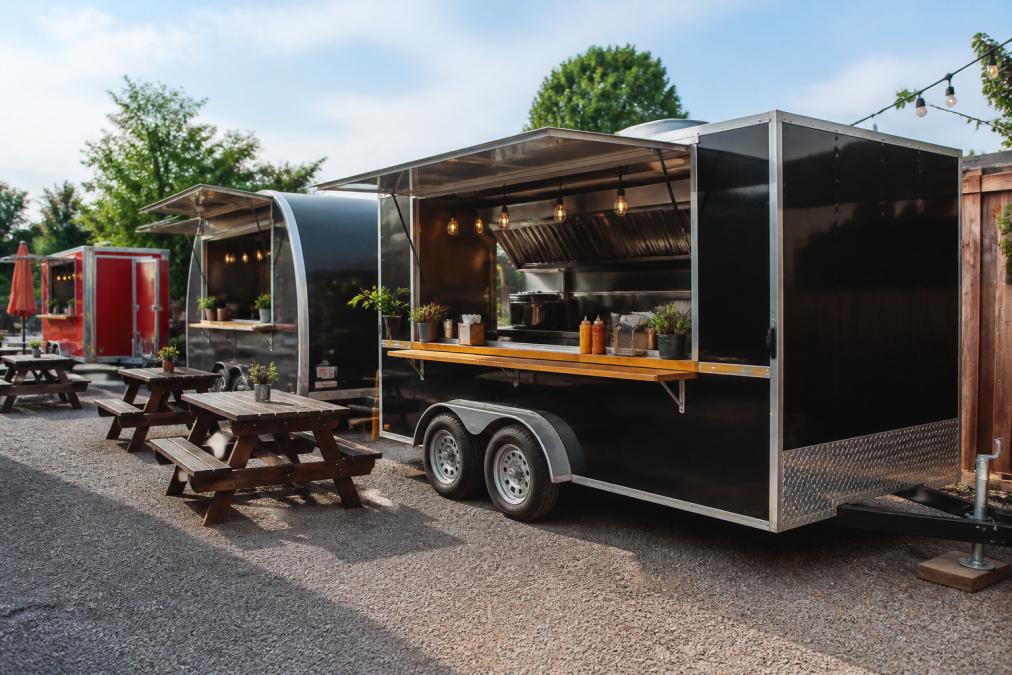
Choosing among the best trailers for mobile food businesses starts with one decision: what you plan to cook and where you plan to park. A concession trailer is a towable, self-contained mobile kitchen built on a trailer chassis, designed for food prep and service at fairs, lots, and private events. Most vendors settle on one of two paths: a purpose-built concession trailer or a food truck conversion.
Here's the practical breakdown.
| Trailer Type | Typical Size | Best For | Towing Demand |
|---|---|---|---|
| Compact concession | 6x10 to 7x12 ft | Coffee, desserts, single-item menus | Mid-size SUV or half-ton |
| Standard concession | 8.5x14 to 8.5x16 ft | Burgers, tacos, full prep lines | Half-ton truck minimum |
| Large catering unit | 8.5x18 to 8.5x20 ft | Multi-item menus, catering crews | Three-quarter-ton truck |
Concession Trailer vs. Food Truck Conversion
A concession trailer tows behind your vehicle and detaches at the site. A food truck conversion is a drivable vehicle with the kitchen built in. The trailer wins on startup costs, insurance, and maintenance because you're not paying for or repairing an engine, transmission, and drivetrain. The truck wins on maneuverability in tight urban spots and the ability to relocate without a tow vehicle.
Quick Comparison: Trailer Options at a Glance
New custom builds, used units, and stock inventory each solve a different problem. The right pick depends on your timeline, budget flexibility, and how specific your menu concept is. Most top-ranking pages stop at a table and a sales pitch. What they skip is the actual decision logic, what you give up with each path, and how the numbers shake out over a realistic ownership window.
| Option | Typical Lead Time | Customization | Upfront Cost Pattern | Best For |
|---|---|---|---|---|
| New custom build | Several weeks to a few months | Full control over layout and equipment | Highest upfront; lowest near-term repair risk | Vendors with a defined menu and time to wait |
| New stock inventory | Immediate to a few weeks | Limited to what's on the lot | Mid-range; you pay for someone else's spec choices | Vendors who need to launch now |
| Used concession trailer | Immediate | Whatever the previous owner built | Lowest sticker price; highest variance in condition | Tight budgets and fast starts |
The decision logic most buyers get wrong
The mistake is treating these as three price points on the same product. They are three different risk profiles.
- New custom build. You control the service window, cooking line, electrical load, and tank sizes. The trade-off is time and a deposit. Builders typically require a deposit at contract signing and progress payments at milestones (frame, systems rough-in, finish). Ask for the payment schedule in writing before you sign, a builder who won't put milestones in the contract is a red flag.
- New stock inventory. You trade customization for speed. The catch is that stock units are built to a generic spec, which may mean a service window on the wrong side for your busiest pitch, or a hood sized for a griddle when you plan to fry. Walk the unit and map your menu against the actual equipment before you commit.
- Used concession trailer. The cheapest way to start cooking, and the highest-variance purchase. Two used trailers at the same price can differ by thousands in deferred maintenance. Always inspect the chassis, axles, and bearings, not just the kitchen.
How to compare them on equal footing
Pricing depends on size, equipment, and build specifications, so request a build quote rather than guessing from online listings. DoubleTake Trailer Sales offers in-stock inventory and custom builds, which means you can compare both paths side by side before deciding.
Used vs New Custom Concession Trailers: Which Makes Sense
Used vs new custom concession trailers comes down to three trade-offs: cost, control, and risk. A used unit gets you cooking faster and often for less money upfront, but you inherit someone else's kitchen layout and whatever wear the chassis and systems have accumulated. A new custom build costs more and takes longer, but every inch is designed around your menu and workflow.
The depreciation curve nobody explains
Mobile food trailers do not depreciate like cars. The steepest drop happens in the first year or two, when a new build becomes a used unit on paper. After that, the curve flattens, a well-maintained trailer with a clean stainless steel interior and working equipment can hold a meaningful share of its value for years. That shape has two implications:
- Buying used lets you skip the steepest part of the depreciation curve. You pay the flattened price and, if you maintain the unit, you can resell it later without taking a large second hit.
- Buying new only makes financial sense if you plan to keep the trailer long enough for the flat portion of the curve to outweigh the first-year drop. For most operators, that means a multi-year horizon, not a one-season test.
What actually drives resale value
The secondary market rewards documented maintenance above almost everything else. Keep records of service, parts replacements, and upgrades. When you sell, buyers pay more for a trailer with a service history than one with a mystery past. The features that hold value are the ones that are expensive to retrofit: a sound chassis, properly sized axles, working plumbing and electrical, and a stainless steel interior.
A pre-purchase inspection checklist for used units
If you go used, inspect in this order. Chassis and running gear first, because they are the most expensive to fix and the hardest to hide.
- Frame for rust, cracks, or prior repairs
- Axles, springs, and bearings for wear or play
- Tires for age (check the date code, not just tread) and uneven wear
- Fresh water and waste water tanks for cracks, leaks, and correct capacity
- Plumbing for leaks and evidence of freeze damage
- Electrical panel, wiring, and generator or shore-power hookup
- Ventilation hood and fire suppression system condition and certification
- Refrigeration and cooking equipment under load, not just powered on
- Stainless steel surfaces for corrosion, delamination, or water damage
- Service window, door seals, and screens for gaps that fail health inspection
The hidden variable: code compliance
Health department approval is the variable that flips the math. A used trailer must already meet current code, or you will pay to bring it up to standard. A new build is code-compliant from day one if your builder knows the local requirements. Before you buy used, confirm the unit's current compliance status with your county health department, not with the seller.
Food Trailer Health Department Requirements You Must Meet
Food trailer health department requirements vary by state and county, but the core categories are consistent: a three-compartment sink, a handwashing sink with hot water, a potable fresh water tank, a waste water tank, proper refrigeration, and a ventilation hood over cooking equipment.
Permitting and Licensing Checklist
- Confirm your county health department's plan review process
- Submit kitchen layout drawings for approval
- Verify fresh water tank and waste water tank capacities meet local code
- Confirm three-compartment sink and handwash sink specifications
- Check fire suppression and ventilation hood requirements
- Obtain a business license and any mobile vendor permit
- Arrange commissary or servicing agreement if required
- Schedule the pre-operational health inspection
Mobile Food Business Financing Options and Insurance
Mobile food business financing options typically fall into three buckets: dealer financing, traditional bank loans, and equipment-specific lenders. Dealer financing is often the fastest route, especially for buyers with imperfect credit. Some dealerships, including DoubleTake Trailer Sales, offer no credit check financing options, which removes the biggest barrier for first-time vendors.
Customization, Equipment, and Operational Workflow
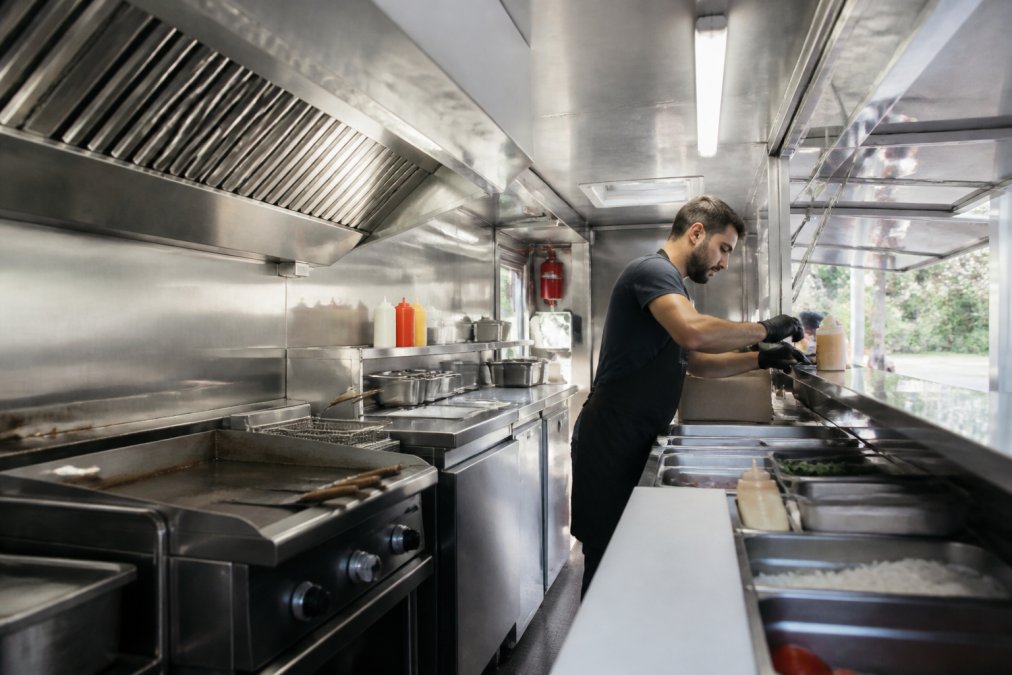
Customization decisions should follow your workflow, not your Pinterest board. Start with the service window position, then work backward through the cooking line, prep area, and storage. A layout that forces staff to cross paths during a rush costs you speed and sales.
Resale Value and Depreciation for Mobile Food Trailers
Mobile food trailers hold value better than most people assume, provided the chassis, plumbing, and electrical systems stay in good condition. A well-maintained trailer with a clean stainless steel interior and working equipment resells far faster than one with corrosion or water damage. Depreciation is steepest in the first year and flattens after that, which is why buying used can be a smart entry point and buying new can make sense if you plan to keep it long term.
Conclusion
The best trailers for mobile food businesses are the ones matched to your menu, your tow vehicle, and your local health department's requirements, not the biggest or flashiest unit on the lot. Get the layout, systems, and financing right, and the trailer becomes an asset that holds value and scales with your business.
Frequently Asked Questions
What are the essential health department requirements for mobile food trailers?
Most health departments require a three-compartment sink, a handwashing sink with hot water, a separate fresh water tank and waste water tank, a working ventilation hood, and food-contact surfaces made of commercial grade stainless steel. You also need a food handler permit and a commissary agreement for waste disposal. Requirements vary by county, so request the local checklist before you finalize a build quote. A code-compliant trailer saves you thousands in retrofits after inspection.
Is it better to buy a new custom trailer or a used concession trailer?
A used concession trailer costs less upfront and can get you operating faster, but you inherit someone else's kitchen layout, wear on the plumbing system and electrical hookup, and often outdated equipment. A new custom build lets you design the kitchen layout around your menu, choose the axle configuration and trailer dimensions you need, and start with a clean inspection record. If your budget is tight, a well-inspected used unit from a dealer with a service department is a reasonable middle path.
How much should a food trailer cost?
Pricing depends on size, equipment, and whether you buy used or new. A basic used concession trailer with minimal equipment sits at the low end, while a fully equipped custom build with a ventilation hood, commercial grade refrigeration, HVAC installation, and a wrapped exterior sits at the top. Financing terms and delivery also affect your total. Request a written build quote from the dealer so you can compare line items instead of guessing from online listings.
Which vehicle specifications are required for towing a mobile food trailer?
Match your tow vehicle to the trailer's loaded weight, not its dry weight. A 12-foot concession trailer with full fresh water tank, propane system, and equipment can exceed 5,000 pounds, which usually calls for a half-ton truck or larger with a proper hitch, brake controller, and tow mirrors. Check the trailer's GVWR against your vehicle's towing capacity, and confirm the axle configuration and tongue weight before you buy. Underpowered tow vehicles are a common and expensive mistake.
The real challenge is finding a dealer who will build to your specifications and still be there when you need parts or service six months later. DoubleTake Trailer Sales has served Midwest vendors since 2010, offering custom concession trailer builds, in-stock inventory, no credit check financing, and an in-house service and parts department. Get started with DoubleTake Trailer Sales and get a trailer spec'd to your menu, your workflow, and your budget.