 blog
How to Choose the Best Car Haulers for Classic Cars
Last Updated: November 2, 2026
Quick Summary
Choosing the best car haulers for classic cars means matching the trailer to the vehicle's value, ground clearance, and how often you tow. Enclosed car haulers protect original paint and fresh bodywork, while tilt deck car haulers load low-clearance classics at a shallow angle without scraping.
- Add at least 12 to 18 inches beyond the car's overall length for proper tongue weight.
- Compare curb weight against the trailer's payload rating, not its gross rating.
- Axle straps and wheel baskets are the two main classic car tie-down methods.
- Ask whether a quote is for exclusive-use enclosed or shared enclosed transport.
- Confirm the per-vehicle cargo insurance limit covers your classic's value.
Table of Contents
- Matching the Right Car Hauler to Your Classic
- Why an Enclosed Car Hauler Trailer Protects Your Investment
- When a Tilt Deck Car Hauler Makes Loading Easier
- Car Hauler Trailer Size Guide for Classic Vehicles
- Classic Car Tie-Down Methods That Prevent Damage
- Open Versus Enclosed Transport: Weighing the Tradeoffs
- Vetting Carriers and Verifying Cargo Insurance
- Picking Your Classic Car Hauler at DoubleTake Trailer Sales
- Frequently Asked Questions
Matching the Right Car Hauler to Your Classic
Choosing the best car haulers for classic cars starts with one question: what does the vehicle actually need from car haulers? A numbers-matching show car and a driver-quality weekend cruiser call for different equipment, and the wrong car hauler can turn a careful restoration into a repair bill. Buyers often overpay for capacity they don't need or underspend on protection they do.
Three factors decide the match: the vehicle's value, its ground clearance, and how often you tow. A low-slung convertible needs a gentle load angle. A heavy steel-bodied sedan needs a deck rated for the weight. Below, we break down each trailer type, sizing, tie-down methods, and how to vet a carrier if you'd rather hire the hauling out.
Why an Enclosed Car Hauler Trailer Protects Your Investment
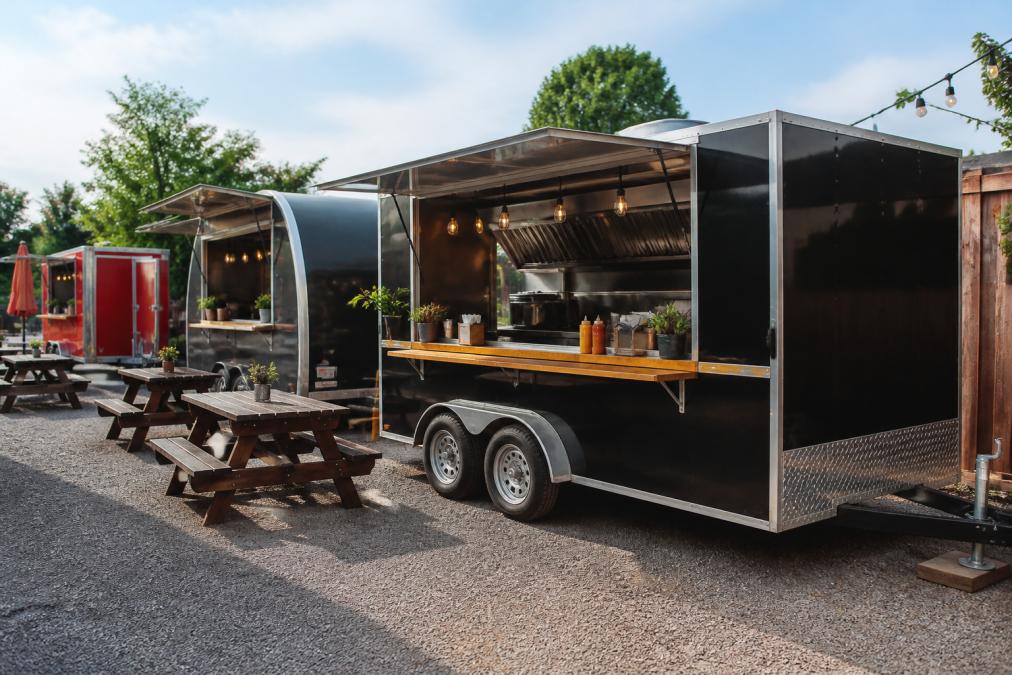
An enclosed car hauler trailer is the strongest protection you can put around a classic during transport. Walls and a roof block rain, hail, and sun, while the sealed box keeps road debris and gravel spray away from paint and chrome. For a car with original paint or fresh bodywork, that matters more than any other feature.
The tradeoffs are real. Enclosed units weigh more, cost more, and demand a tow vehicle with adequate capacity. Ventilation and secure door latches matter too, since a trailer that traps moisture can create its own problems. Buyers hauling a show car several states away usually accept those tradeoffs. Buyers moving a project car across town often don't need them.
When a Tilt Deck Car Hauler Makes Loading Easier
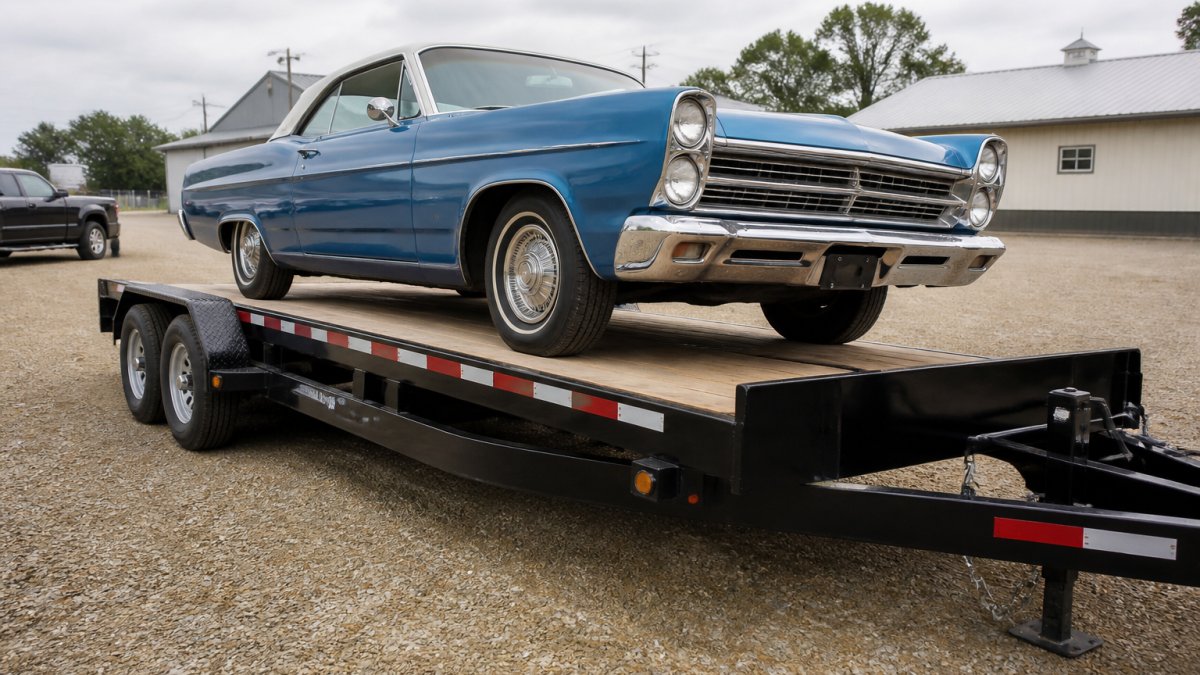
A tilt deck car hauler removes the ramp problem entirely. The deck pivots to the ground, so the car rolls on at a shallow angle instead of climbing a steep incline. That angle is the whole point: low-clearance classics, long front overhangs, and cars with fragile air dams load without scraping.
Tilt decks suit owners who load alone and often. There's no ramp to position, no helper needed to spot the approach, and no gap between ramp and deck for a wheel to catch. The limitation is deck length. A tilt deck needs enough run to fit the whole vehicle plus a margin, and very long classics can push past what a standard tilt unit offers. Check the usable deck length against your car's overall length before committing.
Car Hauler Trailer Size Guide for Classic Vehicles
Sizing comes down to three measurements: overall length, overall width, and curb weight. Measure the car yourself rather than trusting a spec sheet, since bumper guards, mirrors, and added accessories change the numbers. Then add a safety margin on every dimension.
A practical car hauler trailer size guide for classics:
- Length: Add at least 12 to 18 inches beyond the car's overall length so you can position it for proper tongue weight.
- Width: Confirm the deck accommodates the track width plus room for wheel baskets or strap routing.
- Weight: Compare the car's curb weight against the trailer's payload rating, not its gross rating. Leave headroom for tools and spare parts.
- Deck height and breakover: Lower decks load easier; higher decks tow better over rough pavement.
Buyers regularly underestimate width once wheel straps and fender clearance enter the picture. Measure twice.
Classic Car Tie-Down Methods That Prevent Damage
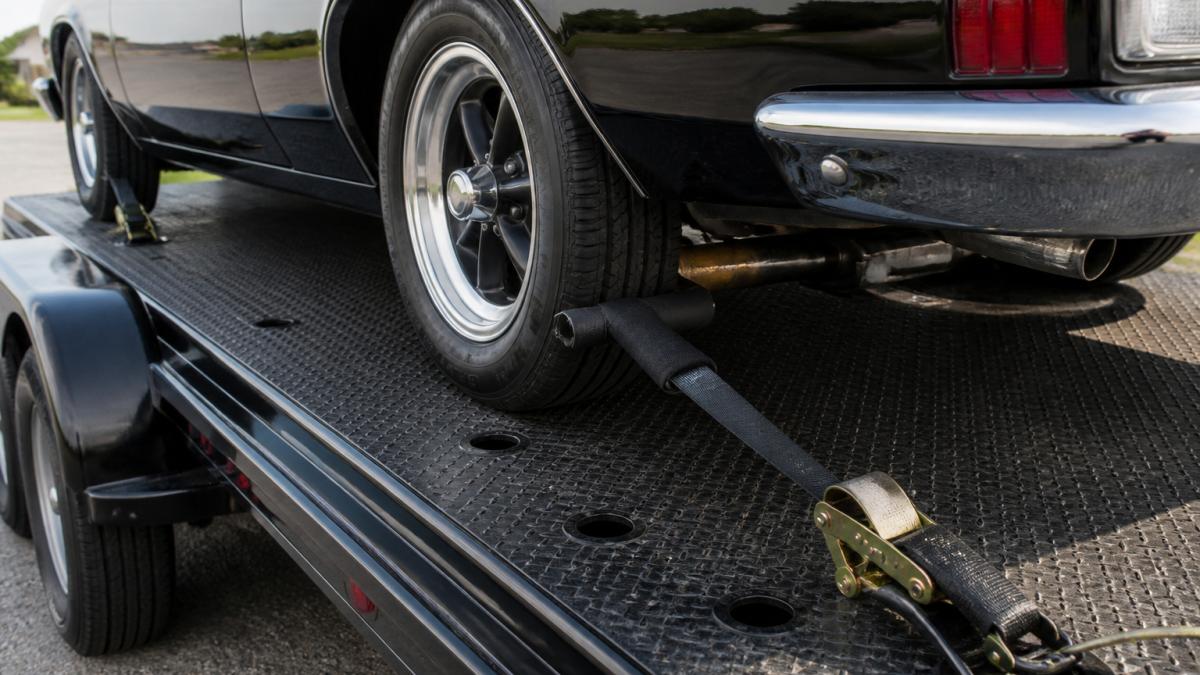
Classic car tie-down methods fall into two camps: axle straps and wheel baskets. Axle straps loop around the rear axle or a designated frame point and pull the car down and slightly forward. Wheel baskets cradle each tire and secure it without touching suspension or paint. Both work; the choice depends on the car.
Avoid routing straps over body panels, chrome bumpers, or brake lines. Cross the straps in an X pattern where the trailer's anchor points allow it, which limits side-to-side movement. Check tension after the first few miles, since straps settle once the suspension compresses.
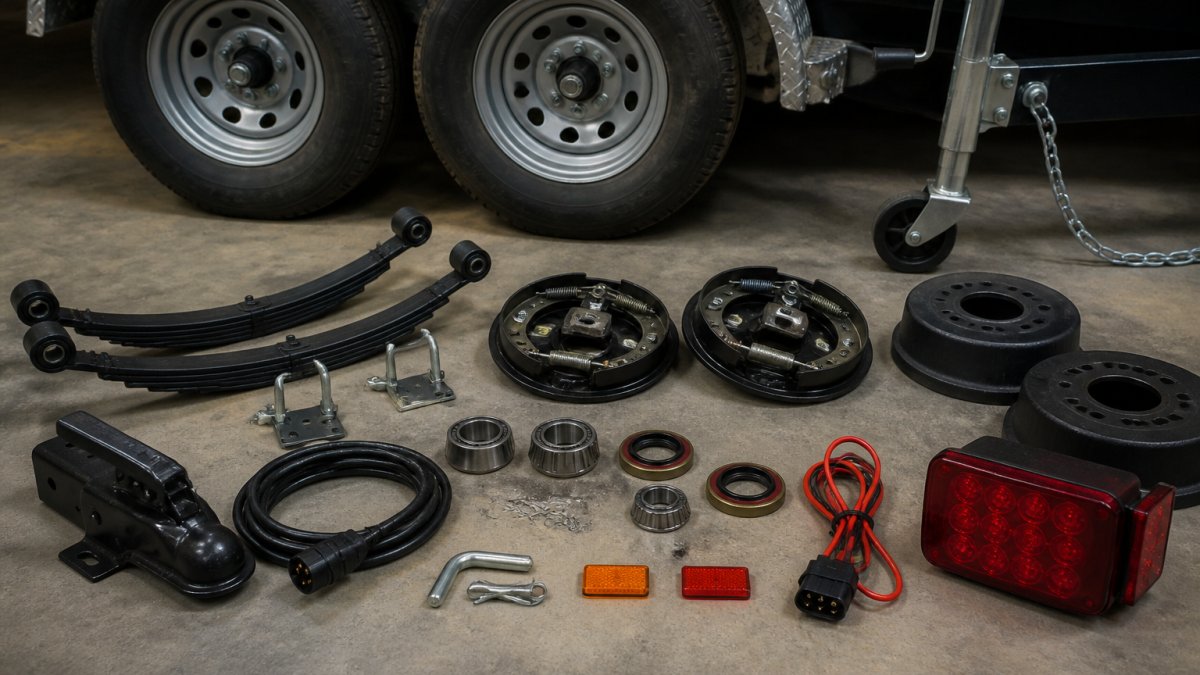
If you're stocking up on straps, ratchets, and replacement hardware, our guide to essential trailer parts for regular maintenance covers what to keep on hand.
Open Versus Enclosed Transport: Weighing the Tradeoffs
Open and enclosed transport are not just a price difference. They are two different loading systems, two different risk profiles, and two different booking calendars. The right choice depends on the car's paint and body condition, its value relative to your deductible, and how flexible your pickup window is.
| Factor | Open Transport | Enclosed Transport |
|---|---|---|
| Trailer type | Multi-car flatbed or wedge, often 3 to 9 vehicles per load | Enclosed stacker or single-car enclosed, 1 to 7 vehicles |
| Weather exposure | Full exposure to rain, hail, sun, and road salt | Fully shielded by walls and roof |
| Road debris risk | Moderate to high, especially on gravel or construction routes | Minimal |
| Loading method | Ramp or tilt deck, steeper approach angle | Hydraulic liftgate or long low-angle ramps |
| Typical cost premium | Baseline | Generally higher |
| Availability | Broader | Tighter on popular routes |
| Best for | Drivers, project cars, patina builds | Show cars, original paint, fresh restorations, high-value vehicles |
When open transport is the right call. A driver-quality car that already sees rain, gravel, and highway miles does not gain much from an enclosed box. Open transport is generally more widely available on major routes than enclosed transport.
When enclosed is non-negotiable. Original paint, fresh bodywork, convertible tops, and anything with a value that would make a rock chip a claim should ride enclosed. Enclosed trailers also shield cargo from weather and from debris or leaks from other vehicles.
The middle option most guides skip. Some carriers offer enclosed transport on a shared load, where your car rides in a sealed trailer alongside two or three others. That splits the cost of the enclosure without the full single-car premium. Ask specifically whether the quote is for exclusive-use enclosed or shared enclosed, because the two prices can differ by hundreds of dollars.
For a car you drive regularly and don't mind washing afterward, open transport is a reasonable call. For anything with original paint, fresh restoration work, or serious value, enclosed is the safer bet.
Vetting Carriers and Verifying Cargo Insurance
Checking insurance before you book a classic car carrier starts with knowing which documents to request, what the limits cover, and how a claim gets paid.
Step 2: Request the certificate of insurance directly. Do not accept a screenshot or a verbal assurance. Ask the carrier or broker to have its insurer email a certificate of insurance naming the carrier as insured. Check three things on that certificate:
- Auto liability limit, this covers damage the carrier causes to other people and property, not your car.
- Cargo insurance limit, this is the coverage that pays for damage to your classic. Confirm the per-vehicle limit, not just the aggregate policy limit.
- Effective dates, a certificate that expires before your pickup date is worthless.
Step 3: Compare the cargo limit to your car's value. If your classic is worth more than the carrier's per-vehicle cargo limit, you have a gap. Ask whether the carrier offers additional declared-value coverage, and get the cost and terms in writing.
Step 4: Read the exclusions. Cargo policies commonly exclude or limit coverage for pre-existing damage, mechanical failure, and certain weather events. Ask the carrier to identify the exclusions that apply to your shipment in writing.
Step 5: Confirm the claims procedure before the car moves. Ask who inspects damage, how soon a claim must be filed, and whether the carrier handles claims in-house or through the insurer. Get the claims contact and the filing deadline in writing.
Step 6: Document condition at both ends. Photograph the car from every angle, including the undercarriage and wheels, before loading. The carrier should perform its own inspection and give you a copy of the bill of lading noting existing damage.
Warning signs to walk away from:
- No MC or DOT number, or a number that does not match the company name
- Refusal to provide a certificate of insurance from the insurer
- A quote far below every other quote on the same route
- Pressure to pay a large deposit by wire or payment app before any paperwork
- No written bill of lading or inspection report
For buyers still deciding where to purchase equipment, our comparison of buying local vs national trailers walks through the tradeoffs.
Picking Your Classic Car Hauler at DoubleTake Trailer Sales
Matching trailer to car is the easy part. Finding a dealer who answers the phone after the sale is where most buyers get burned. DoubleTake Trailer Sales is a locally-owned Iowa dealership established in 2010, and we can build to your specifications when stock doesn't fit.
Dealers in this market generally offer both in-stock trailers and custom builds, so buyers can weigh lead time against exact fit.
What we offer classic-car owners:
- Custom builds to your length, width, and tie-down specifications
- In-house service and parts so a broken latch or worn strap doesn't sideline you
- No credit check financing for buyers with credit concerns
- In-stock and custom options, so you can weigh lead time against exact fit
If financing is the sticking point, our guide to financing trailers with poor credit explains how that process works. For buyers weighing a local dealer against a national site, the case for buying local trailers lays out what you actually get for the difference.
Frequently Asked Questions
What type of trailer is best for hauling a classic car?
An enclosed car hauler trailer is the safest choice for most classic cars because it shields the vehicle from weather, road debris, and UV exposure. Open trailers cost less and work for short trips or cars already showing wear, while tilt deck car haulers help with low-clearance vehicles that scrape on ramps. Match the trailer to your car's ground clearance, value, and how far you plan to tow.
What size car hauler do I need for a classic car?
Most classic cars fit on an 18- to 20-foot deck, but measure your car's length, width, and weight before buying. Full-size vintage models and long-wheelbase convertibles may need 20 to 24 feet. Also check the trailer's gross vehicle weight rating against your tow vehicle's capacity. A car hauler trailer size guide based on your actual vehicle specs prevents buying a deck that is too short or a trailer that overloads your truck.
How do you secure a classic car on a trailer?
Use four-point tie-downs with soft-loop straps or wheel baskets rather than chains hooked to the frame. Cross the straps front and rear to limit side-to-side movement, and avoid routing straps over chrome, paint, or brake lines. Stop after the first few miles to recheck tension. Proper classic car tie-down methods protect both the vehicle and everyone on the road.
Can a half-ton truck tow a car hauler with a classic car?
Many half-ton trucks can tow an open car hauler with a classic car, but you need to check payload, tongue weight, and the trailer's gross vehicle weight rating against your truck's ratings. Enclosed trailers weigh more and often push a half-ton truck near its limit. Add the car's weight, trailer weight, and gear, then compare the total to your truck's tow rating before you commit.
The right car hauler protects a classic for decades; the wrong one costs you a paint job. Tell us the car, the tow vehicle, and how far you're hauling, and we'll match you to a trailer built for it. Get started with DoubleTake Trailer Sales and spec a car hauler that fits your classic the first time.