 comparison
Buying Local vs National Trailers: 2026 Guide
Table of Contents
- Local Dealer vs National Seller: Key Differences
- Benefits of Buying Local Trailers
- When a National Seller Makes Sense
- Trailer Financing Options for Local and National Purchases
- Custom Trailer Build Process: Local vs National
- Warranty, Service, and Parts After the Sale
- Which Option Fits Your Trailer Purchase?
- Conclusion
- Frequently Asked Questions
Last Updated: October 7, 2026
Local Dealer vs National Seller: Key Differences
Buying local vs national trailers comes down to one trade-off: a local dealer gives you hands-on inspection, same-day pickup, and a drivable service department, while a national seller may advertise a lower sticker price but adds delivery costs, travel, and long-distance warranty headaches.
At DoubleTake Trailer Sales, we have watched buyers wrestle with this decision since 2010. The advertised online price looks better until you add freight, an inspection trip, and later service costs. A trailer is a long-term asset, so the cheapest sticker is rarely the cheapest purchase.
Here is the short version of how the two options stack up:
| Factor | Local Dealer | National Seller |
|---|---|---|
| In-person inspection | Yes, before you pay | Rarely possible |
| Delivery cost | Often included or free pickup | Freight charge added |
| Warranty service | Local, drivable | Ships parts or coordinates a distant shop |
| Custom builds | Built to your specs | Limited to catalog models |
| Lead time | In-stock or a few weeks | Varies, often longer |
| Payment options | In-house financing available | Standard lenders only |
The sections below break down each advantage and drawback so you can match the choice to how you use the trailer.
Benefits of Buying Local Trailers
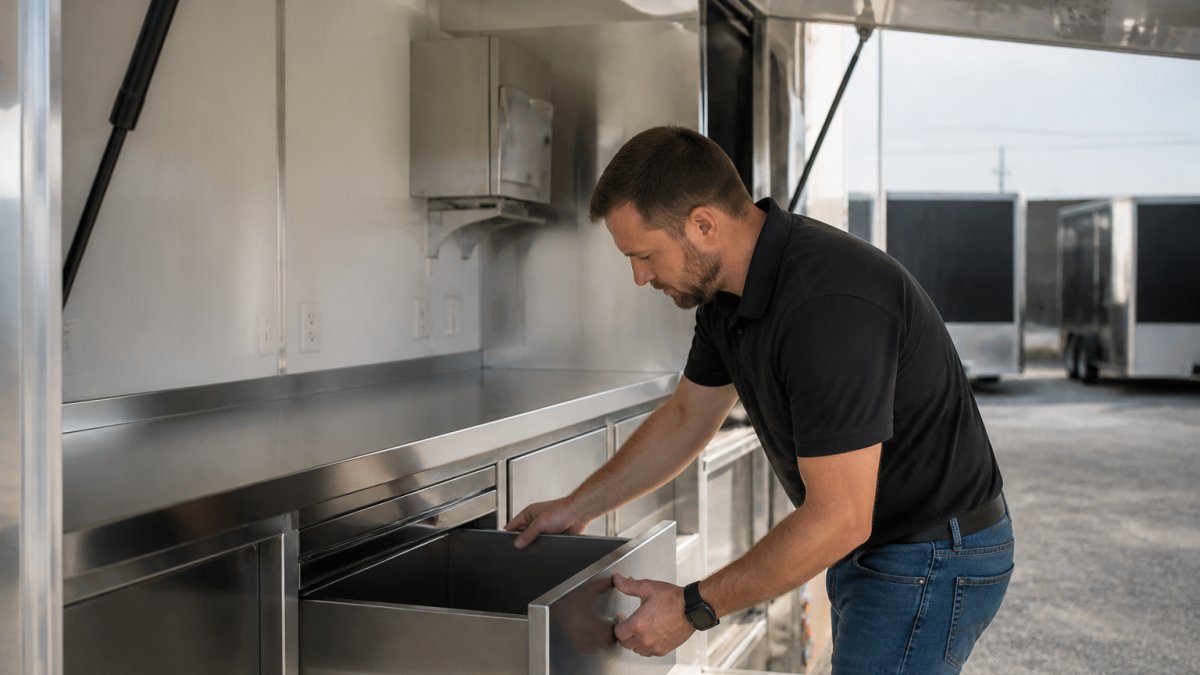
The strongest benefit of buying from a local dealer is inspecting the trailer before money changes hands.
Local purchasing also shortens the logistics chain: you hitch up and drive home the same day, and if something is wrong, you return to a business you can find again.
Here is what buyers consistently value most:
- Same-day pickup on in-stock inventory
- A physical location for warranty claims and repairs
- Parts availability without shipping delays
- A relationship with a team that knows your trailer
- Financing arranged face to face
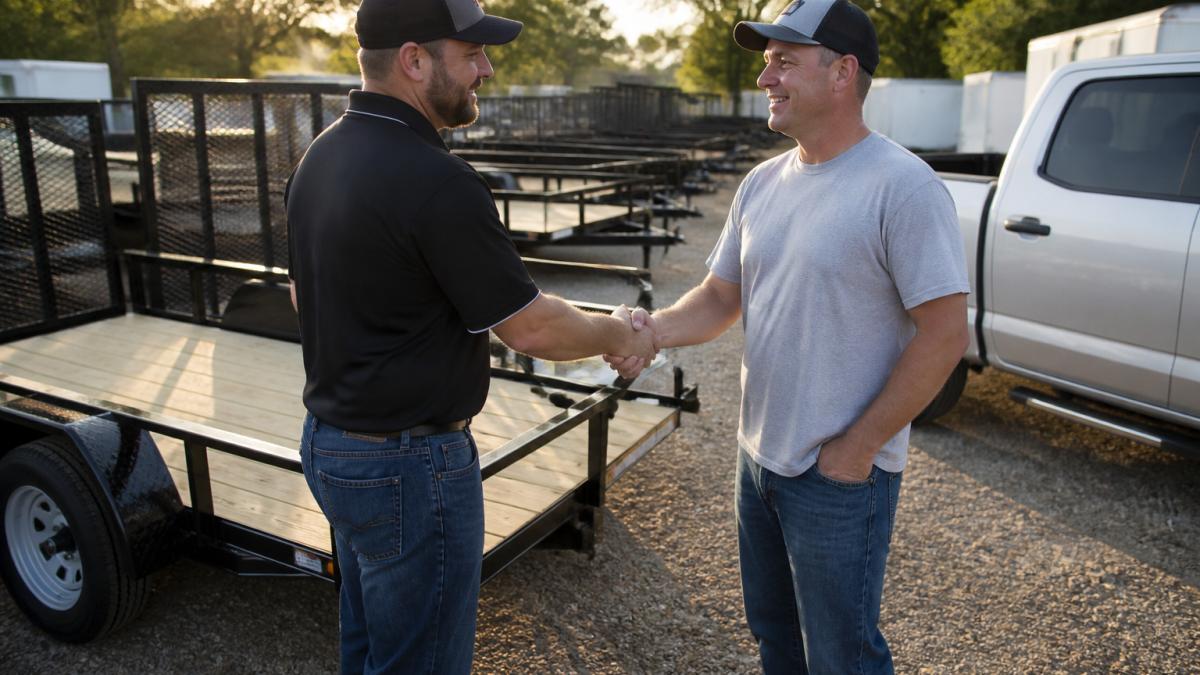
The trade-off: local inventory may not have your exact configuration on the lot. A custom build closes that gap, covered further down.
When a National Seller Makes Sense
A national seller can be the right call in narrow situations: a highly specific model no regional dealer stocks, a large volume of identical fleet units, or a preference for online checkout.
The catch is buying without seeing the unit, which shifts risk onto you, you cannot verify welds, axle rating, or paint quality from a listing photo.
Watch for these costs that rarely appear in the headline price:
- Freight or delivery fees to your location
- Travel costs if you decide to inspect in person
- The time cost of coordinating a distant warranty claim
- Limited ability to negotiate or customize
For a one-off trailer you will use for years, those hidden costs often erase the savings that drew you to the national listing.
Trailer Financing Options for Local and National Purchases
Financing is where the local and national paths diverge sharply. A local dealership can often work with imperfect credit because the decision is made in-house, while national sellers route every application through standard lenders with fixed approval rules.
Payment options to expect on each side:
- Local dealer: in-house financing, no credit check options, flexible terms, face-to-face paperwork
- National seller: bank or online lender, credit score thresholds, standardized terms, remote approval
If your credit history is not perfect, this difference matters more than any sticker price. A trailer you cannot finance is not a trailer you can buy.
Custom Trailer Build Process: Local vs National
The custom trailer build process is the clearest reason many buyers choose local. A local dealer can spec the trailer to your exact job with a realistic timeline, while national sellers offer catalog configurations only, anything unusual means a longer wait or a flat no.
A typical local custom build follows a clear sequence:
- Define the job: payload, dimensions, and how you will tow it
- Match the trailer type: dump, enclosed, utility, or car hauler
- Confirm the tow vehicle's hitch and gross vehicle weight rating
- Finalize specs and place the order
- Receive the finished trailer and inspect it before signing
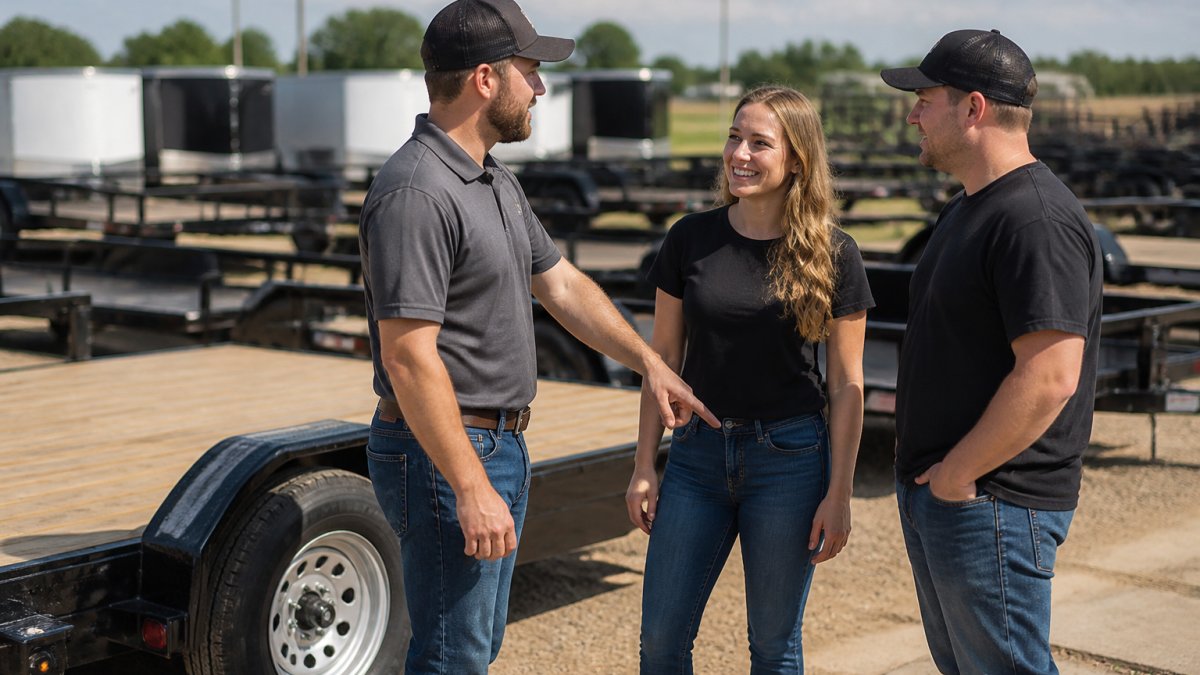
Customers worry most about the timeline. One recent buyer sat down with our team, built the trailer to their specs, and had it in about five weeks, the realistic window for a custom build, not a same-week promise.
Warranty, Service, and Parts After the Sale
Warranty service across state lines is the hidden weakness of buying from a distant seller. A trailer warranty is not a single promise, it is obligations split between the manufacturer, the selling dealer, and the shop performing the work.
Here is how a typical warranty claim actually flows, and where the local and national paths diverge:
| Step | Local Dealer | National Seller |
|---|---|---|
| You notice a problem | Drive to the dealership | Call or email a support line |
| Claim is authorized | Service writer inspects and approves on the spot | Manufacturer or seller reviews photos, may require a second opinion |
| Parts are sourced | Pulled from local stock or ordered same week | Shipped from a warehouse, freight time added |
| Repair is performed | In-house technician, you know the shop | You find a local shop willing to do warranty work at the approved rate |
| Reimbursement | Handled internally | You may pay upfront and wait for reimbursement |
| Dispute resolution | Face-to-face | Phone, email, or written correspondence |
That last row matters more than buyers expect.
Before you buy from anyone, get written answers to these questions:
- Who is authorized to perform warranty repairs in your area, and how far is the nearest one?
- Does the manufacturer reimburse labor at a rate local shops will accept, or is there a gap you cover?
- Are parts stocked domestically, or special-ordered from overseas with lead times measured in weeks?
- What is the process for a claim filed after the selling dealer is no longer in business?
- Does the warranty transfer if you sell the trailer, and does that affect resale value?
Parts availability follows the same logic. Common wear items, bearings, seals, brake assemblies, lights, tires, couplers, are widely stocked. Trouble starts with proprietary components: a specific axle rating, custom ramp gate, branded jack, or unique wiring harness. A local dealer servicing your trailer line usually has them on a shelf or from a regional warehouse in days; a national seller ships them, and you wait.
Regular maintenance protects resale value as much as the trailer: greasing bearings, checking tire pressure, and inspecting lights take minutes and prevent expensive failures.
For buyers who depend on a trailer for income, downtime is the real cost. A cracked weld or failed brake taking three weeks to resolve through a distant seller's claims process can cost far more than the sticker savings that drew you there.
Which Option Fits Your Trailer Purchase?
Match the option to your situation, not the lowest number online.
Here is a cost framework you can fill in with your own numbers. The point is that the national listing's headline advantage shrinks or disappears once these lines are added.
| Cost Line | Local Dealer | National Seller |
|---|---|---|
| Advertised purchase price | Often higher | Often lower |
| Freight or delivery to your address | Usually included or free pickup | Typically added, varies by distance |
| Sales tax | Collected at point of sale per state rules | May be collected by seller or owed at registration |
| Title, registration, plate fees | Handled at the dealership | You handle at your state motor vehicle office |
| Travel to inspect or pick up | Local, minimal | Flights, fuel, hotel, lost work time |
| Financing cost | In-house options may reduce rate or fees | Standard lender terms |
| First-year warranty service | Local, drivable | Travel or reimbursement gap |
| Resale value at trade-in | Local dealer relationship can help | No relationship, market value only |
Two lines deserve extra attention.
A simple rule of thumb: if the national listing's price advantage is less than the sum of freight, travel, and one likely warranty service trip, the local dealer is the cheaper purchase even at a higher sticker.
Now match the option to your situation:
| Your Situation | Best Option | Why |
|---|---|---|
| Need it this week | Local dealer | In-stock inventory, same-day pickup |
| Imperfect credit | Local dealer | In-house and no credit check financing |
| Custom configuration | Local dealer | Built to your specs |
| Want to inspect first | Local dealer | See it before you pay |
| Fleet of identical units | National seller | Volume catalog access and fleet pricing |
| Rare model, no local stock | National seller | Wider inventory reach |
| Trailer earns income daily | Local dealer | Downtime cost exceeds sticker savings |
| Occasional personal use, price-sensitive | Either | Run the cost framework above before deciding |
For most contractors, farmers, and small business owners, the local route wins on total cost of ownership once delivery, travel, and service are counted. The national listing's sticker advantage shrinks fast, and for buyers whose trailer is a working asset, it usually disappears entirely.
Conclusion
Choosing between buying local vs national trailers is a question about risk, service, and total cost, not just price. A local dealer keeps inspection, financing, customization, and repairs within reach, which is why the local route usually wins for buyers who depend on their trailer. DoubleTake Trailer Sales has served Iowa buyers since 2010 with in-stock inventory, custom builds to your specifications, no credit check financing options, and an in-house service and parts department. When you are ready to stop comparing listings and start hauling, shop our inventory and let our team help you find the right fit.
Frequently Asked Questions
What are the primary benefits of buying a trailer from a local dealership?
Buying from a local dealership means you can inspect the trailer in person before purchase, get same-day pickup, and have a nearby service department for warranty work and repairs. Local dealers often provide flexible financing options and can handle custom trailer builds with shorter lead times. You also avoid delivery fees and can build a relationship that pays off when you need parts or advice down the road.
Are there hidden costs when buying a trailer from a national chain?
National sellers may advertise a lower purchase price, but additional costs can add up. Delivery fees, travel expenses to pick up the trailer, and potential delays in warranty service are common. Some national sellers also charge for customization or require you to arrange your own transportation. Always ask for a total cost breakdown that includes delivery, taxes, and any setup fees before committing.
How does trailer warranty service differ between local and national dealers?
Local dealers typically handle warranty claims in-house or through nearby service partners, so you can bring your trailer in and get it fixed without shipping it across the country. National sellers often require you to contact a central service line and may direct you to an authorized repair center that could be far away. This can mean longer downtime and out-of-pocket costs for transportation.
Is it easier to get custom trailer modifications from a local or national dealer?
Local dealers usually offer more flexibility for custom builds because they work directly with manufacturers and can adjust specifications during the build process. You can visit the shop, discuss your needs face-to-face, and see progress. National sellers may offer custom options but often rely on standardized configurations and have longer lead times due to shipping and coordination across multiple locations.
How does local inventory availability compare to national online listings?
Local inventory varies by dealer, but you can often find trailers in stock and ready for immediate pickup. National online listings may show a wider selection, but availability can be misleading because inventory is spread across multiple locations. You might see a trailer online only to find it's sold or requires shipping from another state. Local dealers can confirm availability quickly and let you see the trailer in person.