 comparison
Benefits of Buying Local Trailers: 2026 Dealer Guide
Table of Contents
- Why Local Trailers Beat Online Sellers on Availability and Cost
- The Trailer Inspection Checklist Before Buying From Any Dealer
- How to Finance a Trailer Through a Local Dealership
- Custom Trailer Build Options You Cannot Get Online
- Warranty, Parts, and After-Sales Support That Actually Shows Up
- Registration, Compliance, and Road Safety With a Local Dealer
- Total Cost of Ownership: Local Trailers vs. Shipped-In Units
- Frequently Asked Questions
Last Updated: September 30, 2026
Why Local Trailers Beat Online Sellers on Availability and Cost
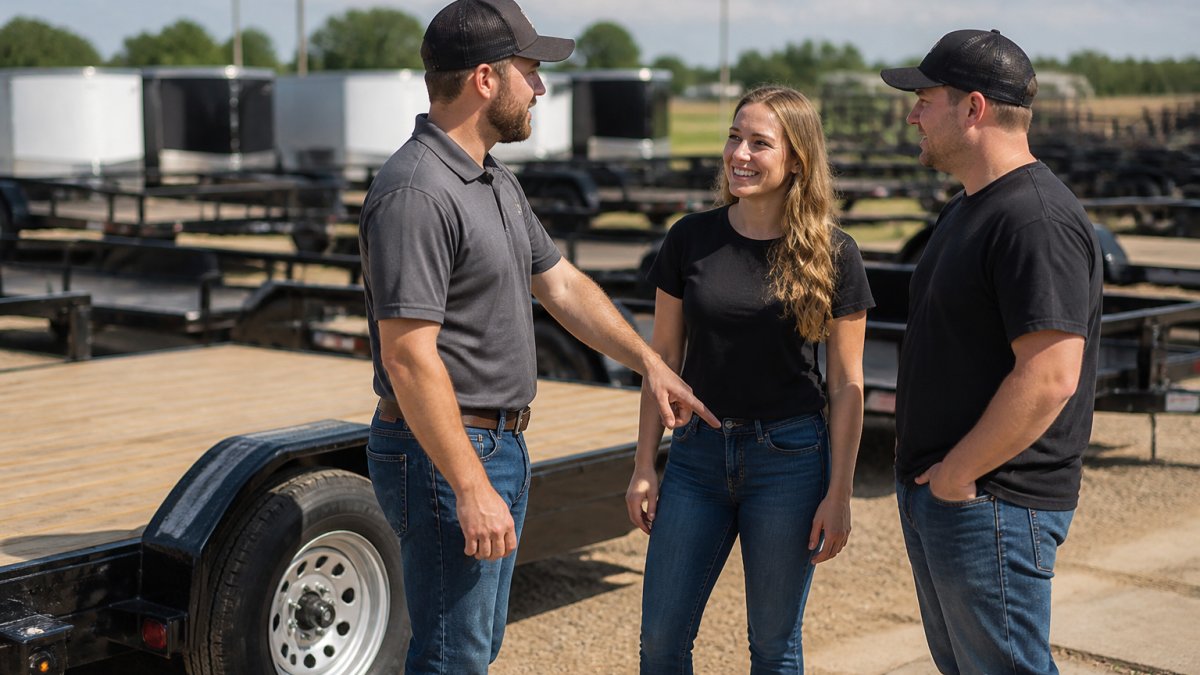
Buying local trailers wins on two fronts online sellers can't match: same-day inspection and delivery, and no freight charges that can add hundreds to the invoice.
The Trailer Inspection Checklist Before Buying From Any Dealer
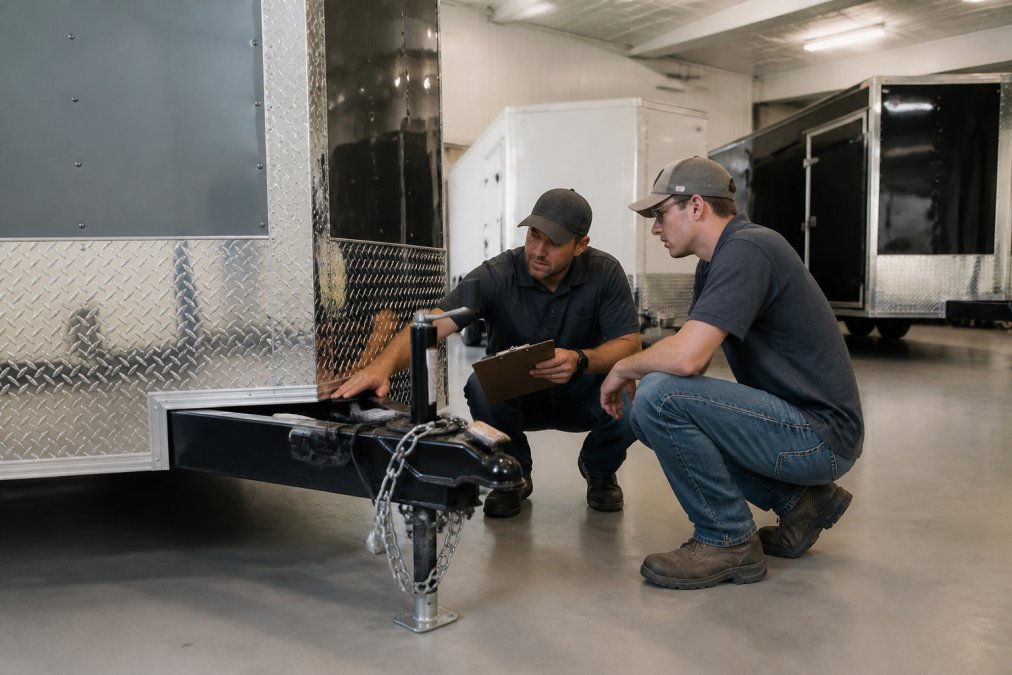
A trailer inspection checklist before buying should cover three areas: structural integrity, running gear, and paperwork. Skipping any one risks a trailer that fails inspection or can't be registered.
Frame, Welds, and Structural Integrity
Start underneath. Check main frame rails for rust that has eaten into the metal rather than surface discoloration, and every weld at the tongue, crossmembers, and axle mounts for cracks, porosity, or incomplete penetration. A good weld is smooth and consistent; a bad one looks lumpy or has gaps.
Tires, Brakes, and Lighting Under Load
Tire date codes matter more than tread depth. A tire can look fine and still be years past its safe service life. Check the four-digit DOT code on the sidewall.
- Check tire DOT date codes on every wheel, including the spare
- Test electric brakes and the breakaway battery
- Verify all lighting works, including side markers
- Confirm the coupler size matches your hitch ball
- Inspect safety chains for wear or missing links
Paperwork, VIN, and Title Verification
The VIN plate on the frame must match the paperwork exactly. A mismatch is a registration nightmare and sometimes a sign of a rebuilt or stolen trailer. Confirm the title is clean and in the dealer's name.
How to Finance a Trailer Through a Local Dealership
Financing a trailer through a local dealership is usually faster than a bank loan because the dealer works with lenders who understand trailer collateral. Many dealerships, including DoubleTake Trailer Sales, offer flexible options, and some provide no credit check financing for buyers who don't qualify through traditional channels.
The practical steps look like this:
- Decide your budget ceiling before you walk in, including insurance and registration
- Gather proof of income, ID, and any business documentation if buying commercially
- Ask what down payment the dealer requires and whether terms vary by trailer type
- Get the total cost in writing, including any fees, before signing
- Confirm the payment schedule and whether early payoff carries a penalty
Custom Trailer Build Options You Cannot Get Online
Custom trailer build options are where local dealerships separate themselves from online sellers. A national website sells you a dropdown-menu configuration; a local dealer asks what you're hauling and builds to those specs.
What can be customized varies by trailer type:
- Enclosed cargo trailers: door placement, interior height, shelving, electrical packages, and ventilation
- Concession trailers: serving window position, equipment layout, sink configuration, and counter heights
- Dump trailers: dump angle, side height, tarp systems, and gate style
- Utility trailers: rail height, tie-down points, ramp configuration, and deck material
Warranty, Parts, and After-Sales Support That Actually Shows Up
Warranty support and parts availability are what online buyers complain about most, because a warranty is only as good as the dealer who honors it. When a trailer ships from another state, a warranty claim can mean shipping parts back or finding a local shop willing to do the work.
The Post-Purchase Lifecycle Most Buyers Never Plan For
The purchase is a one-day event; ownership is years of maintenance, repairs, and part swaps. That gap is where local dealers pull ahead, and it's the part online listings never mention.
- Year 1: Break-in and warranty window. Bearings need re-packing, brakes need adjustment, and any factory defect surfaces now. A local dealer handles this under warranty without a shipping label.
- Years 2-4: Consumables and wear items. Tires age out, lights corrode, couplers wear, and brake shoes thin. A dealer who stocks these parts gets you back on the road the same day. An online seller has no mechanism to help you here at all.
- Years 4-7: Structural and running-gear service. Axle service, suspension bushings, and weld inspection become routine. A shop that knows your trailer's history spots problems a stranger would miss.
- Year 7+: Trade-in or resale. A local dealer can appraise your trailer against a new one, apply trade-in credit, and handle the title transfer in the same visit. Online sellers rarely offer trade-in at all.
Annual Inspections and Preventive Maintenance
Most states don't require annual trailer inspections like they do for passenger vehicles, but skipping them isn't safe. A pre-season inspection before heavy hauling catches bearing play, brake wear, and wiring corrosion before they become roadside failures.
Parts Sourcing: Why It Matters More Than Buyers Expect
Trailer parts are not universal. Axle ratings, spindle sizes, brake backing plates, and lighting harnesses vary by manufacturer and model year. A dealer who sold the trailer knows which parts fit, and often stocks them.
Trade-In and Upgrade Cycles
Trailers aren't lifetime purchases for most owners. A landscaping business outgrows a 12-foot utility trailer in two or three seasons; a contractor who starts with an open deck eventually needs an enclosed unit.
What to Ask Before You Buy
Before signing, get clear answers to these questions:
- Where is warranty work performed, and who pays the labor?
- Does the dealer stock parts for this specific model, or order them?
- Is there a service department on site, or is work subcontracted?
- Will the dealer accept this trailer as a trade-in later?
- What does a pre-season inspection cost, and what does it cover?
The answers tell you whether you're buying a trailer or buying into a relationship that keeps paying off after the sale.
Registration, Compliance, and Road Safety With a Local Dealer
Registration assistance is one of the least-discussed benefits of buying local trailers, and often the difference between towing legally and towing with a problem. Trailer registration rules vary by state, and requirements around weight ratings, brake systems, and lighting change with how the trailer is classified.
The Paperwork Most Online Buyers Get Wrong
When you buy from an out-of-state seller, the paperwork burden lands on you. That usually means:
- A Manufacturer's Certificate of Origin (MCO) or out-of-state title that has to be converted to a title in your name
- A bill of sale that meets your state's specific format requirements
- A weight slip or certified weight ticket if the trailer needs to be classified by gross vehicle weight rating (GVWR)
- A VIN inspection, which some states require before issuing a title
- Sales tax remittance, which varies by whether your state collects at the point of sale or at registration
Weight Classes and Why They Change Everything
Trailer regulation in most states hinges on GVWR, not empty weight. A trailer rated at 7,000 pounds GVWR may fall into a different regulatory class than one rated at 2,999 pounds, triggering:
- Brake requirements on one or more axles
- Breakaway system and battery requirements
- Different registration fees and plate types
- Inspection requirements before first registration
- Tow vehicle rating and hitch class requirements
Brake and Lighting Compliance by Trailer Class
Federal motor vehicle safety standards set a floor for trailer lighting and braking, but states layer their own requirements on top. Common patterns include:
- Brakes required on at least one axle above a certain GVWR threshold
- Breakaway systems required on trailers above a heavier threshold
- Specific lighting configurations for trailers over a certain width
- Reflector and conspicuity tape requirements for commercial use
Tow Vehicle Compatibility: The Safety Check Nobody Does Online
Safety and compliance isn't just about the sticker on the plate. It's about tow vehicle compatibility, hitch class, tongue weight, and towing capacity. A dealer who walks you through those numbers prevents the most common and dangerous towing mistake: overloading a vehicle that isn't rated for the trailer.
What Local Dealers Handle That Online Sellers Don't
A short list of the paperwork and compliance tasks a local dealer typically absorbs:
- Preparing the MCO or title for transfer
- Completing the bill of sale in your state's required format
- Providing a certified weight ticket if needed
- Confirming brake and lighting compliance for your state's class
- Advising on plate type and registration fees
- Coordinating with your lender if the trailer is financed
- Handling title work for trade-ins
Total Cost of Ownership: Local Trailers vs. Shipped-In Units
Comparing total cost of ownership between a local purchase and a shipped-in unit requires looking past the sticker price. Purchase price is only one line in a longer ledger.
| Cost Category | Local Dealer | Shipped-In Unit |
|---|---|---|
| Freight charges | None or built in | Quoted separately, varies by distance |
| Inspection before purchase | In person | Photos and video only |
| Lead time | Same day if in stock | Days to weeks |
| Warranty service | In-house | Find a local shop, ship parts |
| Parts availability | Stocked or ordered locally | Order and wait |
| Registration help | Dealer handles | Buyer handles alone |
| Trade-in value | Negotiated in person | Rarely offered |
Frequently Asked Questions
What are the primary advantages of purchasing a trailer from a local dealer?
Buying local trailers gives you immediate availability without freight charges or shipping delays, the chance to inspect the unit in person before you pay, and a service department that handles warranty claims and parts without a phone tree. A local dealer also assists with registration paperwork and can configure the trailer to your towing capacity and load capacity needs. If something breaks six months in, you drive to the lot instead of shipping the trailer back to a factory.
How do I know a local trailer dealership will still be around for parts and service later?
Ask how long the dealership has operated, whether it runs its own parts counter and service bay, and whether it stocks common wear items like bearings, brakes, and lights. A dealership with an in-house service department and a physical parts inventory has infrastructure that outlasts a website. Visit the lot, look at the service area, and ask for the name of the person who will handle your warranty claim. That tells you more than any online review.
Is it worth paying more to buy local instead of ordering from a national site?
The sticker price online often excludes freight charges, which can add hundreds or thousands of dollars to a shipped trailer. Local trailers avoid that line item, and you get in-person inspection, immediate availability, and a service contact who knows your unit. Factor in downtime: if a shipped trailer arrives damaged or misconfigured, you wait weeks for a resolution. A local dealer resolves it the same day. Run the total cost of ownership before deciding.
Can I finance a trailer through a local dealership if my credit is not perfect?
Many local dealerships offer financing options beyond traditional bank loans, including no credit check programs and in-house payment plans. Bring a valid ID, proof of income, and a down payment if you have one. Ask specifically what documentation is required and whether the dealer reports to credit bureaus. A local finance manager can walk you through the terms in person, which is harder to do with a national online lender.