 Comparison
Portable Storage Shed vs Shipping Container: Which to Buy
Last Updated: November 12, 2026
Quick Summary
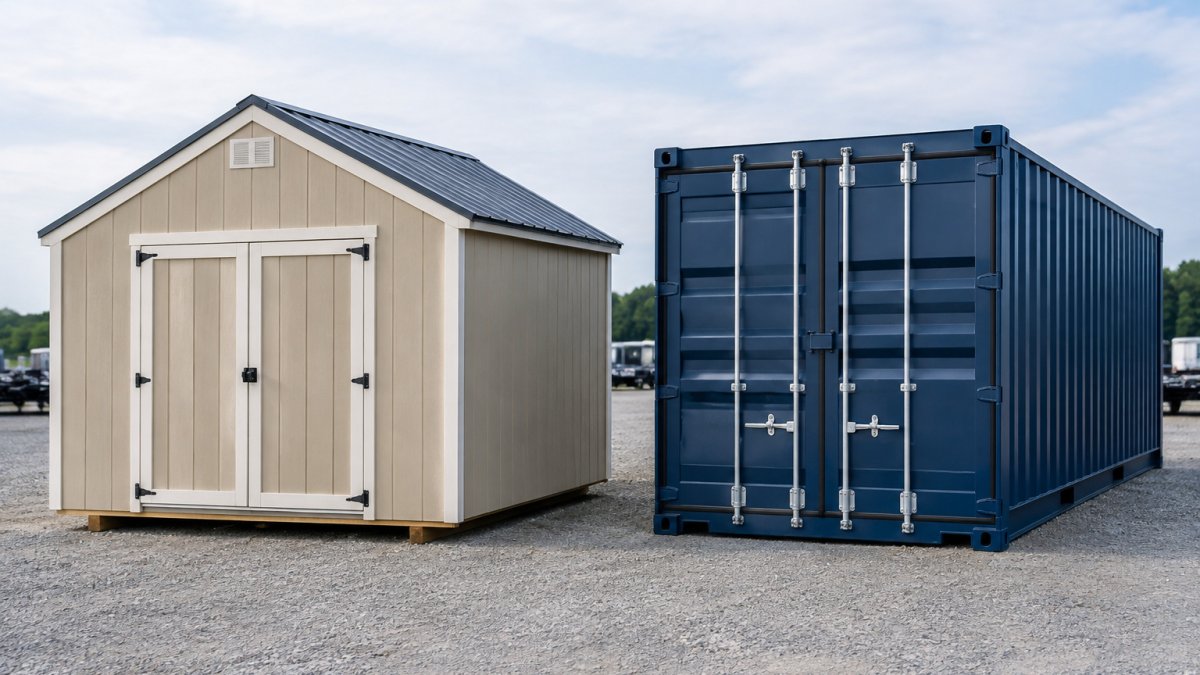
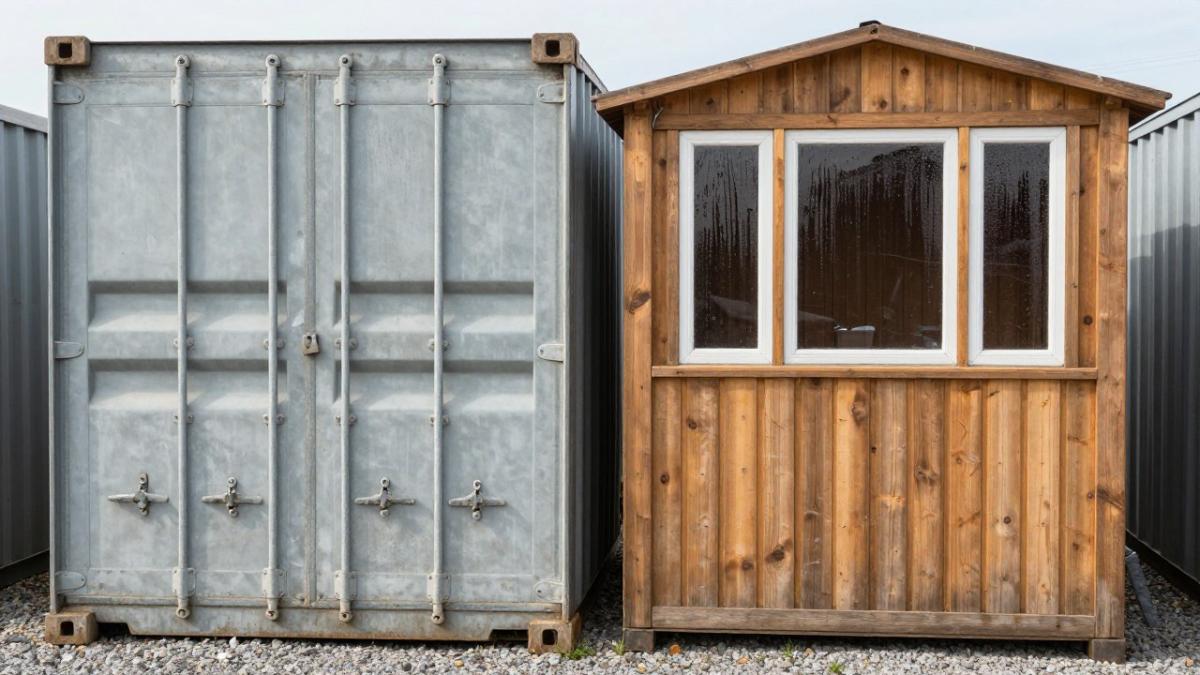
A shipping container wins on durability and security, while a portable storage shed wins on price, placement flexibility, and looks. A shed is cheaper to buy but needs a foundation and regular upkeep, while a container costs more upfront but arrives ready to lock.
- A standard 20-foot container offers about 160 square feet of floor space and roughly 1,170 cubic feet of volume.
- A welded lock box that encloses the padlock shackle is the standard security upgrade for containers.
- Sheds arrive in panels or as a kit and fit through tighter gates than containers.
- Many jurisdictions treat a shipping container as a structure and require a permit and setbacks.
- Compare the all-in delivered and installed cost, then add five years of maintenance and subtract expected resale.
Table of Contents
- Portable Storage Shed vs Shipping Container: The Short Answer
- Portable Storage Shed vs Shipping Container Cost: Purchase, Delivery, and Total Ownership
- Portable Storage Shed vs Shipping Container Size: Usable Space and Cubic Footage
- Durability, Security, and Climate Performance
- Delivery, Site Access, Permits, and Zoning Rules
- Shipping Container Shed Ideas That Actually Work
- Shipping Container Sheds for Sale: What to Check Before You Buy
- Choosing Your Storage Solution at DoubleTake Trailer Sales
- Frequently Asked Questions
Portable Storage Shed vs Shipping Container: The Short Answer
For most buyers who need secure, weather-tight storage fast, a shipping container wins on durability and security, while a portable storage shed wins on price, placement flexibility, and looks.
Portable storage shed is a movable, prefabricated structure, usually wood-framed or steel, built to sit on a prepared pad and store tools, equipment, or household goods.
The short version: a shed is cheaper to buy but needs a foundation and regular upkeep. A container costs more upfront but arrives ready to lock.
Side-by-Side Comparison at a Glance
| Factor | Portable Storage Shed | Shipping Container |
|---|---|---|
| Upfront price | Lower | Higher |
| Assembly | Kit assembly or dealer install | None |
| Foundation | Required | Gravel pad recommended |
| Security | Basic lock, break-in risk | Steel walls, lock box |
| Lifespan | Shorter, needs upkeep | Long, rust is the main threat |
| Mobility | Can be relocated | Requires a truck and crane |
| Climate | Ventilates, but can rot | Condensation risk without vents |
| Best for | Tight budgets, tight access | Security, fast setup |
Portable Storage Shed vs Shipping Container Cost: Purchase, Delivery, and Total Ownership
The purchase price is only the first line on the invoice. Total ownership is where these two options separate, and it is the number most buyers forget to calculate. A shed's sticker price looks friendlier, but site prep, delivery, and maintenance close much of the gap. The transparent way to compare is to build a five-year cost sheet with the same line items for both options, then adjust for your site.
The Line Items That Belong on the Sheet
- Purchase price: Sheds generally cost less than a comparable container at the same nominal footprint. Containers carry a steel premium, but one-trip and cargo-worthy units hold value better than used boxes with rust or door damage.
- Site preparation: Both need level, drained ground. Containers sit well on a compacted gravel pad, but the pad must be level enough that the doors swing and the floor does not rack. Soft or sloped ground can push site prep costs higher.
- Delivery and placement: Containers arrive on a tilt-bed or roll-off truck and may need a crane or a trained operator to set them square. Delivery cost scales with distance, access difficulty, and equipment time, not with the sticker price.
- Permits and inspections: Many jurisdictions treat a container as a structure and require a permit, setbacks, and sometimes a foundation inspection. Sheds below a size threshold are often exempt, but the threshold varies. Budget for the permit fee and the staff time to pull it.
- Maintenance: Sheds need paint or stain, roof checks, caulking, and rot repair. Containers need rust inspection, touch-up painting on scratches and floor rails, and door seal and hardware lubrication. Neither is maintenance-free, but the failure modes differ.
- Insurance and risk: Check whether your homeowner or commercial policy covers an outdoor structure and whether a steel box is treated differently from a wood shed. A rider may be needed either way.
How the Five-Year Math Usually Shakes Out
A useful rule of thumb is to compare the all-in delivered and installed cost, then add five years of maintenance and subtract expected resale. The crossover point depends on your climate: a shed in a wet, humid region needs more rot and roof attention, while a container in a freeze-thaw region needs attention to condensation and floor rust.
Watch out: a low delivered price can hide extra charges for delivery, placement, or site preparation. Ask for these terms in writing before you pay.
For a deeper look at whether a nearby dealer beats a national supplier on delivered cost, see our guide to buying local vs national trailers.
Portable Storage Shed vs Shipping Container Size: Usable Space and Cubic Footage
A standard 20-foot container offers about 160 square feet of floor space and roughly 1,170 cubic feet of volume. A 40-foot container doubles the floor area.
Measure your tallest and widest item first. If you store ladders, pipe, or pallets, the container's straight walls and cubic footage win. If you store lawn equipment and hand tools, a smaller shed covers it.
Durability, Security, and Climate Performance
Steel construction outlasts wood in almost every category except appearance. Steel walls resist weather and pests, but steel brings its own enemy: condensation.
Break-In Resistance and Lock Options
Containers are harder to break into, but not impossible. The weak point is the lock. A padlock on the handle is easy to cut; a welded lock box that encloses the shackle is the standard upgrade. Sheds rely on a hasp and padlock, and a determined thief can pry a door or cut through siding.
Neither option is a vault. If you store high-value tools, add interior security and lighting regardless of which structure you choose.
Condensation, Ventilation, and Temperature Extremes
Steel sweats. Temperature swings cause condensation inside a sealed container, and anything moisture-sensitive will rust or mold without ventilation. Add vents or a small dehumidifier. Sheds ventilate more naturally through gaps and wood breathability, but wood invites rot and termite damage in humid climates.
Insulation can help both options hold a steadier temperature.
Delivery, Site Access, Permits, and Zoning Rules
Site access decides more purchases than buyers expect, and the permit question decides the rest. Treat this as two separate checklists: can the structure physically get to the spot, and is it legal to put it there.
Site Access and Placement Checklist
Measure before you buy, and measure the narrowest point, not the widest.
- Approach width: A tilt-bed truck needs a straight, wide approach, and the driver needs room to back in without clipping fences, mailboxes, or low branches. Walk the route and note gate widths, driveway curves, and overhead lines.
- Turning and overhead clearance: A crane or roll-off needs swing room and clear overhead space. Low branches, power drops, and carport roofs stop deliveries.
- Ground bearing and slope: Soft ground, recent fill, or a slope will not hold a loaded truck or a level container. A compacted gravel pad with drainage is the common fix for both options.
- Level foundation: Containers need a level pad so the doors operate and the floor does not rack. Sheds need a level pad or pier system so the frame does not twist.
- Setbacks and easements: Keep the structure clear of property lines, utility easements, and drainage paths. Your local building department and plat map are the source of truth.
Sheds arrive in panels or as a kit and fit through tighter gates, which is a real advantage on urban and suburban lots. Containers are the harder delivery and the one more likely to need a crane.
Permits, Zoning, Setbacks, and HOA Rules
Permits and zoning vary by municipality, so the only safe move is to confirm in writing before you buy. A practical checklist:
- Is it a structure? Many areas treat a shipping container as a structure and require a permit, setbacks, and sometimes a foundation inspection. Sheds below a size threshold are often exempt, but the threshold varies by jurisdiction.
- Zoning district: Confirm the structure is allowed in your district and whether it counts as an accessory structure with its own setback rules.
- HOA covenants: Read the covenants, not just the bylaws. Some associations restrict visible steel containers, require screening, or cap the number and size of outbuildings. Get approval in writing.
- Neighbor and sightline issues: A container placed on a property line or in a view corridor invites complaints even when it is legal. Screen it or set it back.
- Insurance and lender rules: Some policies and mortgages have their own restrictions on outbuildings and containers. Ask before you place it.
Watch out: a verbal "you're fine" from a clerk is not approval. Ask for the requirement in writing or pull the applicable code section, because the person who inspects the installation may read it differently.
For buyers weighing delivery logistics and local rules, our guide on the benefits of buying local trailers explains why a nearby dealer simplifies both.
Shipping Container Shed Ideas That Actually Work
The best shipping container shed ideas solve a specific problem rather than just adding storage. A container with a roll-up door and shelving becomes a clean workshop. One with vents and insulation becomes a climate-stable equipment locker. Two containers with a roof between them create a covered bay for trailers and implements.
Popular configurations include:
- Single-door workshop: shelving, a workbench, and lighting.
- Double-door drive-through: store a small trailer or ATV inside.
- Container plus awning: covered storage for equipment that does not need full enclosure.
- Split office and storage: partition one end for a site office.
Keep modifications simple. Every cut into the steel needs re-sealing to prevent corrosion, and structural cuts need bracing.
Shipping Container Sheds for Sale: What to Check Before You Buy
Inspect before you pay. Look for rust along the floor rails and door seals, dents that affect door operation, and a floor that is not soft or delaminated.
Ask these questions:
- Is it one-trip, cargo-worthy, or wind-and-water-tight rated?
- Are the doors square and easy to open?
- Is there rust perforation on the roof or floor?
- Does the seller deliver and set it level?
- Is a lock box included or available?
- Are there certification plates and a clear history?
Choosing Your Storage Solution at DoubleTake Trailer Sales
The right answer depends on what you store and where it sits. If security and speed matter most, a container is the stronger build.
At DoubleTake Trailer Sales, we work with contractors, farmers, and business owners on hauling needs. We offer custom builds to your specifications and an in-house service and parts department.
Storage decisions get easier when you can see the options in person and ask direct questions.
Frequently Asked Questions
Is it cheaper to buy a shipping container or build a shed?
It depends on how you count the costs. A container usually wins on the sticker price per square foot, and it arrives ready to use with no assembly. A portable storage shed often costs more up front once you add a foundation and site prep, but it can be built to match your property and may add resale value. Compare delivery, permits, maintenance, and resale before you decide which is cheaper for your situation.
Which is better for storage, a shipping container or a portable storage shed?
A shipping container suits tools, equipment, and anything that needs tight security and weather resistance. Its steel construction and lock box make break-ins harder. A portable storage shed works better for items you access often, for climate-sensitive goods that need ventilation, and for properties where a container would look out of place or violate local rules. Match the choice to what you store and how often you need to get to it.
How do portable storage sheds and shipping containers compare in size?
Measure your tallest and widest items before choosing a size, since usable floor space depends on the structure's walls and roof.
Which option is easier to move or relocate?
A shipping container needs a tilt-bed trailer or crane to move, and you must plan for truck access and ground level at both ends.
What site preparation is needed for a portable shed or shipping container?
Both need a level, stable base. A container can sit on gravel, crushed stone, or concrete blocks, but the ground must be flat or the doors will not swing and the steel will twist. Check local zoning, setbacks, and homeowners association rules before placing any storage structure, since some areas require a permit.