 Comparison
How Do You Identify Reliable Trailer Axle Brands?
Last Updated: November 10, 2026
Quick Summary
Identifying reliable trailer axle brands starts with reading the identification tag and measuring spring center, hub face, and bolt pattern, then comparing trailer axle brands on parts availability and build quality. Dexter and Lippert both build leaf spring and torsion axles across common weight ratings, so application and parts sourcing usually matter more than brand name alone.
- The identification tag is usually welded or riveted within a foot of the axle tube center.
- Measure spring center, hub face, and bolt pattern twice before ordering any replacement axle.
- Weigh your loaded trailer at a certified scale to confirm the real gross vehicle weight rating you need.
- A same-capacity axle from another brand can still differ in spindle dimensions and brake mounting.
- Torsion axles ride smoother and sit lower, while leaf spring axles handle heavier, uneven loads.
Table of Contents
- Why Axle Brand Identification Decides Your Replacement
- Reading a Trailer Axle Identification Chart
- Lippert Axle Serial Number Lookup: Step by Step
- Dexter vs. Lippert Trailer Axles: Build Quality Compared
- Torsion vs. Leaf Spring: Matching the Axle to the Job
- Trailer Axle Inspection and Maintenance That Extends Life
- Upgrade or Replace? Cross-Referencing Compatibility Before You Buy
- Getting the Right Axle for Your Trailer at DoubleTake
- Frequently Asked Questions
Why Axle Brand Identification Decides Your Replacement
Identifying reliable trailer axle brands starts with one hard truth: comparing trailer axle brands is the part that decides whether a load arrives or ends up in a ditch.
Brand matters because it tells you what else fits.
Below, we walk through how to read an axle identification tag, measure the dimensions that actually matter, and compare the major brands on build quality.
Reading a Trailer Axle Identification Chart
An identification chart is a reference table that maps a manufacturer's tag codes to axle capacity, tube size, and brake configuration. Most charts organize by brand first, then by serial prefix or model family. You need your tag data before the chart is useful.
Locating the Identification Tag and Serial Number
The identification tag is a metal plate welded or riveted to the axle tube, usually within a foot of the center. It carries the manufacturer name, a serial number, and often the weight rating.
If the tag is gone, look for a stamped serial number directly on the tube or on the spindle end. Write down every character, including letters that look like numbers.
Measuring Spring Centers and Hub Face Dimensions
Two measurements separate a correct axle from a return shipment: spring center and hub face. Spring center is the distance between the centers of your two spring mounting brackets. Hub face is the distance from the outer face of one wheel hub to the outer face of the other, measured with the drums installed.
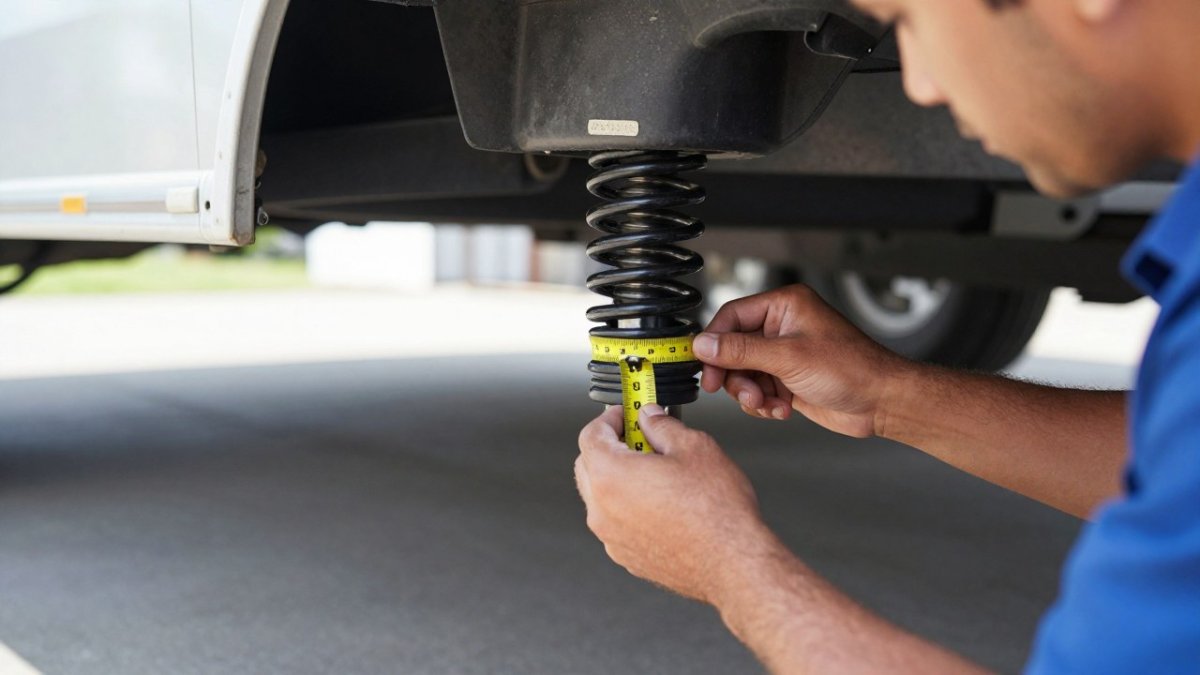
Measure both twice. Then measure your bolt pattern, which is the circle diameter through your wheel lug holes and the count of lugs. A 5-on-4.5 pattern and a 5-on-5 pattern look similar at a glance and are not interchangeable.
Lippert Axle Serial Number Lookup: Step by Step
A Lippert axle serial number lookup follows the same path every time, and it takes about ten minutes if you have the tag in hand. Lippert's own axle selection guidance says to begin by confirming axle capacity and trailer measurements before ordering anything. Here is the order we recommend:
- Photograph the identification tag from two angles in good light.
- Note the serial number and any model prefix stamped beside it.
- Measure spring center, hub face, and bolt pattern.
- Weigh your loaded trailer at a certified scale to confirm the real gross vehicle weight rating you need.
- Contact the manufacturer or a dealer with the serial and measurements together.
The serial number is the anchor. Everything else confirms it. Skipping the scale step is the most common mistake we see, because owners order to the trailer's sticker rating rather than what they actually haul.
Dexter vs. Lippert Trailer Axles: Build Quality Compared
The Dexter vs. Lippert trailer axles comparison comes down to application more than a clear winner. Both brands build leaf spring and torsion axles across common weight ratings.
| Brand | Known For | Watch For | Best For |
|---|---|---|---|
| Dexter | Wide parts availability, common OEM fitment | Verify brake assembly match by serial | Straight replacements and easy parts sourcing |
| Lippert | Broad axle-type range, published selection guides | Confirm capacity before ordering | Owners researching fitment first |
| Duratek | Positioned on value in side-by-side comparisons | Limited independent data available | Budget-conscious buyers who verify specs |
| Carter | Reported lower price point in trade comparisons | Quality claims are not independently tested | Buyers willing to confirm specs directly |
For a working trailer, parts availability often matters more than a small price gap. If you are still deciding which trailer platform to build around, our guide to the best trailer brands for contractors covers the bigger picture.
A Maintenance-Based Reliability Score, Not a Brand Reputation
Most comparisons stop at the name on the tag. A more useful approach is to score each brand on the failure points that actually strand trailers, because reliability is earned at the seal, the spindle, and the weld, not in the marketing copy.
- Seal and bearing life. Look for weeping grease at the seal lip and heat discoloration on the spindle. A brand whose seals weep early forces bearing service more often, and a dry bearing can seize and destroy the spindle with almost no warning.
- Spindle fatigue. Inspect the spindle shoulder and the transition to the tube for hairline cracks. Spindle fatigue is the failure that turns a routine replacement into a road call.
- Brake hardware corrosion. Electric brake backing plates, magnets, and wiring connectors are where road salt does its fastest damage. A brand with better-coated hardware survives winter towing longer.
Use the four checkpoints above as your own scoring sheet: inspect a used axle of the brand you are considering, or ask a dealer which of these parts they stock. If they stock seals and spindles for that brand, that is a reliability signal in itself.
Cross-Referencing Specs Between Brands Before You Buy
Owners rarely struggle to identify a brand; they struggle to find a direct replacement when the original is discontinued or out of stock. Cross-referencing four dimensions solves most of that problem: weight rating, spring center, hub face, and bolt pattern.
Watch out: a same-capacity axle from a different brand can still differ in spindle dimensions and brake mounting, so confirm the brake assembly and bearing part numbers cross over before you order.
Torsion vs. Leaf Spring: Matching the Axle to the Job
Torsion axles use rubber cords inside the tube to absorb road shock, while leaf spring suspension uses stacked steel springs and shackles. Torsion setups ride smoother and sit lower, which suits enclosed cargo and concession trailers.
Choose torsion if you haul fragile equipment or want a lower deck height. Choose leaf spring if you regularly load near capacity or want serviceability with basic tools.
Trailer Axle Inspection and Maintenance That Extends Life
Routine inspection is where reliability is actually earned, not in the brand name on the tag. Check these on a set schedule:
- Grease seals for weeping or tears at every bearing service
- Bearing play by rocking the wheel top to bottom
- Brake assembly and electric brake wiring for corrosion
- Camber and toe-in wear patterns on tire tread
Grease bearings on schedule rather than waiting for noise or heat. For the full parts list that keeps an axle healthy between services, see our roundup of essential trailer parts for regular maintenance.
Upgrade or Replace? Cross-Referencing Compatibility Before You Buy
Replacing means matching what you have. Upgrading means matching what you need, and the two require different homework. Before you buy, cross-reference four things: weight rating, spring center, hub face, and bolt pattern. If any one of them changes, you are also changing wheels, fenders, or suspension mounts.
A Decision Matrix for Upgrade vs. Like-for-Like Replacement
Most guides tell you to "match your towing capacity" and stop there. A clearer path is to run your situation against four questions in order:
- Do you consistently haul near or above the current rating? Weigh the loaded trailer at a certified scale. If the real gross weight is at or above the axle rating on a regular basis, you are a candidate for an upgrade, not a like-for-like swap.
- Are the brakes undersized for your loads? If stopping distance has grown or the brakes fade on long descents, a higher-capacity axle with larger brake assemblies may be the right move even if the beam itself is sound.
- Has rust reached the tube? Surface rust on the paint is cosmetic; flaking scale or pitting on the tube wall is structural. If rust has reached the tube, replace rather than repair.
- Did the axle fail from wear while the rating still fits your work? Then replace like-for-like. Upgrading a trailer that is already correctly rated adds cost and may force wheel and fender changes you do not need.
If the answer to question one or two is yes, price the upgrade against the cost of wheels, fenders, and suspension mounts before you commit. If the answer to question three is yes, do not defer the replacement.
Environmental Durability: Saltwater, Road Salt, and Freshwater
Where you tow shortens axle life faster than mileage does, and the coating on the axle is the variable most owners ignore. A painted or powder-coated axle holds up well in freshwater and dry climates.
Watch out: an upgraded axle with a higher rating can exceed the capacity of your trailer frame, tires, or coupler, so confirm the whole towing system is rated for the new load before you buy.
Getting the Right Axle for Your Trailer at DoubleTake
The fastest way to end the guesswork is to bring your measurements to people who sell axles and trailers every day. DoubleTake Trailer Sales offers an in-house service and parts department, so you can bring your identification tag and measurements to the team for help matching a replacement to your trailer.
Stop guessing at part numbers. Get started with DoubleTake Trailer Sales and put the right axle under your load.
Frequently Asked Questions
How can I identify the brand of my trailer axle?
Start at the axle tube and look for a welded or stamped identification tag. It usually lists the manufacturer, part number, weight rating and serial number. If the tag is gone, compare visual cues: leaf spring versus torsion design, brake assembly style and mounting bracket shape. Dexter and Lippert axles are the most common on production trailers, so measure spring centers and hub face dimensions and match them against a trailer axle identification chart before ordering parts.
Where can I find the serial number on a trailer axle?
The serial number is normally on the identification tag welded to the axle tube, often on the rear or underside where road spray is less likely to wear it away. Some builders stamp the number directly into the tube near the spring seat. Clean the area with a rag and a light wire brush, since paint and rust hide the digits. Write the number down and photograph it; it is the key to a Lippert axle serial number lookup or a warranty claim.
How can I tell what weight rating my trailer axle has?
Check the identification tag first, which lists the axle capacity directly. If it is unreadable, measure the axle tube diameter and the brake drum or hub size, then compare those measurements against a trailer axle identification chart. Common capacities run from 3,500 to 7,000 pounds per axle, with heavier 8,000-pound units using thicker tubes and larger brakes. Never guess: an axle rated below your loaded trailer weight is a towing safety problem, not just a parts mismatch.
Are Lippert and Dexter trailer axles interchangeable?
Sometimes, but only when the mounting dimensions match. Spring centers, hub face dimension, brake flange position and overall beam length all have to line up, and the weight rating must meet or exceed the original. Bolt patterns and wheel lug spacing also need to match your wheels. A Dexter vs. Lippert trailer axles swap is common on utility and enclosed trailers, but verify every measurement against the chart before buying, and confirm the brake assembly wiring matches your tow vehicle.
What should I look for when comparing trailer axle brands?
Look past the sticker price. Check the axle tube wall thickness, weld quality at the spindle and spring seats, bearing and grease seal quality, and how easy replacement parts are to source locally. Confirm the brand publishes clear weight ratings and serial number lookup tools. Maintenance support matters too: a brand with a wide bearing kit and brake assembly network keeps you on the road. Ask your dealer which brands they stock parts for, since that decides how fast a repair happens.