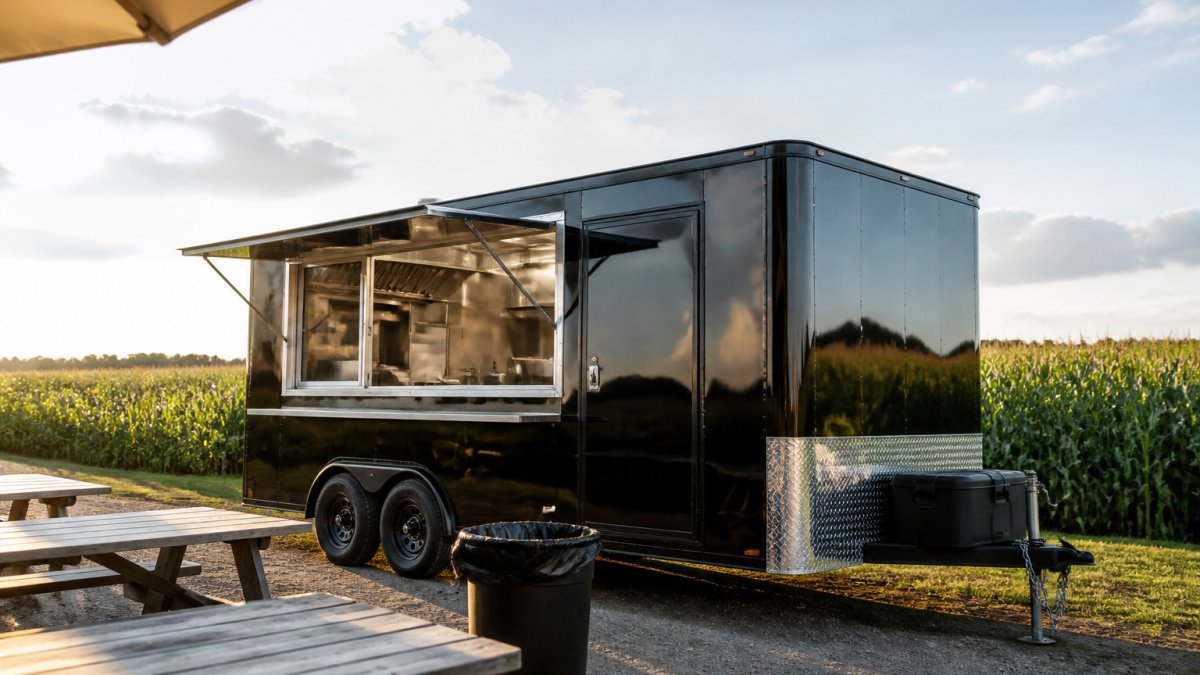
 comparison
Buy Custom Concession Trailers in Iowa: 2026 Review
Table of Contents
- What Iowa Buyers Need to Know Before Buying a Custom Concession Trailer
- New vs Used Concession Trailers: Which Makes More Sense for Your Business?
- Custom Food Trailer Cost: What Drives the Price Up or Down
- Food Trailer Equipment Checklist: What Should Be Built In
- Food Trailer Buying Checklist: Questions to Ask Every Seller
- Comparing Custom Concession Trailer Builders and Sellers in Iowa
- Build Timelines, Permits, and After-Sale Support
- Conclusion
- Frequently Asked Questions
Last Updated: October 5, 2026
What Iowa Buyers Need to Know Before Buying a Custom Concession Trailer
A concession trailer is a mobile food-service unit built to your menu, layout, and volume, rather than a fixed model you adapt to, and concession trailers Iowa buyers order are no exception. For anyone searching for buy custom concession trailers Iowa, the appeal is simple: you get a kitchen that works the way your business operates.
Three things decide whether a build goes well. First, your menu drives everything: a coffee and pastry trailer needs different equipment than a BBQ or taco operation. Second, your service model matters. Festival vending, weekday lunch routes, and private catering each demand a different serving window, storage plan, and power setup.
Before comparing builders, get clear on what you plan to sell and where, that decision shapes every specification that follows.
New vs Used Concession Trailers: Which Makes More Sense for Your Business?
New concession trailers give you a warranty, current equipment, and a layout built to your menu. Used units cost less upfront but carry unknowns: aging wiring, worn flooring, and equipment that may not meet current food-service standards.
New trailers make the most sense when:
- You need a specific layout and menu flow
- You want commercial-grade equipment under warranty
- You plan to operate for years without major repairs
Used trailers can work when:
- Your budget is tight and you can inspect thoroughly
- You are testing a concept before committing
- You can handle repairs yourself
The risk with used is hidden: a clean-looking trailer can have a failing breaker panel, a compromised three-compartment sink, or a water system that will not pass inspection.
Custom Food Trailer Cost: What Drives the Price Up or Down
Custom food trailer cost depends on size, equipment, and finish, not a single sticker figure. A 12-foot coffee trailer and a 24-foot full-service kitchen sit in different price brackets, so we quote each build individually rather than publish a number that will not fit your menu.
The biggest cost drivers:
- Length and layout. More square footage means more materials and more build time.
- Equipment package. A three-compartment sink, handwashing sink, and drain board are baseline. Fryers, griddles, refrigerators, and exhaust hoods add cost.
- Electrical and power. Breaker panel capacity, generator readiness, and air conditioning all affect the total.
Financing and Total Cost of Ownership
Total cost of ownership goes beyond the purchase price. Insurance, commissary fees, permits, maintenance, and equipment replacement add up over the trailer's life, so plan for them from day one.
Financing changes the math for many buyers. No credit check financing options exist, which matters if past credit issues have made traditional lending difficult. We offer flexible financing solutions at DoubleTake Trailer Sales so a tight budget does not have to stop a good business plan.
Food Trailer Equipment Checklist: What Should Be Built In
A food trailer equipment checklist should cover three areas: kitchen equipment, plumbing, and electrical. Missing an item means an expensive retrofit later, so run through this before finalizing any build.
Kitchen equipment
- Cooking surface sized to your menu (griddle, fryer, range, or combi)
- Exhaust hood with fire suppression rated to your cooking load
- Refrigeration and freezer space matched to your prep cycle
Plumbing
- Three-compartment sink for washing, rinsing, sanitizing
- Handwashing sink with hot water, separate from the three-compartment
- Drain board sized to your largest pot or pan
Electrical
- Breaker panel rated for your connected load with headroom
- Generator or shore power hookup, or both
- Interior lighting rated for food prep
Sizing the Numbers That Actually Matter
Sizing is where builds go wrong, and the step most buyers rush.
- Electrical load. Add up the running amps of every appliance you plan to operate at once, then add a safety margin. A trailer that trips a breaker mid-service loses sales. Running a fryer, griddle, and refrigerator simultaneously needs a different panel than a coffee trailer running an espresso machine and a fridge.
- Water capacity. Estimate gallons per service day from your menu: handwashing, warewashing, and cooking water all draw from the same tank. Buyers commonly undersize fresh water and oversize gray water, then discover the imbalance on their first busy weekend.
- Ventilation. Hood size and fan CFM should match your cooking surface, not trailer length. A 24-foot trailer with a small griddle does not need the same hood as a 16-foot trailer with a fryer and range.
Compliance Anchors to Confirm Before You Sign
Food-service equipment requirements are set at the state and county level and vary by jurisdiction. Two anchors are consistent enough to plan around:
- Three-compartment sink plus a separate handwashing sink. Most health departments expect both, and the handwashing sink must be accessible without crossing the cooking area.
- Hot water at the handwashing sink. Cold-only handwashing is a common inspection failure.
Confirm specifics with your local health department before the build starts, a layout that fails inspection is expensive to fix.
A Quick Spec Sheet to Bring to Any Builder
Before you talk to a builder, fill in these fields. It makes quotes comparable and exposes sellers who are guessing.
| Spec | Your Target | Why It Matters |
|---|---|---|
| Trailer length | ___ ft | Drives layout, weight, and price |
| Cooking equipment | ___ | Sets hood, panel, and gas or electric load |
| Connected electrical load | ___ amps | Sizes breaker panel and generator |
| Fresh water capacity | ___ gal | Sets service-day length |
| Gray water capacity | ___ gal | Must match fresh water use |
| Axle / GVWR | ___ lb | Must cover loaded weight |
| Power source | Shore / generator / both | Affects cost and siting |
Bring this sheet to every seller. A builder who answers in specifics is worth shortlisting; one who deflects to "it depends" is not.
BTU ratings on cooking equipment and water capacity in gallons both matter for compliance. Size them to your busiest day, not your average one.
Food Trailer Buying Checklist: Questions to Ask Every Seller
A food trailer buying checklist keeps you from getting swept up in a shiny unit. Ask these questions before committing to any seller.
- What is my total timeline, from deposit to delivery? Get it in writing.
- What warranty covers the build, and for how long?
- What is included in the asking price, and what is extra?
- Can I see a completed build or in-progress unit?
- Who handles service and parts after the sale?
- Do you build to order, or only sell what is on the lot?
- How do you handle financing, and what are the terms?
The last two questions separate sellers who stand behind their work from those who disappear after the sale. A dealer with an in-house service and parts department answers both without hesitation.
Comparing Custom Concession Trailer Builders and Sellers in Iowa
Most search results for custom concession trailers mix three very different business models: local custom dealers, custom manufacturers, and online inventory marketplaces. They are not interchangeable, and the right fit depends on whether you need speed, a fully tailored build, or a low entry price.
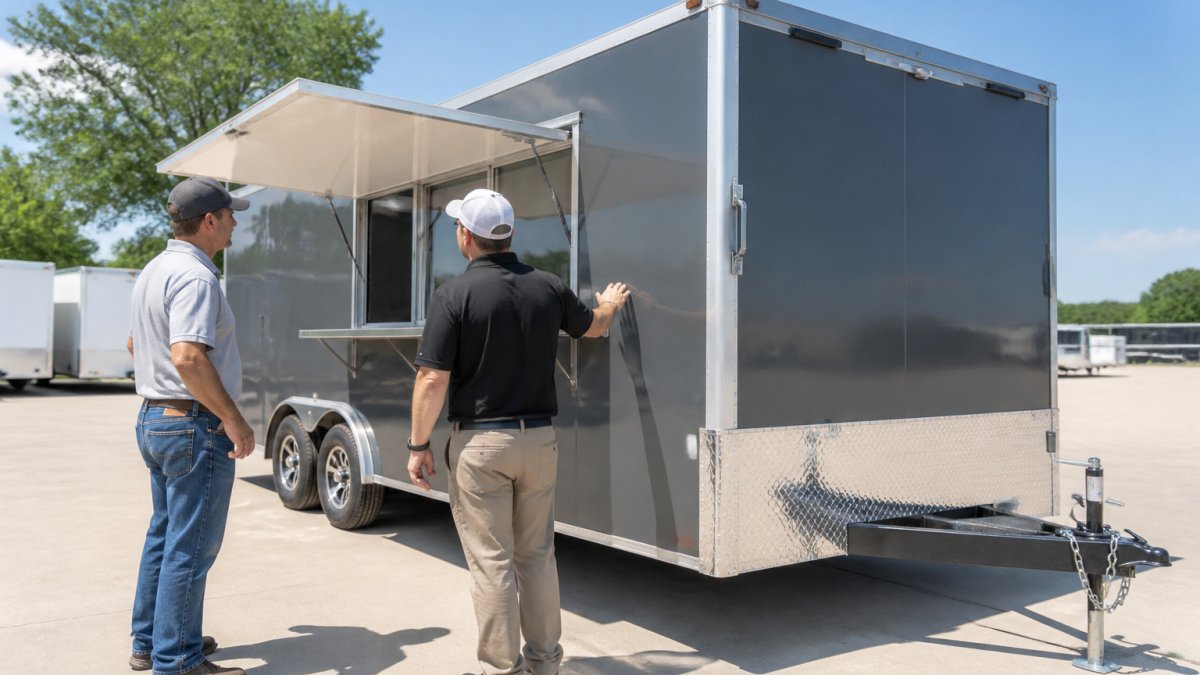
The Three Seller Types, Compared Honestly
| Option Type | Best For | Typical Lead Time | Equipment Included | After-Sale Support |
|---|---|---|---|---|
| Local custom dealer | Tailored builds, financing, service | Weeks to a few months, varies by spec | Built to order | In-house service and parts |
| Custom manufacturer | Large or complex builds | Longer lead times, often months | Built to order | Varies by shop |
| Online inventory seller / marketplace | Ready-to-operate units, fast start | Immediate to a few weeks | As listed | Limited, often remote |
A few patterns hold across all three:
- Local custom dealers usually combine in-stock inventory with build-to-order capability. You can see a finished unit, ask about service, and get financing in one place. The trade-off: a fully custom build still takes time.
- Custom manufacturers are the right call when your menu or volume is unusual enough that a standard layout will not work. Expect longer lead times and less hand-holding on financing and permits.
- Online inventory sellers and marketplaces are fastest and often cheapest upfront, but you buy as-is. Inspection, delivery, and any retrofit are on you.
How to Compare Builders Without Getting Sold
Use the same five criteria for every seller. Score each one, and the decision usually makes itself.
- Build capability. Do they build to order, or only sell what is on the lot? Ask to see an in-progress unit, not just a finished one.
- Lead time in writing. Get a deposit-to-delivery date range in the contract, not a verbal estimate.
- Warranty terms. What is covered, for how long, and who performs the work?
- Service and parts. Is there an in-house department, or will you be sourcing parts yourself mid-season?
- Financing options. What terms are available, and does the seller work with buyers who have credit challenges?
A seller who answers all five in specifics is worth shortlisting. One who deflects on lead time or warranty is telling you something.
Where Each Option Falls Short
No seller type wins on every criterion, and honest comparison means naming the trade-offs.
- Local custom dealers can be slower than a marketplace for a fully custom build. Custom manufacturing takes time, and no dealer can honestly promise otherwise.
- Custom manufacturers may not offer financing or permit guidance, so you handle those separately.
- Online marketplaces rarely provide warranty service, and inspection is entirely your responsibility. A trailer that looks clean online can have failing wiring or a compromised sink.
A Note on Our Own Fit
DoubleTake Trailer Sales is a locally-owned dealership established in 2010. We offer in-stock inventory and custom-built solutions, plus no credit check financing and an in-house service and parts department. One customer drove from Ohio for a concession trailer we had in stock and ready to go, noting the quality construction and that they skipped the extended lead times of a custom build.
Build Timelines, Permits, and After-Sale Support
Build timelines vary with complexity, but a straightforward custom build often takes several weeks from deposit to delivery.
Permits and inspections are where buyers get tripped up. Food-service compliance is handled at the state and county level, and requirements differ by jurisdiction.
After-sale support is the part competitors gloss over. Ask what happens when a breaker fails or a pump gives out mid-season.
Conclusion
Getting a concession trailer right takes planning, and buyers who struggle usually skipped the checklist. If you are ready to move from research to a real build, DoubleTake Trailer Sales can help. We offer custom trailer builds to your specifications, no credit check financing options, and an in-house service and parts department to keep you running long after the sale.
Frequently Asked Questions
How much does a custom concession trailer cost?
Pricing depends on trailer length, layout, equipment, and materials. For a quote tailored to your menu and build specs, contact a dealer directly.
Is it better to buy a new or used concession trailer?
New trailers give you a warranty, current equipment, and a layout built to your menu, but cost more upfront. Used trailers cost less and can be ready immediately, though you risk worn equipment, outdated wiring, and hidden water damage. Inspect the frame, welds, sinks, and breaker panel carefully. If the price difference is small, a new custom build often delivers better long-term value.
What should I look for when buying a concession trailer?
Check the frame and welds for cracks or rust, confirm the trailer has a three-compartment sink, handwashing sink, and drain boards, and verify the breaker panel matches your equipment load. Ask about water capacity, BTU rating for cooking gear, axle rating, and whether the trailer is wired for 120V or 240V. Also confirm the seller provides parts and service after the sale.
How long does it take to build a custom concession trailer?
Build timelines vary by manufacturer and current demand. Custom builds often take several weeks to a few months from order to delivery. One customer reported receiving a custom-built trailer in about five weeks. In-stock units ship immediately, so if you need to start vending fast, ask the dealer what is already on the lot before committing to a build-to-order unit.
What equipment do I need in a concession trailer?
At minimum, plan for a three-compartment sink, handwashing sink, drain boards, a commercial-grade refrigerator, cooking equipment sized to your menu (griddle, fryer, smoker, or coffee station), a breaker panel, and adequate water capacity. Ventilation, air conditioning, and a serving window are also common. Build your equipment list around your menu first, then size the trailer to fit.