 blog
Best Utility Trailers for Small Contractors
Table of Contents
- What Makes a Utility Trailer Right for Small Contractors
- Utility Trailer Size for Contractors: Getting the Dimensions Right
- Open vs. Enclosed Contractor Trailer: Which Setup Works Best
- Understanding Utility Trailer Payload Capacity and Load Limits
- Best Trailer for Remodeling Contractors: Equipment and Materials Transport
- Key Features That Matter: Deck Configuration, Tie-Downs, and Durability
- Total Cost of Ownership: Beyond the Purchase Price
- Frequently Asked Questions
Last Updated: October 11, 2026
What Makes a Utility Trailer Right for Small Contractors
Choosing the right utility trailer for your contracting business is one of the most important equipment decisions you'll make. The best utility trailers for small contractors balance payload capacity, durability, and cost-effectiveness without forcing you to pay for features you don't need.
Oversizing creates problems: higher fuel costs, difficult maneuverability on tight jobsites, and unnecessary maintenance expense.
The decision comes down to three factors: what you're hauling, where you're hauling it, and how often. A landscape contractor needs different specs than a remodeling crew; a solo operator has different constraints than a team with multiple vehicles.
Utility Trailer Size for Contractors: Getting the Dimensions Right
Trailer size directly impacts efficiency. Too small means multiple trips; too large means wasted capacity and maneuverability problems on residential jobsites.
Common Deck Lengths and Widths
Most contractors operate in the 6x12 to 8x16 range. A 6x12 works for solo operators and small crews, fitting standard lumber and basic tools. The 7x14 offers more space without becoming unwieldy on narrow streets or residential lots.
An 8x16 provides serious cargo space while fitting most residential gates. Anything larger than 8x20 creates maneuverability problems.
Most trailers come in 5-foot or 6-foot widths; the extra foot adds about 20% more deck space without significantly changing handling.
Matching Size to Your Jobsite and Equipment
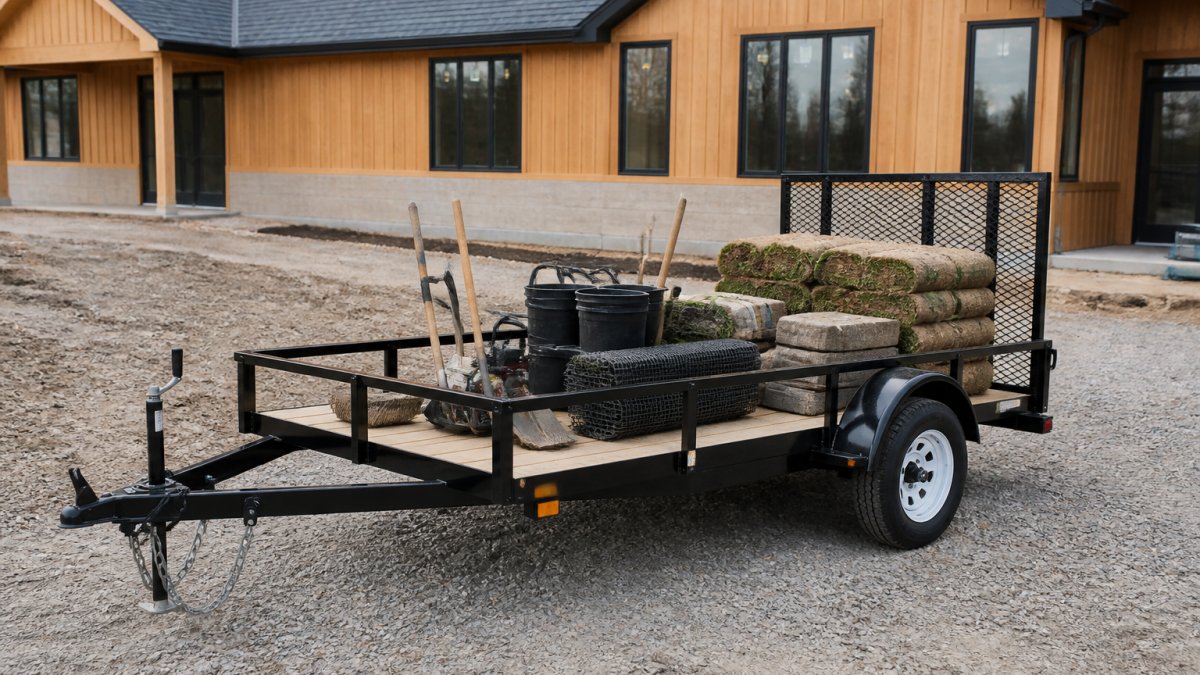
Consider your typical day. Residential remodeling work requires tight-space maneuverability; landscape work can accommodate larger trailers. A 6x12 works for hand tools and materials; a 7x14 handles mid-sized equipment; an 8x16 accommodates mini excavators or multiple landscape machines.
Residential driveways often can't accommodate trailers over 7 feet wide or 16 feet long. Ask yourself: where do 80% of my jobs happen? That answer determines your size ceiling.
Open vs. Enclosed Contractor Trailer: Which Setup Works Best
This choice separates contractors into two camps, and the right answer depends entirely on what you're protecting and how much weather exposure matters.
When Open Trailers Make Sense
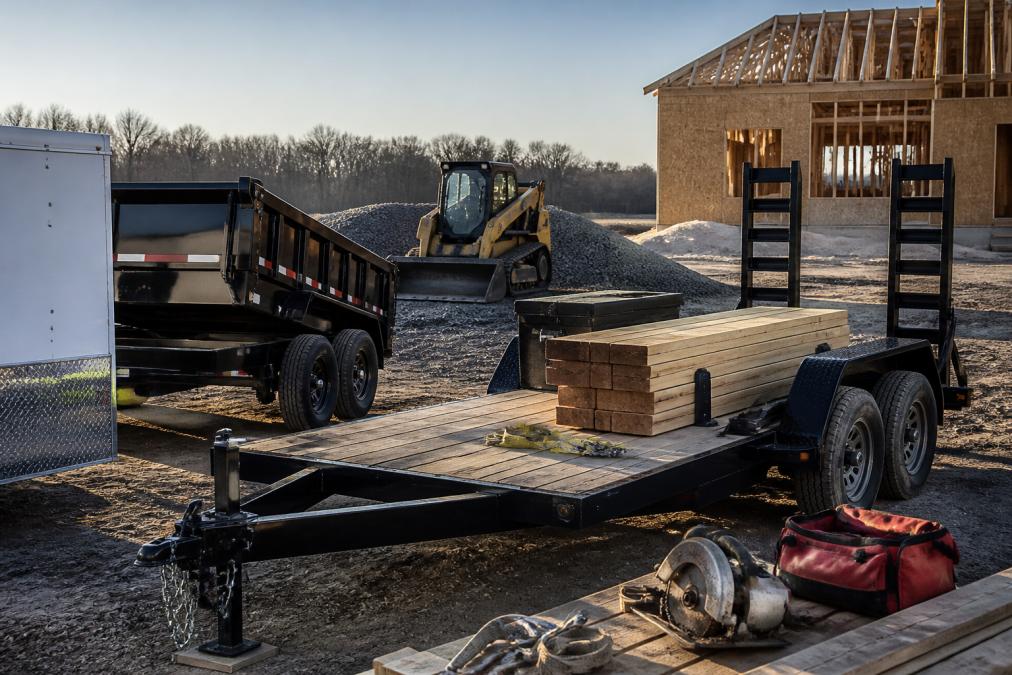
Open trailers cost less and offer flexibility for long materials. Loading is faster and cleaning easier. For contractors hauling lumber, drywall, roofing materials, and large equipment, open trailers are standard.
Open trailers work best for weather-resistant cargo like lumber, concrete blocks, and landscaping equipment. You avoid the weight penalty of an enclosed structure, preserving payload capacity.
Downsides: cargo can shift, theft is a concern, and rain damages drywall and finished materials.
When Enclosed Trailers Protect Your Investment
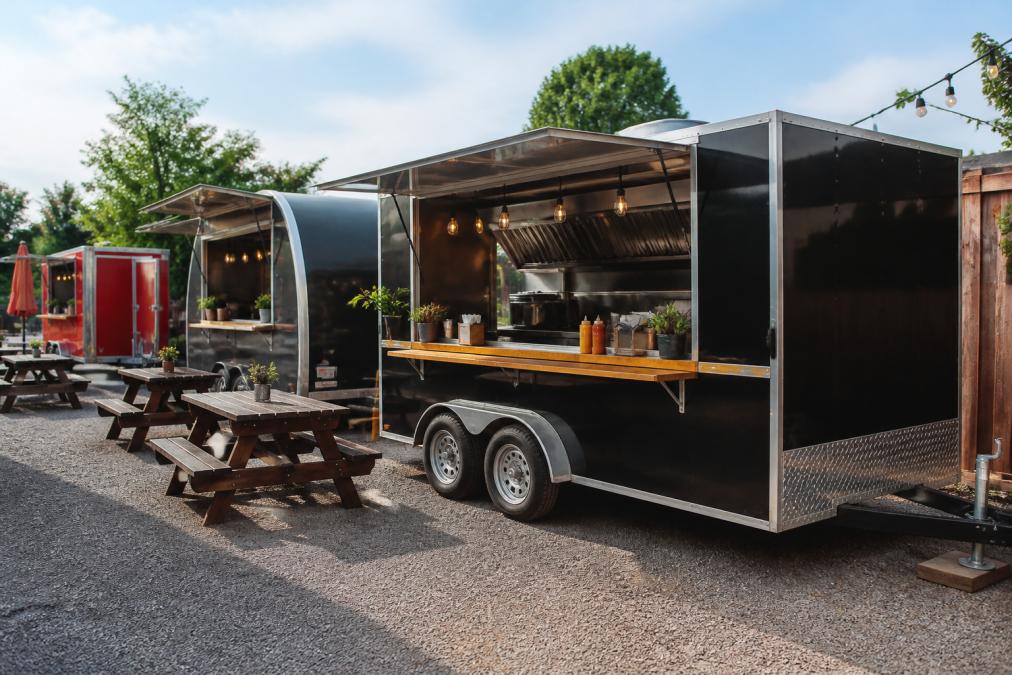
Enclosed trailers cost more but protect materials and tools from weather and theft. For contractors hauling high-value items, the protection justifies the cost.
Enclosed trailers improve security and reduce waste. For remodeling contractors, this protection often pays for itself within the first year.
Trade-offs: enclosed trailers weigh more, reducing payload capacity and requiring a heavier tow vehicle. You can't haul long materials easily, and loading takes more time.
Understanding Utility Trailer Payload Capacity and Load Limits
Most contractors underestimate weight limits. You need to understand the numbers and apply them to your actual equipment.
Gross Vehicle Weight Rating and Tongue Weight
Your trailer has two critical limits: GVWR (maximum total weight including the trailer) and tongue weight (typically 10-15% of payload capacity, pressing down on your hitch).
Example: a 6x12 trailer with 7,000-lb GVWR and 1,400-lb trailer weight leaves 5,600 lbs payload capacity. Tongue weight of 600-800 lbs must be handled by your tow vehicle.
Real-World Load Examples for Common Contractor Equipment
Understanding weight in the abstract is one thing; knowing what your actual equipment weighs is another. Here are typical weights for common contractor loads:
- Lumber load (full 2x4 and 2x6 assortment): 2,000-2,400 lbs
- Drywall (one pallet, 60 sheets of 5/8" board): 3,000-3,200 lbs
- Concrete blocks (one pallet, 90 blocks): 3,600-4,000 lbs
- Landscape equipment (walk-behind mower, trimmer, blower, gas cans): 800-1,200 lbs
- Mini excavator with trailer-mounted carrier: 4,500-5,500 lbs
- Hand tools, power tools, and miscellaneous supplies: 400-800 lbs
Now apply this to a real scenario. You're a remodeling contractor loading a 6x12 trailer (5,600-lb payload) for a drywall job: one pallet of drywall (3,200 lbs), lumber for framing (1,800 lbs), tools and supplies (600 lbs). Total: 5,600 lbs. You've hit your limit before loading a single piece of finished flooring or paint. Add a second pallet of drywall and you're 800 pounds over GVWR, unsafe and illegal.
A landscape contractor with a 7x14 trailer (7,500-lb payload) can haul a walk-behind mower (500 lbs), a zero-turn mower (1,200 lbs), a compact loader (3,500 lbs), and hand equipment (400 lbs) for a total of 5,600 lbs, well within limits with room to spare.
Safe Loading and Tow Vehicle Compatibility
Your tow vehicle's towing capacity must exceed the trailer's GVWR, and its payload capacity must exceed tongue weight. Many contractors use vehicles that barely meet minimums, leaving no safety margin.
Your tow vehicle should be rated for at least 25% more than your trailer's loaded weight. A 5,600-pound payload trailer needs a vehicle rated for 7,000+ pounds towing capacity.
A half-ton pickup (5,000-7,000 lbs towing) can safely tow a 6x12 trailer only if rated for 7,000+ pounds and the truck bed is empty. A three-quarter-ton truck (8,000-10,000 lbs) is safer for regular contractor use.
Weight Distribution and Brake Requirements
Distribute weight evenly with heavy items low and forward, never high or toward the rear. This prevents instability and improves control.
Trailers over 3,000 lbs GVWR require electric or hydraulic brakes activated by a brake controller in your tow vehicle. Friction brakes alone are insufficient. Upgrade before towing, it's a legal requirement.
Verify brake type, capacity, and controller function before towing.
Best Trailer for Remodeling Contractors: Equipment and Materials Transport
Remodeling contractors have unique needs. You're hauling drywall, lumber, flooring, paint, and tools, all weather-sensitive. You need security because tools disappear on jobsites. You also need to move between multiple residential locations, which means maneuverability matters.
For most remodeling contractors, a 7x14 enclosed trailer is the sweet spot: large enough for a full day's materials, small enough for residential driveways, and protective enough to justify the cost.
Starting out or working primarily with hand tools? A 6x12 open trailer works at lower cost. As you grow, upgrade to an enclosed 7x14.
DoubleTake Trailer Sales offers custom enclosed trailers for remodeling contractors.
Key Features That Matter: Deck Configuration, Tie-Downs, and Durability
The best utility trailers for small contractors include specific features that make daily work easier and keep your cargo secure.
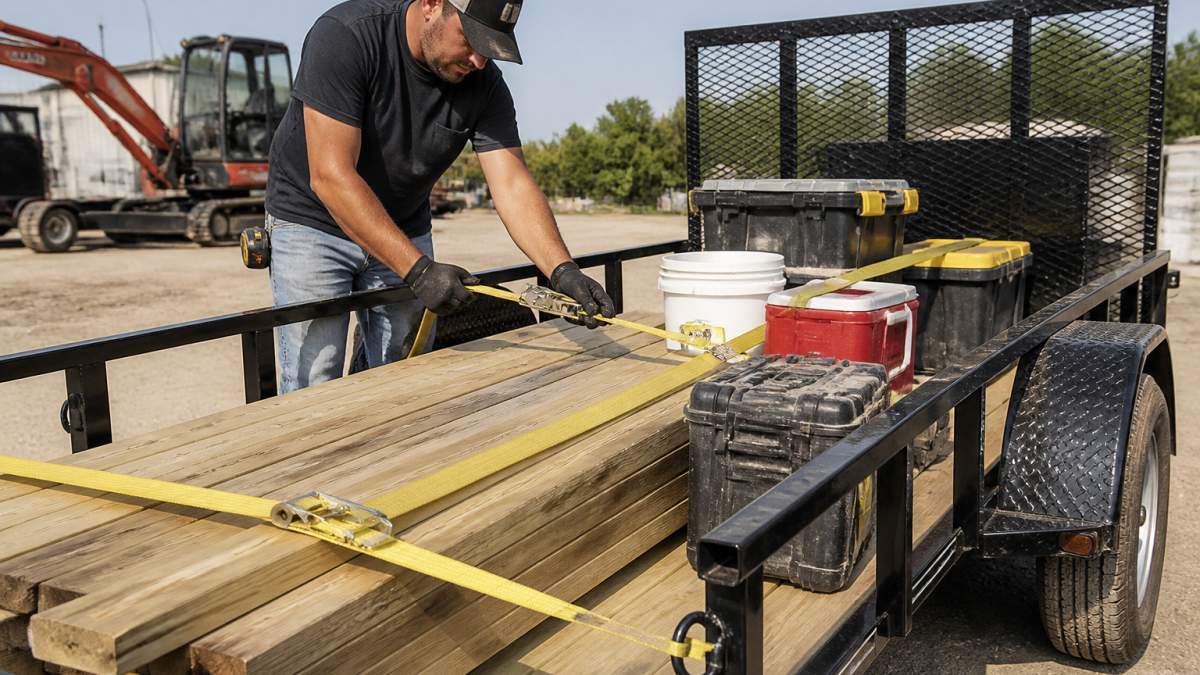
Loading Ramps, Side Rails, and Cargo Security
Quality trailers include integrated aluminum loading ramps, sturdy removable side rails, and properly-spaced tie-down points for secure load management.
Enclosed trailers should have interior tie-down rings and secure locking mechanisms. A door that doesn't latch properly defeats the entire purpose of protection. Ramps should be designed so they don't block the door when stowed.
Construction Quality and Expected Lifespan
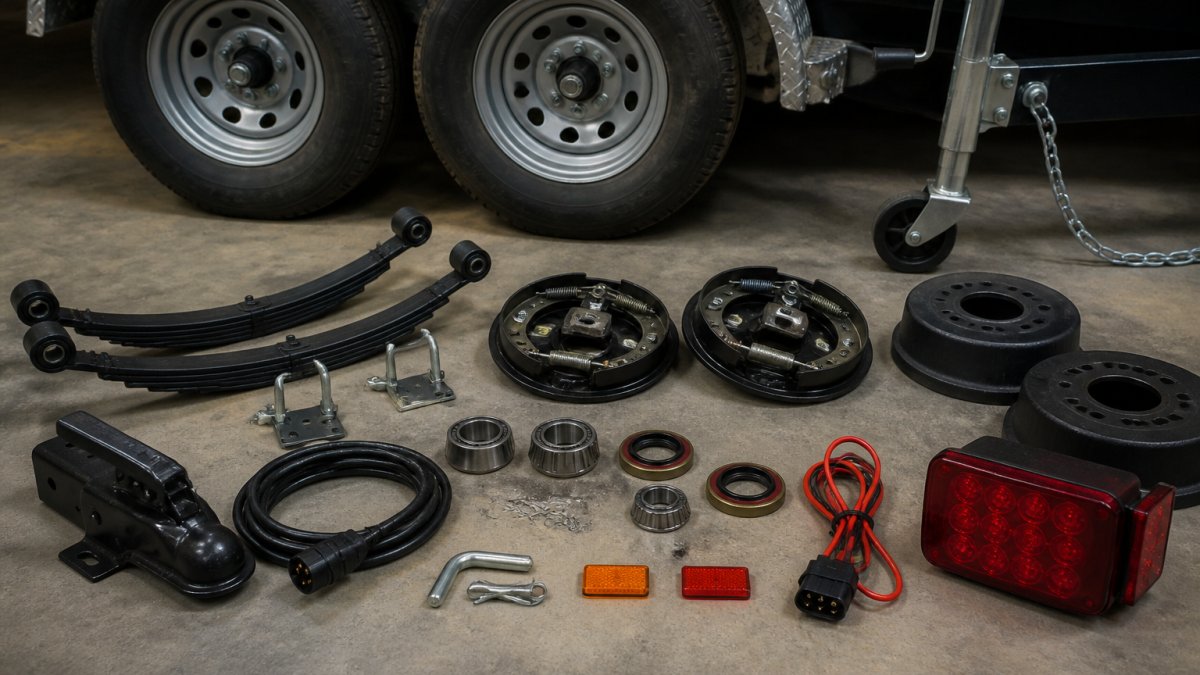
A well-built utility trailer lasts 10-15 years with proper maintenance. Cheap trailers start showing problems within 3-5 years: rust, weld failure, and brake issues. The difference usually comes down to frame quality, welding standards, and paint system.
Look for trailers with hot-dipped galvanized frames or quality powder coating. Welds should be consistent and smooth, not lumpy or incomplete. Axles should be rated for the GVWR with some margin. Brakes should be electric or hydraulic, not just friction brakes.
When you buy from DoubleTake Trailer Sales, every trailer is built to last. We use quality materials, professional welding, and finishes that hold up to jobsite abuse. Our customers tell us their trailers still look and operate well after years of heavy use.
Total Cost of Ownership: Beyond the Purchase Price
The purchase price is just the beginning. Smart contractors calculate total cost of ownership (TCO), which includes maintenance, repairs, financing, insurance, registration, and eventual replacement. A cheaper trailer often costs more per year when you factor in durability and downtime.
Maintenance, Inspections, and Parts Availability
A quality trailer requires annual inspections: brake checks, light function, tire condition, weld integrity, and structural inspection for rust or damage. Budget $300-500 per year for routine maintenance. Tires need replacement every 3-5 years depending on use and mileage; a set of two trailer tires typically costs $200-400. Brakes require service every 2-3 years or after 10,000-15,000 miles; brake service runs $150-300. Rust prevention through regular washing and touch-up paint extends lifespan significantly and costs $50-100 annually.
Parts availability matters. If your trailer breaks down, can you get parts locally or do you wait weeks for shipping? A locally-owned dealership ensures you get parts and service quickly.
Financing, Registration, and Insurance
Most contractors finance their trailers rather than paying cash. Financing terms and interest rates depend on credit and lender.
Registration varies by state. Check your state's Department of Motor Vehicles for exact requirements.
Insurance is often overlooked. Trailer liability and cargo coverage depends on trailer value and coverage limits. If you're hauling high-value tools or equipment, cargo coverage becomes essential, a theft or accident loss without insurance can wipe out your profit margin for months.
Total Cost of Ownership Calculation
Here's how to compare two trailers objectively:
Scenario: 6x12 Open Trailer vs. 7x14 Enclosed Trailer
Depreciation and Resale Value
A well-maintained utility trailer holds value better than most equipment. When you calculate true TCO including resale value, the gap between options narrows significantly. A higher-quality trailer that holds value better often becomes the smarter long-term investment, even if the sticker price is higher.
Frequently Asked Questions
What size utility trailer is best for a small contractor?
Most small contractors find 6x12 or 7x14 trailers strike the right balance between capacity and maneuverability on tight jobsites. A 6x12 works well for hand tools, smaller equipment, and light materials; a 7x14 handles larger equipment and more volume without becoming difficult to park or navigate. Your choice depends on the type of work, remodeling crews often prefer smaller sizes, while landscapers and foundation contractors typically need more deck length. Visit DoubleTake Trailer Sales to see in-stock options and discuss custom sizing for your specific trade.
What is the difference between open and enclosed utility trailers for contractors?
Open trailers cost less, weigh less, and are easier to load large equipment onto, making them ideal for hauling lumber, concrete, and landscaping materials. Enclosed trailers protect tools, materials, and equipment from weather and theft, critical for contractors storing expensive power tools or specialty gear overnight. Enclosed trailers also offer weather protection for job materials and allow secure storage between jobs. The trade-off is higher initial cost and slightly reduced towing efficiency. Choose based on what you're hauling and how much weather and security protection you need.
How much weight can a utility trailer safely carry?
Payload capacity depends on the trailer's gross vehicle weight rating (GVWR) minus its curb weight. Payload capacity varies by model. Equally important is your tow vehicle's towing capacity, your truck or SUV must safely handle the loaded trailer weight. Never exceed either limit. DoubleTake Trailer Sales can match a trailer's payload to your tow vehicle and help you load safely within legal limits.
Why should I buy a utility trailer locally instead of ordering online?
Local dealers like DoubleTake Trailer Sales offer in-house service and parts support, custom builds to your exact specs, and the ability to inspect trailers before purchase. A locally-owned dealership stays in business long-term and stands behind its trailers. You also avoid shipping costs and the risk of receiving damaged equipment from a distant seller.