 How-to
How Do You Maintain Concession Trailer Equipment?
Last Updated: November 5, 2026
Quick Summary
Maintain concession trailer equipment in three layers: daily cleaning and a visual walk-around, weekly deep cleaning and refrigeration checks, and seasonal winterization and part replacement. Log every task and reading, follow your manufacturer's service intervals, and test propane connections monthly with soapy water.
- Wash, rinse, and sanitize food-contact surfaces before every shift and again at close.
- Clean condenser coils on the schedule your equipment manual recommends, brushing from the inside out.
- Run the dollar-bill test on door gaskets and replace them when the bill slides free.
- Test propane connections monthly with soapy water and shut the tank valve if bubbles appear.
- Drain tanks and lines and blow them out with compressed air before freezing weather.
Table of Contents
- Why Concession Trailer Equipment Fails Without a Schedule
- Your Food Trailer Maintenance Checklist for Daily and Weekly Tasks
- Food Trailer Refrigeration Maintenance: Coils, Gaskets, and Temperature Logs
- Food Trailer Generator Maintenance and Electrical Checks
- Plumbing, Propane, and Gas Leak Checks
- Roadworthiness: Tires, Brakes, Wheel Bearings, and Lights Before Travel
- Concession Trailer Winterization: Preparing Equipment for the Off-Season
- Building a Maintenance Log and Budgeting for Repairs
- Frequently Asked Questions
Why Concession Trailer Equipment Fails Without a Schedule
Concession trailer equipment fails for one plain reason: nobody wrote down when it was last checked. A fridge that runs fine in June can quit in July because the coils clogged in May. A propane connection that held all spring can leak by fall because nobody tested it. The good news is that a concession trailer rewards routine care. This guide shows you exactly how to maintain concession trailer equipment, from daily wipe-downs to winter prep.
The Three Maintenance Layers: Daily, Weekly, and Seasonal
Think of maintenance in three layers. Each one catches problems the others miss.
- Daily: cleaning, sanitizing, and a quick visual walk-around
- Weekly: deep cleaning, refrigeration checks, and a full systems inspection
- Seasonal: winterization, part replacement, and log review
Skip a layer and the next one works harder. Skip two and equipment starts to fail.
Your Food Trailer Maintenance Checklist for Daily and Weekly Tasks
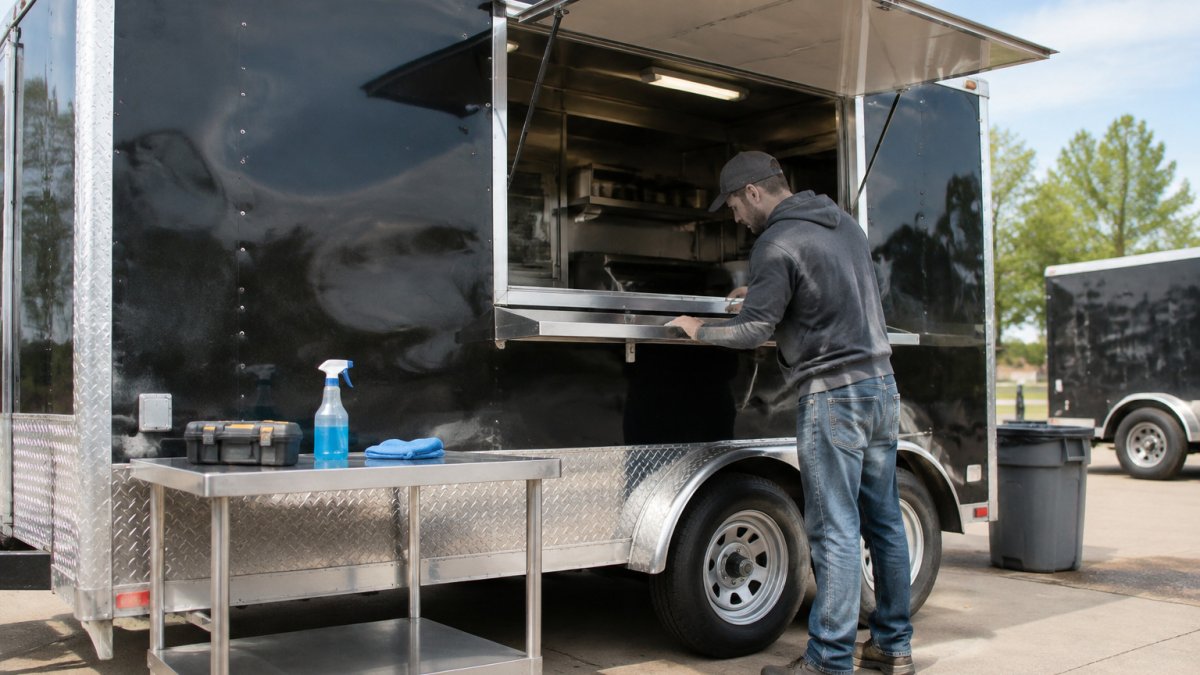
A food trailer maintenance checklist works best when it lives on a clipboard inside the trailer, not in a folder at home. Every task below takes minutes. None of them require a mechanic.
Daily Cleaning and Sanitation of Food-Contact Surfaces
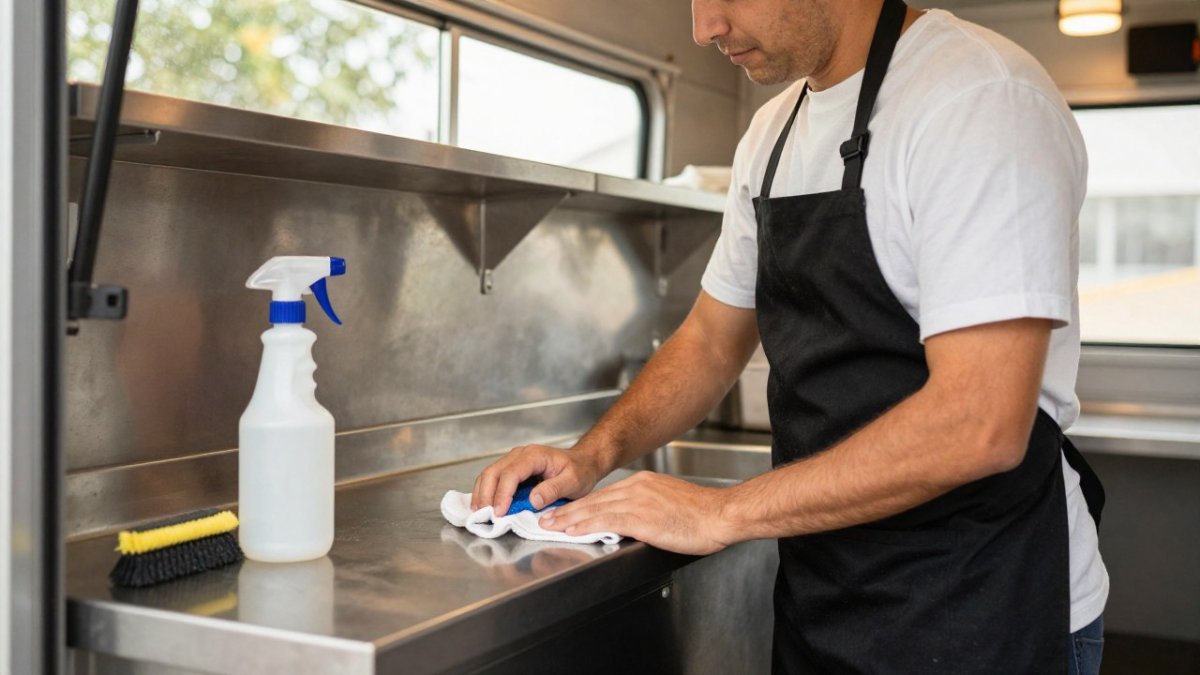
Start every shift with a clean slate. Wash, rinse, and sanitize cutting boards, countertops, prep tables, and utensils before food touches them. The FDA Food Code sets the standard most health departments inspect against, so follow its guidance on sanitizer contact times. At close, repeat the process and wipe down walls and handles. A common mistake is skipping the sanitizer step and only washing. Soap lifts grease; sanitizer kills what's left.
Weekly Deep Cleaning and Hard-to-Reach Areas
Once a week, pull equipment away from walls and clean behind it. Grease hides in corners, under fryers, and along hood seams. Use a degreaser, a stiff scrub brush, and hot water. Then check these spots:
- Ventilation filters and hood surfaces
- Floor drains and the edges around them
- Shelving undersides and cabinet interiors
- Door tracks, handles, and hinges
Tighten loose bolts and hinges while you're in there. Small rattles become cracks over a season of travel.
Food Trailer Refrigeration Maintenance: Coils, Gaskets, and Temperature Logs
Food trailer refrigeration maintenance comes down to airflow, seals, and records, but the difference between a fridge that lasts and one that quits mid-season is whether you follow model-specific intervals instead of generic advice. Pull the manufacturer's manual for your exact unit and post the recommended service intervals inside the trailer door. Commercial refrigeration manuals typically set their own service intervals for condenser cleaning, gasket inspection, and professional refrigerant and compressor checks.
Condenser Coils and Airflow
Clean the condenser coils on the schedule your equipment manual recommends, more often in dusty conditions. Brush and vacuum from the inside out so debris moves away from the fins, not deeper into them. Check that the condenser fan spins freely and that nothing blocks the intake or exhaust. A clogged coil forces the compressor to run longer, which shortens its life and raises interior temperatures on hot days.
Door Gaskets and Seals
Wipe gaskets with warm soapy water and inspect them regularly for cracks, tears, or hardening. Run the dollar-bill test: close the door on a bill and pull; it should drag. If it slides free at any point around the perimeter, adjust the door hinge or replace the gasket. A failed gasket lets warm, humid air in, which ices the evaporator and drives up compressor run time.
Temperature Logs and Measurable Thresholds
Keep a daily temperature log with readings at open, mid-shift, and close for every fridge and freezer. Record the product temperature, not just the air temperature, using a calibrated probe thermometer. Cold-holding standards for TCS foods are set by the FDA Food Code and local health requirements, so treat any reading above the applicable limit as a corrective-action trigger.
Troubleshooting Before You Call a Technician
If a refrigeration unit runs but does not cool, or does not run at all, check the manufacturer's troubleshooting guidance and confirm power and thermostat settings. If ice builds on the evaporator, defrost the unit and verify the door closes fully. Stop using the equipment and call a qualified refrigeration technician if you smell refrigerant, see oil residue around fittings, or the unit cannot hold safe temperatures.
Seasonal and Annual Service
Before the busy season, have a qualified technician check your refrigeration system. Replace worn gaskets and door hinges before they fail. In winter, empty and clean the unit, prop the door open, and disconnect power per the manual. When you are planning equipment upgrades or a new layout, our guide to Custom Concession Trailer Design Tips for 2026 covers how to position refrigeration for easier service access.
Food Trailer Generator Maintenance and Electrical Checks
Food trailer generator maintenance protects every appliance on board. Check oil before long shifts, and follow the manufacturer's service intervals for oil changes, air filters, and spark plugs. Store fuel properly and never refuel while the unit is running.
Inspecting Wiring, Lights, and Equipment Connections
Walk the trailer with a flashlight and look for chafed cords, loose plugs, and scorched outlets. Test GFCI outlets with their test buttons. Confirm that all interior and exterior lights work before you travel.
Plumbing, Propane, and Gas Leak Checks
Propane and plumbing are the two systems where a small miss becomes a safety event, so treat every check as a documented procedure rather than a quick glance. Follow the manufacturer's manual for your specific water heater, pump, and gas appliances, and keep the service intervals posted inside the trailer. Manufacturer manuals typically specify propane leak testing, water system sanitizing, and anode rod inspection intervals; follow the schedule for your specific equipment.
Propane Leak Testing and Safe Shutdown
Mix dish soap with water and brush it on every connection, valve, and regulator, including the tank-to-regulator fitting and each appliance connection. Bubbles mean a leak; shut the tank valve immediately and fix the connection before lighting anything. Do this monthly and before every trip. Store tanks upright and secured, with the valve closed during travel. Never use a flame to test for leaks.
Plumbing Inspection and Sanitizing
Check the fresh water tank, pump, lines, and fittings for drips weekly during the season. Flush the system regularly and sanitize the tank and lines per the manufacturer's guidance. Inspect drain lines and the water heater anode, and replace worn washers and fittings early. A slow drip under a sink can rot a floor in one season.
Safety Procedures and Compliance
Before servicing any electrical or gas component, isolate power at the breaker and shut the propane valve. Follow lockout and power-isolation practices so no one restores power while you are working. Confirm that any fire suppression system and propane system on your trailer are inspected and documented according to applicable requirements. Keep a maintenance log with the date, the test performed, the result, and who did the work, since this record is useful for inspections.
When to Stop and Call a Qualified Technician
Stop using the equipment and call a qualified technician if you cannot stop a leak at a fitting, if the regulator shows signs of corrosion or cracking, if the water heater produces inconsistent temperatures or a rotten-egg smell, or if any gas appliance backfires or burns with a yellow flame. Do not attempt to repair regulators, gas valves, or sealed components yourself.
Roadworthiness: Tires, Brakes, Wheel Bearings, and Lights Before Travel
A concession trailer is a vehicle first and a kitchen second. Check tire pressure when cold and before every tow. Look for cracks and uneven wear. Torque lug nuts to the manufacturer's spec. Follow the manufacturer's schedule for wheel bearing service, and have brakes inspected by a professional. For a broader look at choosing the right unit for mobile food operations, see our guide to the best trailers for mobile food businesses.
Concession Trailer Winterization: Preparing Equipment for the Off-Season
Concession trailer winterization helps prevent damage such as cracked lines and compressor failure. Drain the fresh water tank, water heater, and all lines. Blow out the lines with compressed air or add approved antifreeze. Empty and clean the fridge, then prop the door open. Disconnect propane tanks and store them outdoors, upright and capped. Change the generator oil, add fuel stabilizer, or drain the fuel per the manual.
Building a Maintenance Log and Budgeting for Repairs
A maintenance log turns guesswork into a plan. Record the date, task, part replaced, and who did the work. Note readings too: fridge temps, tire pressures, generator hours. After a few months, patterns show up. You'll see which parts wear fastest and which service intervals actually fit your use.
Budget for repairs the way you budget for ingredients. Set aside a fixed amount each month for parts and service, and keep a small reserve for surprises. Replace wear items on a schedule instead of waiting for failure:
| Item | Check | Replace |
|---|---|---|
| Refrigeration gaskets | Monthly | When the dollar-bill test fails |
| Generator oil and filter | Before long shifts | Per manual intervals |
| Wheel bearings | Each trip | Per service schedule |
| Propane hoses and regulators | Monthly | At first sign of cracking |
| Anode rod | Seasonally | When heavily corroded |
For a full list of wear parts worth keeping on hand, read Essential Trailer Parts for Regular Maintenance (2026).
Frequently Asked Questions
How often should food trailer equipment be serviced?
Daily tasks cover cleaning food-contact surfaces, checking refrigeration temperatures, and testing lights. Weekly work includes deep cleaning, coil and gasket checks, and tightening bolts and hinges. Seasonal service covers generator oil changes, wheel bearing repacking, propane leak tests, and winterization. Follow the manufacturer's service intervals for major items like generators and refrigeration units, and log every task so you can spot recurring problems before they turn into repair bills.
How do you winterize a concession trailer?
Start by draining the freshwater tank, water heater, and all lines, then run food-safe antifreeze through the plumbing. Empty and clean refrigeration units, turn them off, and prop doors open to prevent mold. Disconnect propane tanks and store them outside the trailer. Remove or stabilize generator fuel, disconnect the battery, and clean the interior thoroughly. Seal exterior gaps, check tires for proper inflation, and store the trailer under cover or with a fitted cover to protect it through the off-season.
What should be on a daily food trailer maintenance checklist?
A daily food trailer maintenance checklist should include sanitizing food-contact surfaces, cutting boards, and countertops; checking refrigeration and freezer temperatures and recording them in a temperature log; testing interior and exterior lights; inspecting propane connections with a soapy water test; emptying and cleaning grease traps; checking water levels and pump operation; and walking around the trailer to check tires, lug nuts, and the hitch before travel.
How do you maintain refrigeration equipment in a food trailer?
Clean condenser coils every two to four weeks with a coil brush, and check door gaskets for cracks or gaps that let cold air escape. Keep a temperature log and record readings at the start and end of each shift. Defrost freezer units on the manufacturer's schedule, clear debris from vents, and make sure the unit has proper ventilation. If temperatures drift outside safe ranges, stop using the unit and have it serviced before serving food from it.
Equipment that gets checked lasts longer, runs colder, and fails less often on a Saturday morning when the line is longest. At DoubleTake Trailer Sales, we build and stock concession trailers with service and parts support behind them, plus custom builds to your specs and flexible financing options. Get started with DoubleTake Trailer Sales and keep your trailer road-ready and kitchen-ready all season.