 How-to
Custom Enclosed Trailer Lead Times Explained
Last Updated: October 23, 2026
Quick Summary
Custom trailer lead times run from the day your deposit clears until you take delivery of a finished, road-ready unit, and they are a range rather than one fixed number. That range moves with manufacturing capacity, material and component availability, your configuration complexity, and the season, so most of the waiting happens before your trailer reaches the production line.
- The custom order process has six stages: consultation, spec sheet, deposit, build week, final inspection, and delivery.
- Every spec change after approval can push your completion date, sometimes by weeks.
- Non-standard lengths, specialty doors, and interior build-outs tend to stretch a build timeline.
- In-stock trailers deliver in days, while custom builds take weeks to months.
- Confirm your spec sheet in writing before the deposit clears and check in weekly with your dealer.
Table of Contents
- What Trailer Lead Times Really Mean
- The Custom Trailer Order Process, Step by Step
- What Drives Custom Trailer Build Time
- Custom Enclosed Trailer Options That Add Weeks
- In-Stock vs Custom Trailer: Which Fits Your Timeline?
- Seasonal Demand, Supply Chain, and Delivery Windows
- How to Avoid Delays and Track Your Build
- Frequently Asked Questions
What Trailer Lead Times Really Mean
A trailer lead time is the total time between placing a custom order and taking delivery of a finished, road-ready unit. At DoubleTake Trailer Sales, we explain it to customers as one simple chain: order date, build week, final inspection, then pickup or freight.
That chain matters most for custom enclosed trailer lead times explained in plain terms: the clock starts when your deposit clears, not when you first call.
Most buyers assume the factory builds their trailer the week after they order it. It doesn't work that way. Build slots are scheduled in advance, and your place in line depends on when your spec sheet is finalized.
Here's the part most guides skip: lead time is not one number. It's a range that moves with your options, the season, and how fast you approve details.
Below, we break down each stage so you can plan around your actual delivery window instead of a guess.
The Custom Trailer Order Process, Step by Step
The custom trailer order process runs through six stages: consultation, spec sheet, deposit, scheduled build week, final inspection, and delivery. Most of the waiting happens before your trailer ever reaches the production line.
- Consultation. You tell us how you'll use the trailer: equipment, debris, cargo, or concession service.
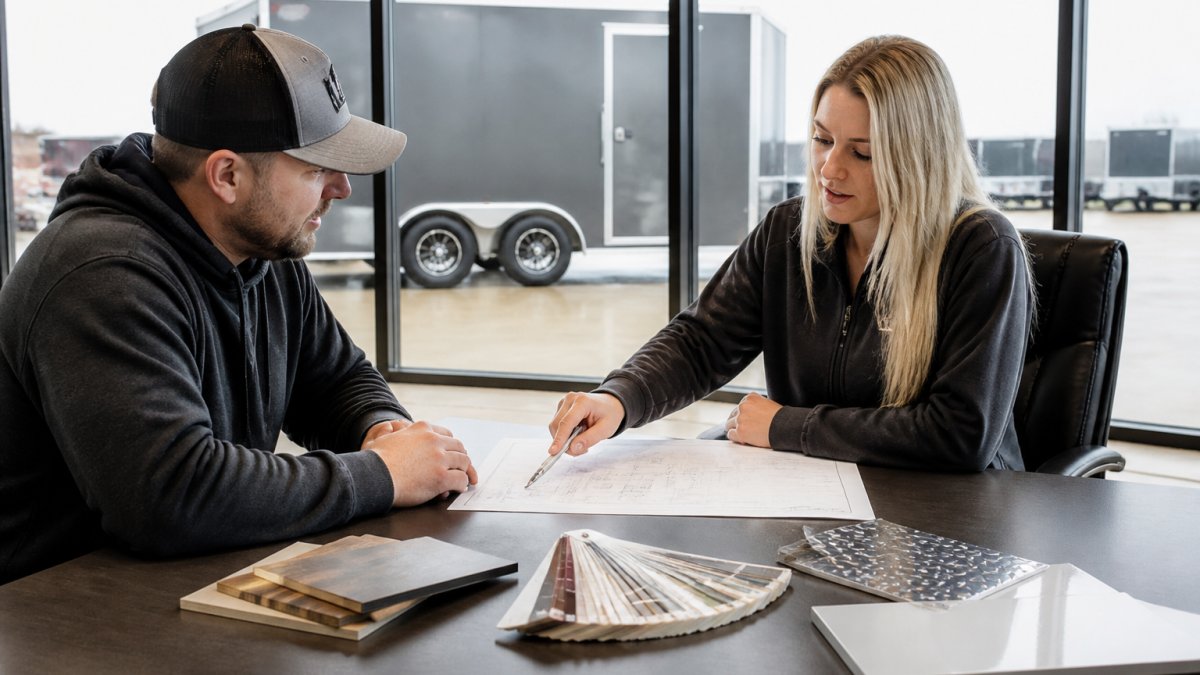
- Spec sheet. Length, axles, doors, interior finish, and electrical get locked in writing.
- Deposit. Your order enters the production schedule once the deposit is paid.
- Build week. The factory assigns a slot based on capacity and component sourcing.
- Final inspection. Lights, brakes, welds, and doors get checked before release.
- Delivery. You pick up locally or arrange freight and transport.
A common mistake is treating the spec sheet as a rough draft. Every change after approval can push your projected completion date, sometimes by weeks.
What Drives Custom Trailer Build Time
Build time is driven by four things: manufacturing capacity, raw material availability, component sourcing, and how complex your custom configuration is. Change any one of them and your delivery window shifts. The useful question is not which factor matters most but which one is currently binding your specific order, and that is where most lead-time guides go quiet.
Manufacturing capacity. Enclosed trailer factories schedule build slots weeks or months ahead. A plant running two shifts with a full order book cannot absorb a new custom unit next week no matter how simple the spec is.
Raw material availability. Aluminum coil and extrusions, steel tubing, plywood and composite panel, and insulation all feed the line. When a mill allocation tightens or a coil shipment slips, the factory does not stop building, it builds what it can and holds the units that need the missing material.
Component sourcing. Axles, brakes, couplers, jacks, specialty doors, and ramp assemblies often come from outside suppliers, and those suppliers serve many industries at once. A trailer can be fully welded, painted, and sitting on the yard waiting on one axle or one door.
Configuration complexity. A standard enclosed trailer moves through the line on a known rhythm because the crew has built that layout hundreds of times. A one-off layout with extra windows, a custom ramp, or special wiring needs more hands-on labor, more fitting, and more inspection time.
A common pattern is that buyers blame the factory for a delay that actually started upstream, a supplier allocation, a freight backlog, or a spec change that forced a re-quote on a component. Understanding the chain lets you ask better questions and plan a realistic buffer instead of reacting to a date that moves without explanation.
Federal Reserve Board industrial production data for transportation equipment
Custom Enclosed Trailer Options That Add Weeks
Some options barely move your timeline. Others can add weeks. Knowing which is which helps you decide what you truly need versus what sounds nice on the spec sheet.
Options that tend to stretch a build:
- Non-standard lengths and heights that require custom fabrication
- Specialty doors and ramps that come from outside suppliers
- Interior build-outs for concession or mobile business use
- Upgraded electrical and lighting packages
- Custom paint or finish work scheduled after assembly
Options that usually fit a standard build week:
- Standard axle and brake configurations
- Common tie-down layouts
- Basic shelving and D-rings
- Stock color choices
The real difference between a fast build and a slow one often comes down to how many parts your trailer shares with standard units.
In-Stock vs Custom Trailer: Which Fits Your Timeline?
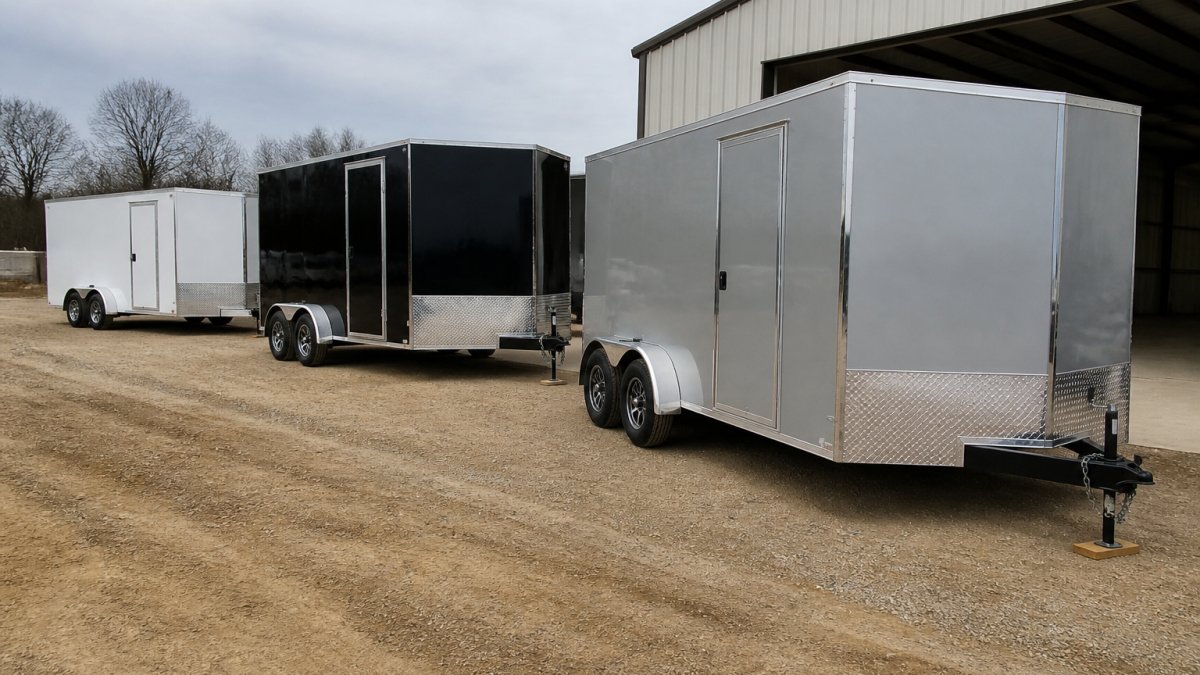
In-stock wins on speed every time. A trailer already on the lot can be hitched and hauled the same week. A custom build gives you exactly what you need but puts you in the production queue.
| Factor | In-Stock Trailer | Custom Trailer |
|---|---|---|
| Time to delivery | Days | Weeks to months |
| Configuration | Fixed, as built | Built to your specs |
| Best for | Urgent jobs, tight schedules | Exact fit, long-term use |
| Flexibility | Limited | High |
| Planning certainty | Immediate | Depends on build week |
One customer drove out from Ohio for a concession trailer already in stock because they didn't want to wait the extended lead times for a custom build. Another sat down with Curt, built the trailer to their specs, and had it within about five weeks.
Neither choice is wrong. The question is whether your schedule can absorb a wait.
Seasonal Demand, Supply Chain, and Delivery Windows
Peak season demand reshapes lead times more than almost anything else. When many buyers order at once, manufacturing capacity fills and the queue gets longer for everyone behind them. Spring and early summer tend to be busy for contractors and event vendors gearing up for the work season. Order in a slower stretch and you often get a shorter delivery window for the same build.
Supply chain constraints add a second layer. Even in a slow season, a missing component can hold up a finished trailer waiting on one part. The two effects compound: a peak-season order placed while a supplier is short on axles can stretch far beyond the published range.
The trade-off most guides skip: used versus new lead time. When a seasonal window is closing, the real decision is rarely 'custom now or custom later.' It is 'custom later or something available now.' A used enclosed trailer already on a lot can be hitched and hauled the same week, which makes it the only option that fits a job starting in days. The cost is that you take the configuration as built, axle rating, door placement, interior finish, and wear are fixed. A new custom build takes longer but arrives configured for your work and carries a full warranty.
A practical way to decide:
- If the trailer is revenue-critical this season, an in-stock or used unit now usually beats a perfect build later. Idle equipment and missed jobs cost more than a compromise on floor plan.
- If the trailer supports work you have not booked yet, a custom order placed in the off-season gets you the exact spec without paying a peak-season time premium.
- If you need it soon but not this week, ask the dealer whether any in-stock units can be modified, added tie-downs, shelving, or a different door, without re-entering the production queue.
Freight and transport also affect your delivery window if you are not picking up locally. Long hauls need scheduling, and that adds days on top of the build itself. During peak season, transport capacity tightens too, so confirm freight plans well before the build week rather than the day the trailer is released.
How to Avoid Delays and Track Your Build
Delays are usually avoidable. The buyers who get their trailers on schedule are the ones who lock specs early, stay reachable, and ask about order status on a set rhythm.
A simple post-order communication checklist keeps you ahead of surprises:
- Confirm your spec sheet in writing before the deposit clears
- Get your projected completion date and build week in writing
- Ask which components are already sourced and which are pending
- Set a weekly check-in with your dealer
- Approve any change orders fast, and ask what each one does to your date
- Confirm pickup or freight plans two weeks before the build week
- Schedule your final inspection walkthrough
Lead time variability is normal. What separates a smooth order from a frustrating one is communication, not luck.
At DoubleTake Trailer Sales, we've built our process around that idea. Our in-house service and parts department stays with you after the sale, and we offer no credit check financing options for buyers who need flexibility.
If you're weighing used versus new, remember that a used trailer is available now but comes as-is. A new custom build takes longer but arrives configured for your work.
Waiting on a trailer while your equipment sits idle is a real cost, and guessing at lead times only makes it worse. DoubleTake Trailer Sales can walk you through current build windows, help you lock a spec sheet that won't need changes, and point you to in-stock units if your schedule can't wait.
Frequently Asked Questions
How long does it take to build a custom enclosed trailer?
Most custom enclosed trailer builds take several weeks from the day you place your deposit, though the exact window depends on your configuration and the manufacturer's production schedule. A straightforward build with standard sizing can move faster, while heavy customization, specialty doors, or electrical work adds time. DoubleTake Trailer Sales walks you through a projected completion date before you commit, so you know what to plan around rather than guessing.
What factors affect custom enclosed trailer lead times?
Trailer lead times move with four main forces: raw material availability, manufacturing capacity and backlog, the complexity of your custom configuration, and peak season demand. Component sourcing for axles, doors, and electrical parts can shift a build week. Ordering early in the season, locking your specifications before the deposit, and staying in touch for order status updates all help keep your delivery window predictable.
Is an in-stock enclosed trailer faster than a custom-built one?
Yes, by a wide margin. An in-stock trailer is ready to hitch up and tow home, while a custom build runs through fabrication, final inspection, and shipping logistics before it reaches you. If your job site or event date is close, buying from inventory is the safer play. If you need specific dimensions, interior finishes, or a concession layout, the custom route is worth the wait.
Can custom trailer lead times change after I place an order?
They can, which is why post-order communication matters. Supply chain constraints, a surge in manufacturing backlog, or a specification change on your end can all push the projected completion date. Ask for regular order status updates and confirm any change in writing. A dealer that stays in contact during the build phase gives you room to adjust your business operational planning instead of being caught off guard.